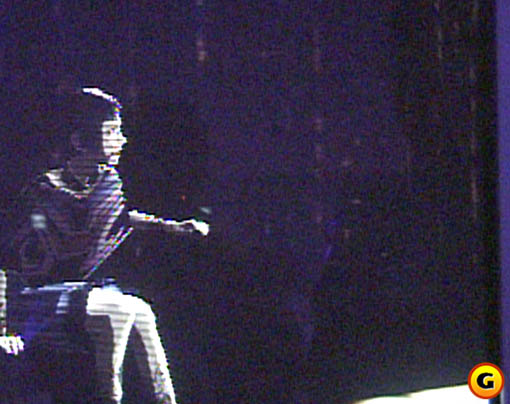
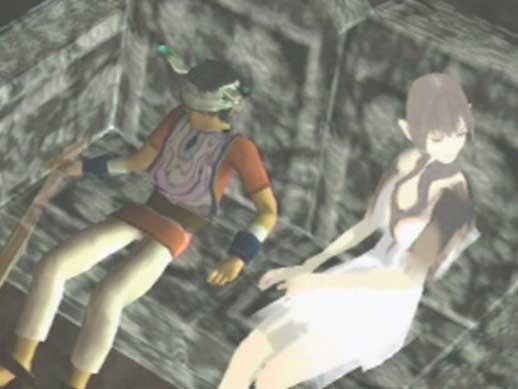
Saffire is a cancelled action adventure that was in development by Saffire (yes, the company used its same name to call their project) for the GameBoy Color. This version was going to be one chapter of the Saffire epic series, that was meant to be published for the Nintendo Dolphin (aka the GameCube) and the GameBoy Advance too. On IGN we can read part of the planned story:
The basic storyline of Saffire revolves around ancient Grecian myth. As the tale goes, in ancient times the god Zeus saw that the other gods were carelessly destroying the planet. To end this, he decided to seal off all of his enemies into the underworld, whereupon he himself swore never to return to the Earth. Centuries later, in modern times, a group of archeologists accidentally stumble upon the dangerous seals and open them, letting loose all the destructive gods of ancient past. Zeus watches from afar, but ironically, because he swore never to return, cannot do anything to stop the madness. Zeus enlists the help of teenage gods to put an end to the chaos engulfing the planet.
Saffire was one of the first development studios that started to create game concepts for the new Nintendo’s “128 bit” console, and they shown some famous tech demos as Saffire (Young Olympians) and Saffire Shooter. This GBC game was never finished for unknown reasons, but at least Dolphin’s Saffire evolved into Barbarian after some development issues. Saffire Corporation released their last title, Van Helsing, in 2004 (for the PS2, XBOX and GBA) and went out of business sometime afterwards.
Aqua Prophecy is a cancelled action adventure game that was in development by ASCII for the Playstation. The project was shown at E3 1997, but sadly it was never finished for some reasons. More info about this game can be found on IGN in an old interview / chat with Rob Fleischer from Ascii:
Adam@PSXPower: Tell us about Aqua Prophecy.
Rob@ASCII: Aqua Prophecy is an underwater adventure where you are out to save the world. You must save the world from the prophecy of Nostradamus and you travel to various different underwater locals.
Dinosaur: “Like Tomb Raider, only all under water?”
Rob@ASCII: Kind of, Dino.
Spelunx: “Is it like Ecco for Genesis?”
Rob@ASCII: There is a lot of puzzle solving and not a lot of killing. You explore sunken pyramids, ships, planes.
Bizarro: “Have you been researching the Nostradamus prophecies for the game?”
Rob@ASCII: Yes, it is true to form.
As with another cancelled aquatic game, Aqua by Scavenger, Aqua Prophecy’s gameplay could have been similar to Everblue (PS2) / Endless Ocean (Wii) by Arika or the Aquanaut’s Holiday series by Artdink.
Thanks to Celine for the contribution! Scan from GameFan magazine #5-8 and EGM ’97 Show Guide To E3
LMNO (also known as The Escape Artist) is a cancelled action adventure that was in development for the Xbox 360 and Playstation 3 from 2005 to 2010 by Electronic Arts Los Angeles, with the help of Steven Spielberg. As we can read in Wikipedia, the partnership with Spielberg, first announced in 2005, was to produce an action game with an aim to evoke emotion, described as “a mix of first-person parkour movement with adventure/RPG objectives and escape-focused gameplay, all based around the player’s relationship with an alien-looking character named Eve”.
The team never released many information about the game, but after it was officially cancelled in october 2010, 1UP wrote an interesting article about LMNO, in which we can read some previously unknown facts on the project and see a target-render video:
When EA signed its deal with Spielberg in 2005, some of the specifics were intentionally left unclear. The deal committed him to create three franchises for EA, but initially, LMNO was the only one locked in, and there was no team in place to make it. Project two, “PQRS,” went on to become Boom Blox, while project three hasn’t been mentioned publicly since the deal was announced.
EA’s answer was to hire designer Doug Church and build a small team around him in their Los Angeles studio. Through 2007, they put together a group of 25-30 people who worked under Young’s EA Blueprint group — a quiet experimental label designed to build new intellectual property while outsourcing much of its production (such as some of LMNO’s level design that went to Arkane in France late in the project’s life) — to prototype ideas. […]
On the surface, it was a first-person action/adventure PS3/360/PC game set in modern times. Players would split their time between light role-playing objectives like talking to characters to uncover information, and action sequences featuring a lot of what the team referred to as “escape gameplay” where the player would run from approaching helicopters and FBI-style agents too overwhelming to fight face-to-face. […]
The developers did a lot of prototyping with Eve to make for a strong connection between her and Lincoln. Part of that came visually — Eve’s design was deliberately exaggerated, with large eyes and lanky fingers, to help the animators express her emotions, and she was designed to be sympathetic and sensitive rather than a sex symbol. Part of that came with her abilities — she could team up with Lincoln for cooperative attacks, or project things into his vision because she had the power to tap into his mind, so things like storm clouds would appear when she was in trouble. […]
In 2008 EA laid off most of the LMNO team, and the project evolved from a characters-driven adventure into a more traditional action game (now called The Escape Artist), somewhat similar to Uncharted. It seems that the original LMNO concept was too abitous and even after the change in its design, EA decided that it was not worth the risk to continue with the development, after so many years of work and money already spent on it. Instead “in November 2009 EA acquired popular social game developer Playfish, and on the same day laid off approximately 1,500 employees in other EA studios“.
ICO is an action adventure game that was developed by Sony / Team ICO for the Playstation 2. ICO was originally planned for the PlayStation 1, but after two years of development, the team ran into limitations on the PSX hardware and faced a critical choice: either terminate the project altogether or to restart it on the PS2.
An interim design of the game shows Ico and Yorda facing horned warriors similar to those that take Ico to the castle. The game originally focused on Ico’s attempt to return Yorda to her room in the castle after she was kidnapped by these warriors. Ueda believed this version had too much detail for the graphics engine they had developed on the PSX, and replaced the warriors with the shadow creatures. [Info from Wikipedia]
From early beta screens and videos, we can notice that Yorda had a different design and there were some huge shadows enemies, removed from the final version. If you can notice more differences in the screens and concept arts below, please let us know!
Son of the Dragon is a cancelled action adventure that was in development by Renegade Kid and that would have been published by Gamecock for the Nintendo Wii. Sadly when Gamecock had to close down for economic issues, Renegade Kid was not able to find another publisher and the project had to be canned. Only few concept arts were released and it seems that Son of the Dragon was still in early development when it was cancelled. As we can read from an interview with Renegade Kid co-founder Jools Watsham on 1UP:
JW: Son of the Dragon was a third-person action adventure title set in a heavily stylized 15th century. You were Dracula. Something happened to you, which striped you of your ability to use your awesome powers. A quick description of it is a “good” 3D Castlevania where you are Dracula, with a focus on responsive combat, solid gameplay camera, light RPG elements, and a rich world of wickedly diverse landscapes, enemies, player weapons, and abilities. […]
JW: We spent many months developing the idea with a team of very experienced and dedicated individuals. The art team created loads of superb concept images for the player character, enemies, bosses, and environment locations. The design group created a game design document that quickly grew to over 100 pages, and detailed player abilities, damage types, enemy AI, items, accessories, level designs, currency, and many other details. It was truly inspired and exciting. We were considering licensing an engine for development, and the same day we had assets loaded into the engine, the hammer came down and the project was canceled. It was a bittersweet day.
This website uses cookies to improve your experience, by continuing to browse the site you are agreeing to the use of cookies. Find out more about cookies.Hide
Privacy & Cookies Policy
Privacy Overview
This website uses cookies to improve your experience while you navigate through the website. Out of these, the cookies that are categorized as necessary are stored on your browser as they are essential for the working of basic functionalities of the website. We also use third-party cookies that help us analyze and understand how you use this website. These cookies will be stored in your browser only with your consent. You also have the option to opt-out of these cookies. But opting out of some of these cookies may affect your browsing experience.
Necessary cookies are absolutely essential for the website to function properly. This category only includes cookies that ensures basic functionalities and security features of the website. These cookies do not store any personal information.
Any cookies that may not be particularly necessary for the website to function and is used specifically to collect user personal data via analytics, ads, other embedded contents are termed as non-necessary cookies. It is mandatory to procure user consent prior to running these cookies on your website.