Sony

Paladin (Midway Studios Austin) [PC/PS3/Xbox 360 – Cancelled]

Paladin is a cancelled open world Action medieval game developed around 2007-2008 by Midway Studios Austin (formerly Inevitable Entertainment) and published by Midway Games for the PC, Playstation 3 and Xbox 360 platforms. The game was using the Unreal Engine 3.

For years, few information were available regarding Paladin as it was cancelled before being announced. On his personal website, Richie Romero, who was Art Director at Midway until the closure of the company, shared screenshots and videos to what appears to be an action game set in the medieval times with open world elements. During that period, Midway Studios Austin was split in two teams, both working on different projects: Paladin, and Career Criminal, which was cancelled in August 2008, following publisher’s huge financial loss.

While no official announcement were made during its development, we can speculate that Paladin was cancelled back in December 2008, when the studio was closed by Midway which still faced financial difficulties:

Facing possible bankruptcy, Midway games will close its Austin studio entirely, suspend development on several unspecified titles, and reduce its workforce by 25 percent. (…) Midway did not list which projects it plans to cancel or suspend, but calls them “non-core” projects slated for 2010 and 2011 that had not yet been announced. (…)

Alongside Paladin and Career Criminal, Midway’s bankruptcy also led to the cancellations of various projects such as Stranglehold 2: Gun Runner, This is Vegas, Hero or even a new take on Mortal Kombat.

Videos:

Images: 

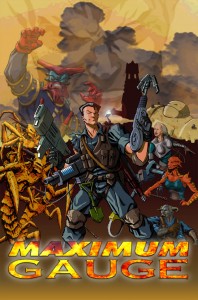
Maximum Gauge [Cancelled – PC/PSX]

maximum-gauge-pc-ps1-big-grum-mgm

Maximum Gauge was an 2D/3D adventure game with a sci-fi theme in development for the PC and the Playstation 1, developed by Big Grub and published by MGM Interactive. Gregg Tavares, who was Programmer at the time, described the game as “take Diablo but make it play like The Legend of Zelda: A Link to the Past“.

In June 1997, issue #15 of French magazine PlayMag wrote about the title:

Gregg Tavares and John Alvarado, with their experience with Hollywood studios, approached MGM, which had expressed its desire to launch an interactive branch. Result: Maximum Gauge on Playstation.

Gregg wanted to tackle a much more perilous field, that of Zelda-style RPGs. As a fan of Chrono Trigger, Zelda and company, he set himself a challenge: create an equivalent on Playstation with a much more sophisticated graphic style. Indeed, the big difference with a Super Nintendo RPG lies first of all in the 3D modeling of the sprites. Thus, all the characters and decorative elements are made in pseudo 3D. All bosses will be real 3D objects like certain special effects in the game. As for the character animation, it is also designed in 3D Studio, then transformed into sprites. This results in neat and very precise work. Indeed, if the animators find issues in the digitization of the sprites, they can modify the key frames of the movement. Fluidity is therefore there.

Maximum Gauge begins in the distant future in a distant galaxy. You and a band of merry men are at the controls of your spaceship when you crash on a completely unknown planet. The ship can be repaired but unfortunately the technician has disappeared. All you have left is an unfortunate shovel to explore this mysterious land. It’s like a basic sword in an RPG. All you have to do now is find a better weapon. (…) Unlike a Japanese game, Maximum Gauge explains the situation to you with humor. You have to laugh at your own misfortune and the designers of Big Grub couldn’t help but make references to American blockbusters. Brandon Humphreys, in charge of cinematics, gave us a mix between True Lies and Last Action Hero. (…)

The Art Director Willis Wong is obsessed with Japanese style. Despite everything, we still find a slight Japanese touch, all giving a rather special atmosphere. Like Zelda, Maximum Gauge is a game where you never stop exploring to discover new play areas. Weapons play a huge role at this level since some of them destroy specific obstacles. As a result, it is necessary to remember all the details of Maximum Gauge. Thus, an ultrasonic gun atomizes the crystal peaks which seemed unbreakable a few hours or days before. A grappling gun also gives you access to hidden corners. Don’t forget the shovel when you find something better because if it is used to crush enemy faces at first, it can also dig. Once the hero gets his hands on the metal detector, he makes holes and scans them to unearth treasures.

Your companions keep coming to your aid. The inventor is responsible for assembling the parts that seem unnecessary. You have to constantly question him and get to know him because it turns out to be essential. Even if the gameplay is essential in an RPG where you have to constantly fight, Big Grub attached great importance to the music. As proof, I cite the $50,000 invested in musical equipment and the full-time composer that the company hired. (…) Maximum Gauge therefore offers a slew of different themes that keep changing depending on your actions and the places you explore. No mystery, the music accelerates when facing bosses, calms down in green settings, darkens in swamps and completely immerses you in the world of Maximum Gauge. To conclude, Maximum Gauge is one of the flagship titles from MGM Interactive which intends to make a sensational arrival in the video game world by giving a breath of fresh air to a genre that does not really seem to evolve. It remains to be seen if in one take, our friends at Big Grub will do as well as the Japanese.

Atari Compendium made an interview of Tavares back in 2007, and Maximum Gauge was briefly mentionned:

Q: There were a few projects that you worked on that ultimately never got released (or possibly finished).  Do you recall the reason(s) why?

Gregg Tavares: (…) Big Grub’s unreleased game was called Maximum Gauge.  It was basically SNES Zelda-type of adventure with Diablo or better graphics.  The main characters were Space Marines. (…)

Q: If you had a chance to redo any of your games, what would you change?

Gregg Tavares: That’s a hard question.  If I was to redo Maximum Gauge I’d redesign it around the dialog since because it’s an adventure game.  That’s really where those games get their base.  Originally I designed it around the levels and thought I’d fill in dialog later.  But more than design I would manage it differently and hopefully in a way that it would have shipped.

Apparently there were direction problems and the game never seen the light of the day, as Tavares explained on his old personal website:

The second time I started a company it was called Seven.  A few things I learned there: 1) Never except a fixed amount of money for an unspecified amount of work.  This was obvious at the time but we were anxious to get started on something so we excepted. 2) Partners are generally bad.  Not bad people just a bad idea.   You can hear this advice from many many different people.  There are several problems with partners.  Is it an equal partnership?  Will you have to put in the same amount of effort?  For example a programmer may have to work 11 hours a day to get his work done.  The accounting partner might only have to work 2 hours a week to get his work done especially for a small company.  Sooner or later this kind of issue will cause a painful break in the partnership.  Another is direction, some partners might want to do one type of game where as another might want to do something else, maybe not even games.  I believe this is what happened at Id Software.  It also happened at Seven and Big Grub and caused no end of frustration for everybody involved.
The last time I started a company was with Big Grub.  This time there were four partners.  Again we had the direction problem.  Which type of game should we do next or should we do something other than games etc. Which small side projects should we take on.  The big lesson I think I learned is that it is very very important to have a good Director.  The Game Director is my definition for the person that has the vision of the final game in his head and it is his job to direct everybody to create it.  That would mean the best Game Director would be someone who is both the main Game Designer and also the game’s manager (schedules, budget, etc.)  That’s a very hard person to find.  People that design don’t usually want to manage and people that manage aren’t generally qualified to design.  That person also needs to authority to direct.  I believe that can be next to impossible with partners.  Equal partners can generally say, “screw you I don’t want to do that I want to do this.”  Employee’s can’t do that. Consider the Game Director to be just like a movie director.  He should talk to the Art Director to get the art style he wants for his vision.  He should talk to the music director to make sure he gets the music that matches his vision. He should talk to the programmers and make sure they can create his vision and how he needs to adjust it to fit reality.  You can’t have the Art Director directing the art separate from the Game Director directing the game.   The Game Director should look over the shoulders of each person on the team on a daily basis to see that each person is creating things that fit his vision.  He needs to manage everybody so the project is finished on time and so they are always working toward a common goal.  If a programmer needs certain artwork by next week the Game Director should make sure somebody is creating that art.

Video:

Short grainy gameplay sequence provided by Artist/Assistant Art Director Benjamin Naumann.

Images:


Ted Shred [PC/PlayStation] — Cancelled

Ted Shred is a cancelled skateboarding action-adventure game that was in development by Digital Domain for PC and PlayStation. The game was scheduled for release at Christmas 1996, but it never happened because Digital Domain couldn’t secure a publisher.

Digital Domain is an American company specialising in visual effects and computer animation, originally founded in 1993 by three masterminds: James Cameron, Scott Ross, and Stan Winston. While the company experienced a successful period working in the motion picture industry, they once decided to try their hand at something else: making a video game. That’s where the early seeds of Ted Shred came to life.

The intended story revolved around a real estate tycoon who wants to take Ted’s island, Loki Loco, by trashing and ruining it so he can acquire it cheaply with the help of his minions. It’s up to Ted to stop them.

Below are a couple of videos and images documenting what Ted Shred could have been.

Videos:

Images:

Credit: Lost Media Mines 

Dark Void [PC, Xbox 360, PS3] – Alpha, Beta & Concept Art Work

Dark Void was a fantastic Double-A hidden gem developed by Airtight Games and published by Capcom in 2010 for the Xbox 360 and PlayStation 3, with a PC version following shortly after. While the game introduced two genuinely interesting mechanics: a fully functional jetpack and an ambitious vertical cover system, it ultimately failed to generate the commercial success Capcom had hoped for. As a result, all plans for a sequel were quietly scrapped.

That outcome is particularly unfortunate given how turbulent and imaginative Dark Void’s development history was. Before it became the jetpack-driven shooter we know today, the game went through several radically different conceptual phases.

According to Jim Deal, the project’s earliest pitch leaned heavily into an Indiana Jones-inspired adventure. Players would traverse exotic environments using motorcycles, jeeps, horses, and even airships, with a grappling hook allowing them to latch onto surfaces and swing their way forward. It was less about aerial combat and more about pulpy exploration and cinematic traversal.

Pre-conceptualisation artist Stephen Daniele later revealed that, before the jetpack ever entered the picture, Dark Void was built around a shadowy enemy faction known as The Invisible Hand. A technologically advanced organisation clearly echoing the iconography of Nazi-era villains. The narrative framed them as an existential threat, one that needed to be dismantled before their influence spread further.

Visually, the game was also very different in its infancy. Daniele noted that the original setting was intended to be the Mediterranean or North Africa, with heavy artistic influence drawn from Egypt in particular. Ancient ruins, desert landscapes, and sun-scorched architecture shaped much of the early concept art. At this point in development, the game was a stylised shooter similar to a Pixar film. However, as the project moved forward, the developer eventually opted for a realistic look.

Only after multiple iterations did the jetpack flight system emerge. A decision that would ultimately define Dark Void. It is worth noting that Dark Void began development in early 2007 as a spiritual successor to Crimson Skies: High Road to Revenge because, at the time, Fasa Studios wanted to implement some on-foot third-person interaction, but unfortunately, it didn’t happen. Dark Void seemed like the right opportunity.

Dark Void Content

Sketches and Early Prototype:

Don’t be confused if you recognise the image from the prologue. There’s a perfectly good reason for it. According to Stephen Daniele, Capcom wanted Airtight Games to adopt an approach similar to God of War: begin the game by handing the player almost every tool upfront, then gradually teach them how everything works.

Because this opening sequence functioned purely as a tutorial, the developers placed it at the very start of the game. At the time, nobody realised they were actually controlling an early iteration of Will Grey! A small but fascinating detail that only makes sense in hindsight.

Videos:

A 1-hour chat with Stephen Daniele about the early concepts of Dark Void and some of the cut content, like the Motorcycle!

Images from the 2008 E3 build

Magazine Coverage With Early Preview:

A fan-documentary of Dark Void covering the early codenames and more details on the initial concept of the game and the sequel.

Credit: Huge thanks to Stephen Daniele for the early sketches and details that have gone unknown for 15 years!

Alpha Footage of Dark Void

Before Dark Void soared into the sky, and Will Grey kicked ass, the game had a completely different vision, graphics and, of course, character. In this early phase of development, the game had an entirely different name. The graphics were very reminiscent of a Pixar film, as shared by Stephen Daniele in a previous interview. However, Jose Perez III went on to reveal that some of the ideas in the early iteration of Dark Void were already in place way before Just Cause released. This iteration had a parachute, a grappling hook, a motorcycle (with guns!), aeroplanes which you could hijack anytime you wanted, and so many ideas.

In many ways, the alpha footage of Dark Void had glimpses of the real spiritual successor to Crimson Skies: High Road to Revenge, because it included everything the developer wanted to show in the cancelled Crimson Skies 3.

Videos:

The alpha footage of Dark Void was revealed 15 Years later!

Interview with Jose Perez about Tales from the Black Cloud and other interesting facts!

Credit: Huge thanks to Jose Perez III for sharing a lot of never-before-heard details that have gone unheard of for 15 years! 

Dead to Rights 2: Hell to Pay [PS2 / XBOX / PC – Cancelled]

Dead to Rights 2: Hell to Pay [PS2 / XBOX / PC – Cancelled]

Dead to Rights 2: Hell to Pay was originally planned as the direct sequel to Dead to Rights, continuing Jack Slate’s relentless fight against crime. However, Namco Japan’s abrupt shift toward outsourcing first-party titles to external developers led to its unfortunate cancellation. In its place, Namco Hometek brought in WideScreen Games to develop a completely different version of Dead to Rights 2, one that bore little resemblance to the ambitious sequel that was once in the works.

The impact was severe. Gameplay had to be scaled back, the story was rewritten—twice—and core mechanics that were meant to elevate Dead to Rights 2 were heavily downgraded to meet tight deadlines.

Initially, Hell to Pay was meant to follow Jack Slate and his loyal companion, Shadow, as they dove headfirst into a dangerous conspiracy to save Jack’s friend, Preacher Man Jones. As revealed in Game Informer’s November 2003 issue, this version promised a darker, more intense experience. But by the time Dead to Rights 2 resurfaced at E3 2004, something had changed. Jack was no longer on a mission to save his friend. Instead, the narrative mysteriously shifted to protecting a mysterious—possibly blonde—girl. His overall look was also altered.

Then, as the game neared completion, Dead to Rights 2 was no longer planned as a sequel. Instead, the game was rebranded as a prequel. Evidence of its troubled development was everywhere—unfinished combat animations, stripped-down mechanics, and missing environmental effects, all signs that Dead to Rights 2 had suffered from a troubled development cycle.

In the comments, Vincent was right to spot that Dead to Rights: Reckoning was, in essence, the remnants of Dead to Rights 2: Hell to Pay. It was Namco Hometek’s final attempt to salvage the original sequel’s concept and give players a glimpse of what could have been. Unfortunately, the effort fell short. Only fragments of the original vision made it into the game, while the rest was lost to time.

Below, you’ll find full images from the original Dead to Rights 2: Hell to Pay alongside those from the E3 2004 version shown separately, allowing you to see firsthand how the game evolved—and how much it changed—throughout development. A documentary video was also made to show you what went behind the scenes of the game’s development.

Thanks to Vicente and Evan Hanley for the contribution!

Edit: 9/2/2025

Images of the original Dead to Rights 2: Hell to Pay:

Dead to Rights 2: Hell to Pay (E3 2004):

Bonus – Dead to Rights 2: Beta footage 

Differences:

  • Different HUD  design
  • Cut music (mostly generic from pre-beta)
  • Some different gun sfx (in early Xbox build)

Videos:

Fan-documentary with never-before-heard insights from producer and lead artist Pierre Roux: