
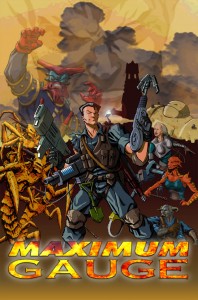
Maximum Gauge was an 2D/3D adventure game with a sci-fi theme in development for the PC and the Playstation 1, developed by Big Grub and published by MGM Interactive. Gregg Tavares, who was Programmer at the time, described the game as “take Diablo but make it play like The Legend of Zelda: A Link to the Past“.
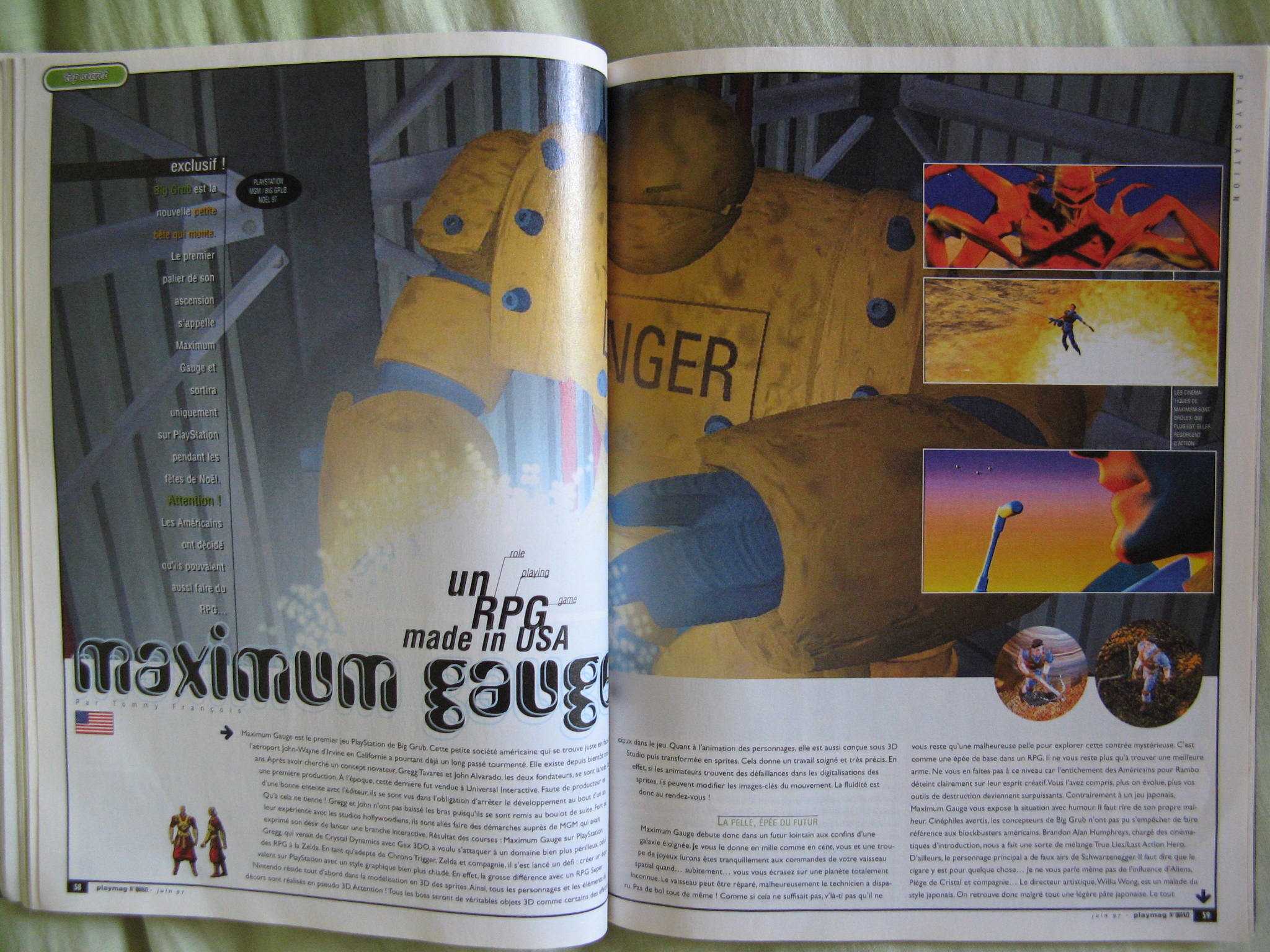
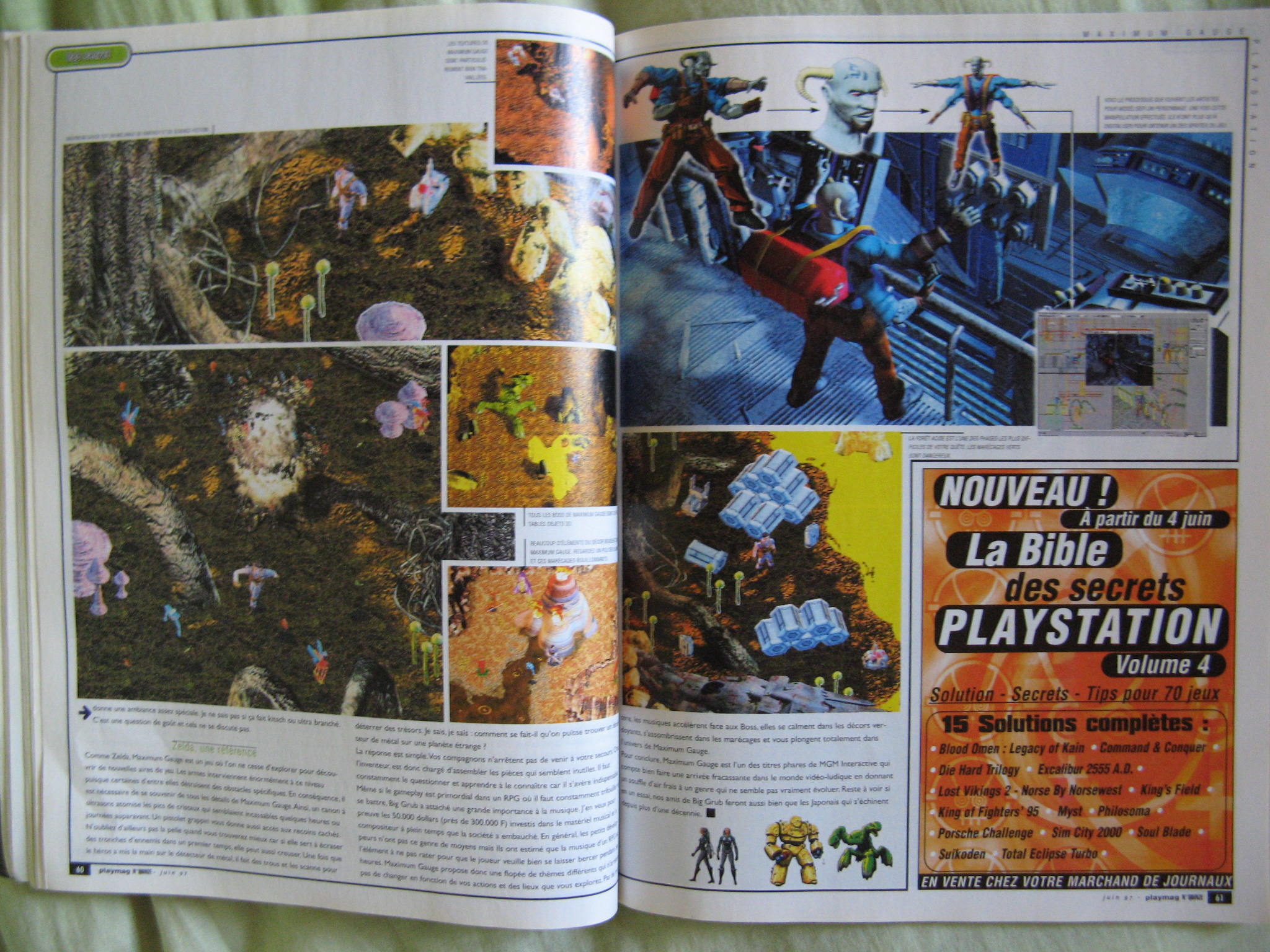
In June 1997, issue #15 of French magazine PlayMag wrote about the title:
Gregg Tavares and John Alvarado, with their experience with Hollywood studios, approached MGM, which had expressed its desire to launch an interactive branch. Result: Maximum Gauge on Playstation.
Gregg wanted to tackle a much more perilous field, that of Zelda-style RPGs. As a fan of Chrono Trigger, Zelda and company, he set himself a challenge: create an equivalent on Playstation with a much more sophisticated graphic style. Indeed, the big difference with a Super Nintendo RPG lies first of all in the 3D modeling of the sprites. Thus, all the characters and decorative elements are made in pseudo 3D. All bosses will be real 3D objects like certain special effects in the game. As for the character animation, it is also designed in 3D Studio, then transformed into sprites. This results in neat and very precise work. Indeed, if the animators find issues in the digitization of the sprites, they can modify the key frames of the movement. Fluidity is therefore there.
Maximum Gauge begins in the distant future in a distant galaxy. You and a band of merry men are at the controls of your spaceship when you crash on a completely unknown planet. The ship can be repaired but unfortunately the technician has disappeared. All you have left is an unfortunate shovel to explore this mysterious land. It’s like a basic sword in an RPG. All you have to do now is find a better weapon. (…) Unlike a Japanese game, Maximum Gauge explains the situation to you with humor. You have to laugh at your own misfortune and the designers of Big Grub couldn’t help but make references to American blockbusters. Brandon Humphreys, in charge of cinematics, gave us a mix between True Lies and Last Action Hero. (…)
The Art Director Willis Wong is obsessed with Japanese style. Despite everything, we still find a slight Japanese touch, all giving a rather special atmosphere. Like Zelda, Maximum Gauge is a game where you never stop exploring to discover new play areas. Weapons play a huge role at this level since some of them destroy specific obstacles. As a result, it is necessary to remember all the details of Maximum Gauge. Thus, an ultrasonic gun atomizes the crystal peaks which seemed unbreakable a few hours or days before. A grappling gun also gives you access to hidden corners. Don’t forget the shovel when you find something better because if it is used to crush enemy faces at first, it can also dig. Once the hero gets his hands on the metal detector, he makes holes and scans them to unearth treasures.
Your companions keep coming to your aid. The inventor is responsible for assembling the parts that seem unnecessary. You have to constantly question him and get to know him because it turns out to be essential. Even if the gameplay is essential in an RPG where you have to constantly fight, Big Grub attached great importance to the music. As proof, I cite the $50,000 invested in musical equipment and the full-time composer that the company hired. (…) Maximum Gauge therefore offers a slew of different themes that keep changing depending on your actions and the places you explore. No mystery, the music accelerates when facing bosses, calms down in green settings, darkens in swamps and completely immerses you in the world of Maximum Gauge. To conclude, Maximum Gauge is one of the flagship titles from MGM Interactive which intends to make a sensational arrival in the video game world by giving a breath of fresh air to a genre that does not really seem to evolve. It remains to be seen if in one take, our friends at Big Grub will do as well as the Japanese.
Atari Compendium made an interview of Tavares back in 2007, and Maximum Gauge was briefly mentionned:
Q: There were a few projects that you worked on that ultimately never got released (or possibly finished). Do you recall the reason(s) why?
Gregg Tavares: (…) Big Grub’s unreleased game was called Maximum Gauge. It was basically SNES Zelda-type of adventure with Diablo or better graphics. The main characters were Space Marines. (…)
Q: If you had a chance to redo any of your games, what would you change?
Gregg Tavares: That’s a hard question. If I was to redo Maximum Gauge I’d redesign it around the dialog since because it’s an adventure game. That’s really where those games get their base. Originally I designed it around the levels and thought I’d fill in dialog later. But more than design I would manage it differently and hopefully in a way that it would have shipped.
Apparently there were direction problems and the game never seen the light of the day, as Tavares explained on his old personal website:
The second time I started a company it was called Seven. A few things I learned there: 1) Never except a fixed amount of money for an unspecified amount of work. This was obvious at the time but we were anxious to get started on something so we excepted. 2) Partners are generally bad. Not bad people just a bad idea. You can hear this advice from many many different people. There are several problems with partners. Is it an equal partnership? Will you have to put in the same amount of effort? For example a programmer may have to work 11 hours a day to get his work done. The accounting partner might only have to work 2 hours a week to get his work done especially for a small company. Sooner or later this kind of issue will cause a painful break in the partnership. Another is direction, some partners might want to do one type of game where as another might want to do something else, maybe not even games. I believe this is what happened at Id Software. It also happened at Seven and Big Grub and caused no end of frustration for everybody involved.The last time I started a company was with Big Grub. This time there were four partners. Again we had the direction problem. Which type of game should we do next or should we do something other than games etc. Which small side projects should we take on. The big lesson I think I learned is that it is very very important to have a good Director. The Game Director is my definition for the person that has the vision of the final game in his head and it is his job to direct everybody to create it. That would mean the best Game Director would be someone who is both the main Game Designer and also the game’s manager (schedules, budget, etc.) That’s a very hard person to find. People that design don’t usually want to manage and people that manage aren’t generally qualified to design. That person also needs to authority to direct. I believe that can be next to impossible with partners. Equal partners can generally say, “screw you I don’t want to do that I want to do this.” Employee’s can’t do that. Consider the Game Director to be just like a movie director. He should talk to the Art Director to get the art style he wants for his vision. He should talk to the music director to make sure he gets the music that matches his vision. He should talk to the programmers and make sure they can create his vision and how he needs to adjust it to fit reality. You can’t have the Art Director directing the art separate from the Game Director directing the game. The Game Director should look over the shoulders of each person on the team on a daily basis to see that each person is creating things that fit his vision. He needs to manage everybody so the project is finished on time and so they are always working toward a common goal. If a programmer needs certain artwork by next week the Game Director should make sure somebody is creating that art.
Video:
Short grainy gameplay sequence provided by Artist/Assistant Art Director Benjamin Naumann.
Images:
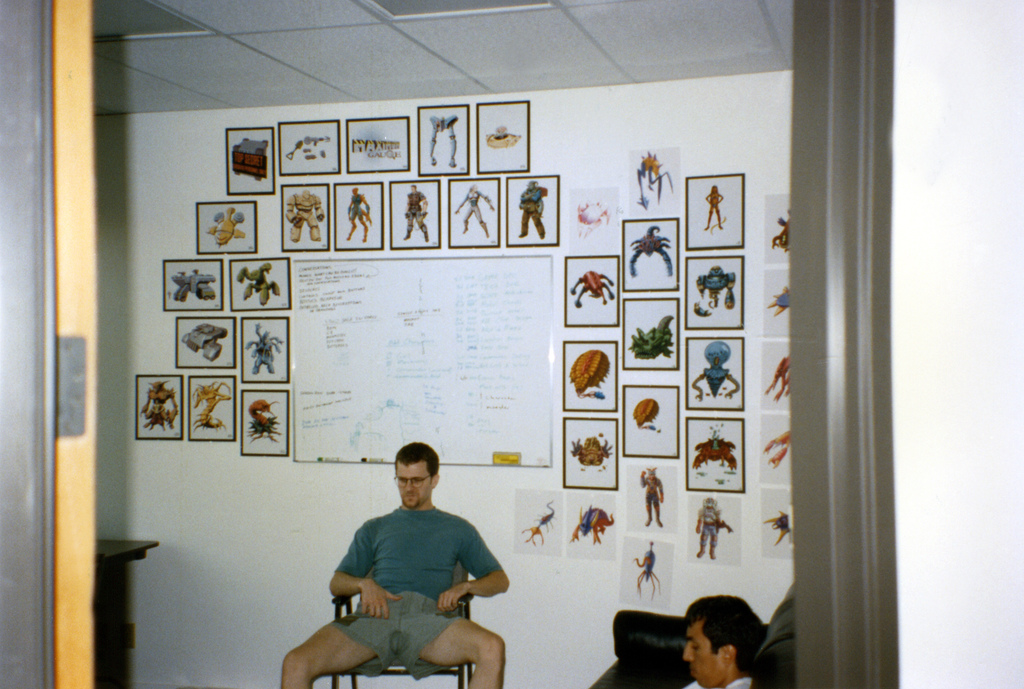
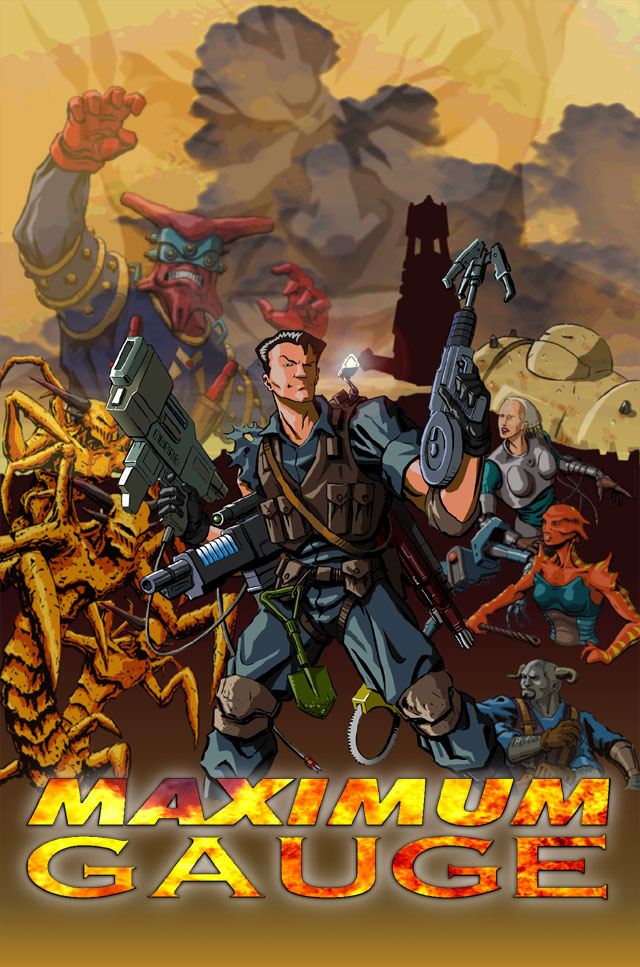
What do you think about this unseen game? Give your vote!
Would you like to add more info, screens or videos to this page? Add a comment below!

- Maximum Gauge [Cancelled – PC/PSX] - 04-04-2026
- Dinosaur Legend (Kyouryuu Densetsu) [NES – Cancelled] - 23-10-2013
- Flux [Playstation / PC – Cancelled] - 25-09-2013
http://games.greggman.com/game/games_o_the_greggman/
Very cool Infos + some more Infos about canceled games