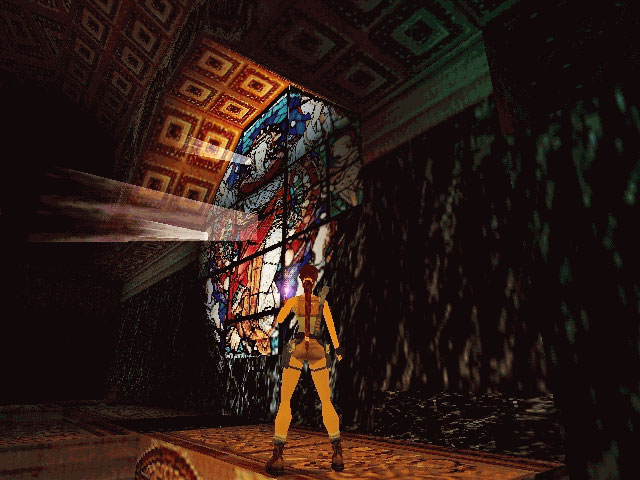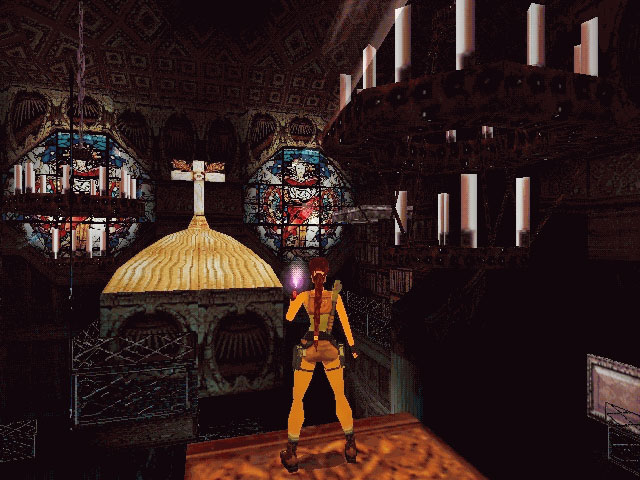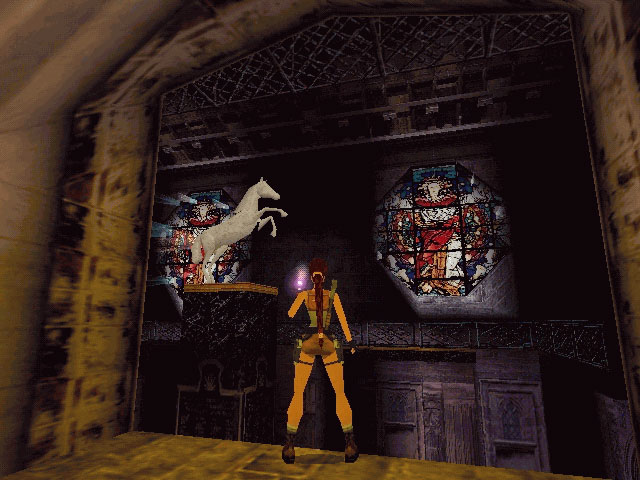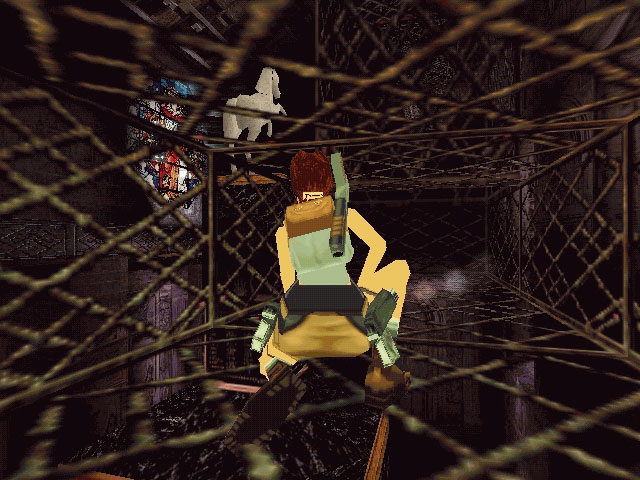
Ultimate Domain was a 3D fighting game in development by Atlus for Sega’s Model 2 board around 1996. The game had 8 characters ( of which 3 were women ) animated with the aid of JAC ( Japan Action club ) for the motion capture sessions. One peculiar feature was the SOL-POWER where the characters can utilise the sun power to charge up super killing techniques ( just like Daitarn 3 ! ). Ultimate Domain doesn’t appear on Atlus or Model 2 release lists so we can conclude that it was never fully released in the arcades.
Overview: The first Tomb Raider game became a success with high ratings and sold well. Core Design of Derbyshire had already planned a sequel, the game underwent big changes through development. According to rumors, due to the original game being such a success, Sony paid for the game to be exclusively made for the PlayStation which in turn resulted in the Sega Saturn version being cancelled. There is no evidence of this happening, if anybody has any official information please do update this. Core Design managed to successfully remaster and implement Lara’s ponytail which was a major issue back in 1995. Tomb Raider 2 was released on the Sony PlayStation and PC early November 1997. In 2004, an external company ported Tomb Raider 2 to the Tapwave Zodiac handheld device which is now defunct. The port was cancelled due to unknown reasons but is available to download from some places on the internet.
— Early Alpha Stage – Date, Late 1996 Platform: PC
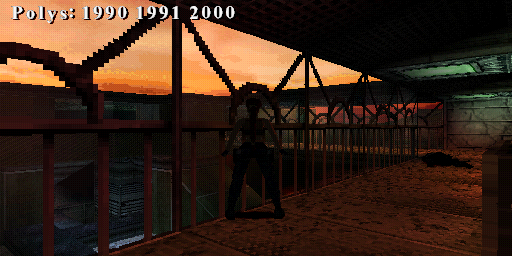
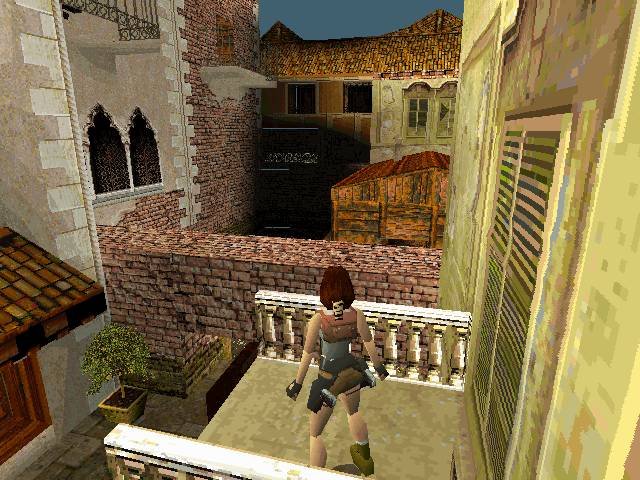
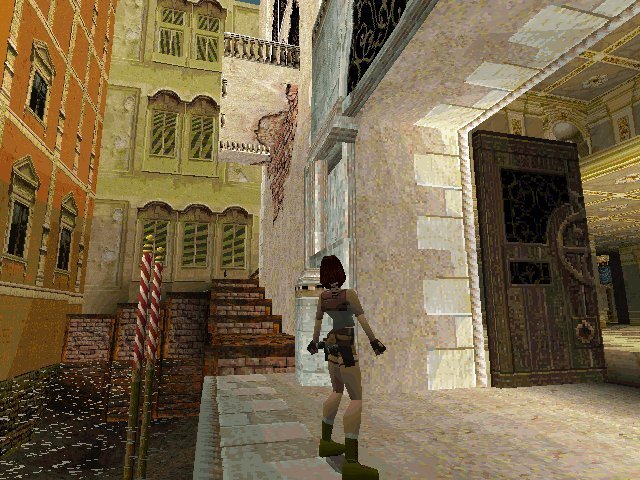
These screenshots come from an early alpha build of Tomb Raider 2. As you can see, Lara has no braid, her model is exactly the same to the first Lara in Tomb Raider 1. There aren’t supposed to be stairs in Bartoli’s Hideout, the gate where the boat is supposed to drive through is missing. These are most likely the first set of screenshots showing Tomb Raider 2.
—
Alpha Stage – Date, Early 1997? Platform: PSX
—
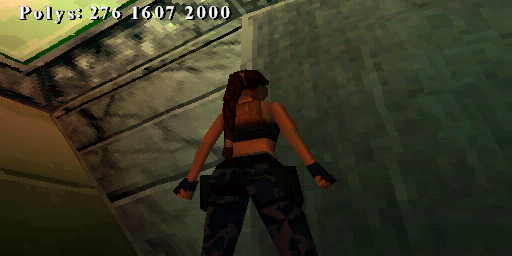
This build is similar to the one above. However, Core Design began experimenting with Lara Croft having a braid. Some early E3 preview videos show a similar build.
—
Beta Stage – Date, 16th June 1997 (E3 Build) Platform: PC
—
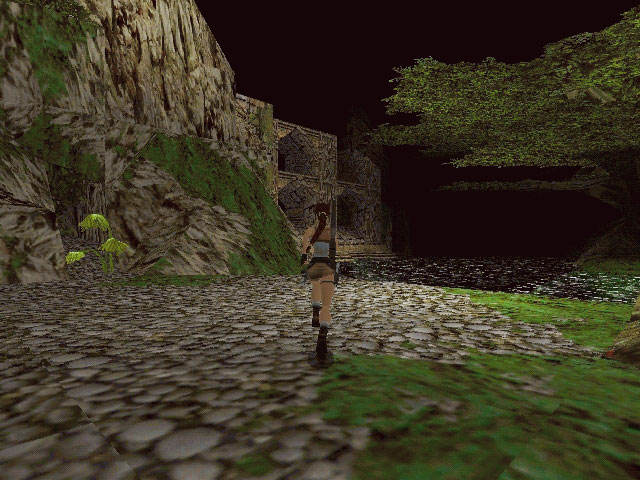
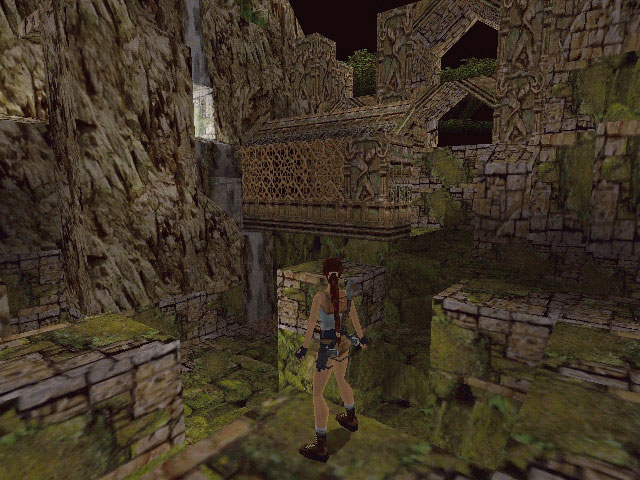
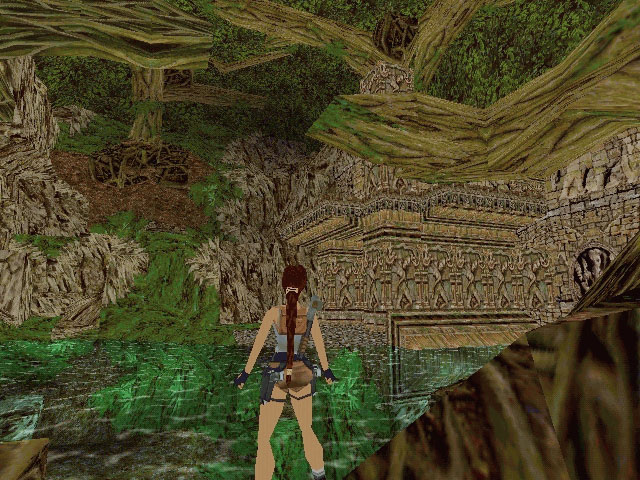
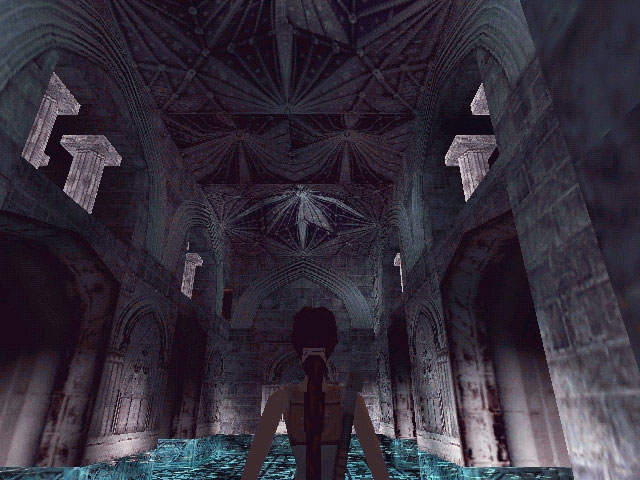
After E3 1997, Tomb Raider 2 E3 build leaked onto the internet. As a result it is now available on many websites. The alpha consists of 3 playable levels in early development
Bartoli’s Hideout.
The Wreck Of Maria Doria
Ice Palace / Catacombs of the Talion
In the first level Bartoli’s Hideout, you can notice that the Pistols’ Sound effects are completely different. The health bar is also different in color, just an early placeholder. In the beginning, you don’t start in the boat, they may not have created it yet. The original gate where you are supposed to go through with the boat is locked and the room in there doesn’t contain the clock tower door, it’s just a white textured room, could this be an early alpha room from the previous level? The sword men have no sound effects whilst their sword goes down. The Debug cheat ‘DOZY’ is available, Lara will swim once the user holds down ‘D-O-Z-Y’. The building shelters are normally textured with a red cloth like surface but in this version they are plain wood. In addition, there are no wired gates which separate areas, they are replaced with wooden slats hammered together unseen in the final version. The first secret is missing, the veranda which leads to the stone dragon is there but the door itself is missing. The positioning of the room under the fireplace was changed slightly in the final release. The inventory is the same to Tomb Raider 1, the guns are also identical: Pistols, Magnums, Shotgun, Uzis. The Magnums were later changed to ‘Automatic Pistols’ in the final build. The compass is still functional but was later changed to statistics watch to give a more modern game play experience. Whilst climbing up walls, there is a glitch which allows Lara to draw her guns, this was a problem back in July 1996 for Tomb Raider 1 which they fixed in the final, but it has re-occurred in this build. Secrets aren’t yet implemented, the locations are there though. The detonation key is different from the final one, it is gold and red where as, the final is grey entitled ‘TNT’. At 08:59, you can see an additional room which was removed from final. It has nothing in it, it may have been a placeholder room for the Stone dragon secret. It isn’t possible to complete the level, the TNT explosive device is not in this version, there are no end triggers so the only way to skip to the next level is to rename the level files.
In the second level, there appears to be a huge difference visually and with sound. The sound effects are from Tomb Raider 1, the first level contains early/final sound effects for Tomb Raider 2. The level is so early, it starts right at the end. In the beginning, there are no textures. The costume itself is completely different from final, it’s striped with orange whereas, in the final it’s white,blue,grey and black. There is a glitch with the lever at 1:53, you must rush to get to the other lever before the door itself closes, DOZY is a quick way of doing this. This area of the level is pretty much final, there aren’t many noticeable changes but the glitch at 3:59, the texture underneath the water is a rock texture. The inventory noise is exactly the same as Tomb Raider 1, in the first level it’s just a high pitched noise, the key has placeholder textures which aren’t final. The ending of the level is yet again untextured with no option to proceed to the next level.
—
Beta Stage – Date, 16th June 1997 Platform: PSX
—
PSX E3 Demo, it is identical to the PC E3 Demo.
—
Beta Stage – Date, Early September 1997 (Demo) Platform: PSX
Coming Soon!
—
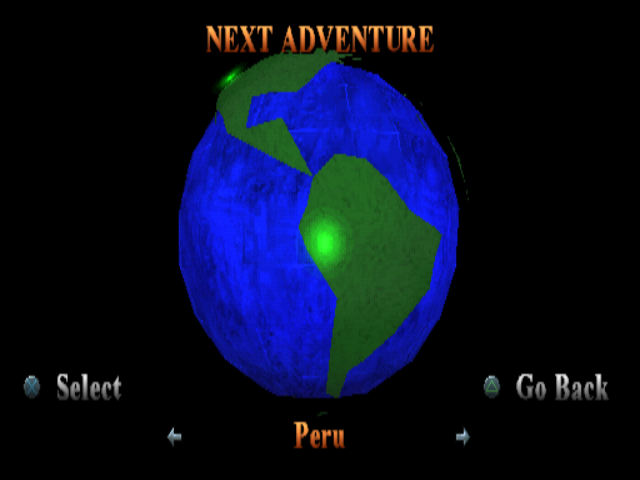
This is a playable beta demo of the first level, there are several differences such as the title screen picture. It’s completely different, shows a picture of early Xian in china. At the beginning of the level, you can jump forward and grab the top ledge which you shouldn’t be able to do, it was fixed in the final build. Also, the helicopter doesn’t exist, it’s supposed to fly by at the top of the Great Wall, she seems to look though. Halfway through, in the room with the flying discs just before the boulders are introduced, the flying discs have the sound of darts from Tomb Raider 1, the sound was later changed in the late September build below. The level ends right after the spike crushers because it’s incomplete. If you bypass the ending, there is no way of proceeding since it’s nothing but a dead end. In the inventory, statistics has the extra feature ‘Hit/Miss Ratio’ this isn’t available in the final version. It may be because in the 30th September build, it is non-functional due to a glitch in the code which they didn’t have time to fix for final release.
Beta Stage – Date, 30th September 1997 Platform: PSX
—
This particular version was burnt to many pirated Tomb Raider 2 discs. Though close to the final game, the last levels are slightly unfinished with Temple of Xian and Lara’s Home being impossible to complete without glitching. The DOZY cheat can be accessed which turns Lara Gold, allowing her to swim in mid-air most likely used to help the developers navigate to specific rooms more quickly.
—
Beta Stage – Date, 17th October 1997 Platform: PSX
Pretty much the final game with dozy. —
Editors: 1. Gh0stblade
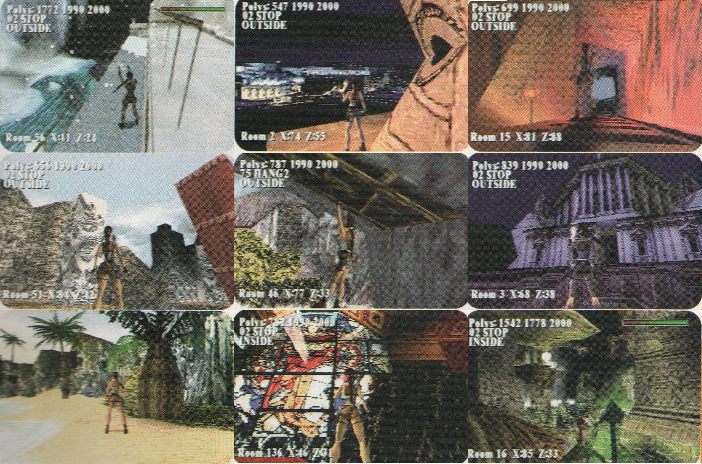
Change Log Gh0stBlade – Added September/October 1997 videos. 16/03/16 Gh0stblade – Added E3 June 1997 info, Added September 1997 Demo info, Early Alpha Info. 03/12/11 Gh0stblade – Added June 1997 Footage, September 1997 Footage, Early 1997 magazine scans. 05/12/11
After Tomb Raider: the Angel Of Darkness had been considered a failure. Core Design (Core), in 2004 came up with a new Tomb Raider Project. The project known as “Tomb Raider: 10th Anniversary Edition” aimed to recreate the original Tomb Raider game released in 1996 including various enhancements and extensions to the original game. Core developed their version of Tomb Raider: 10th Anniversary Edition for approximately 9 months until it was cancelled early June 2006 by SCi. A trailer for the unfinished game emerged on the internet, later that week Eidos officially confirmed the game had been cancelled. Following these events, Crystal Dynamics developed their own Tomb Raider: Anniversary game which released in 2007.
Origin:
Interview by: PlanetLara with former Artist Richard Morton. (24th July 2007)
Richard: It was a strange time really, we’d just finished Free Running for PSP/PS2 and had developed a really good control system and camera, we started messing about with a Lara model on the PSP in the Free Running engine and the idea of 10th Anniversary was born. We suggested it to Eidos who allowed us to develop it, but when Core was sold to Rebellion it seemed like they didn’t want the franchise to go ‘out-of-house’ hence the cancellation of our project.
It is confirmed that PC/PS2 versions were also in development. However, the existing leaked footage and in-game screenshots have been confirmed to be taken from the PSP version. The trailer which leaked from an unknown source seems to show various different builds of Tomb Raider: 10th Anniversary Edition. Some sequences in the trailer are from builds later than others. Both Core Design and Crystal Dynamics were working on separate games (Core Design – Tomb Raider: 10th Anniversary Edition, Crystal – Tomb Raider Legend). Eidos (the game’s publisher at the time now Square Enix) requested Core Design to alter their Lara Croft model so it looks similar to the Lara Croft model used in Tomb Raider: Legend. This is why the Lara Croft model seen in early prototype versions of Tomb Raider Legend is very reminiscent of the one seen in Core Design’s Tomb Raider: 10th Anniversary Edition.
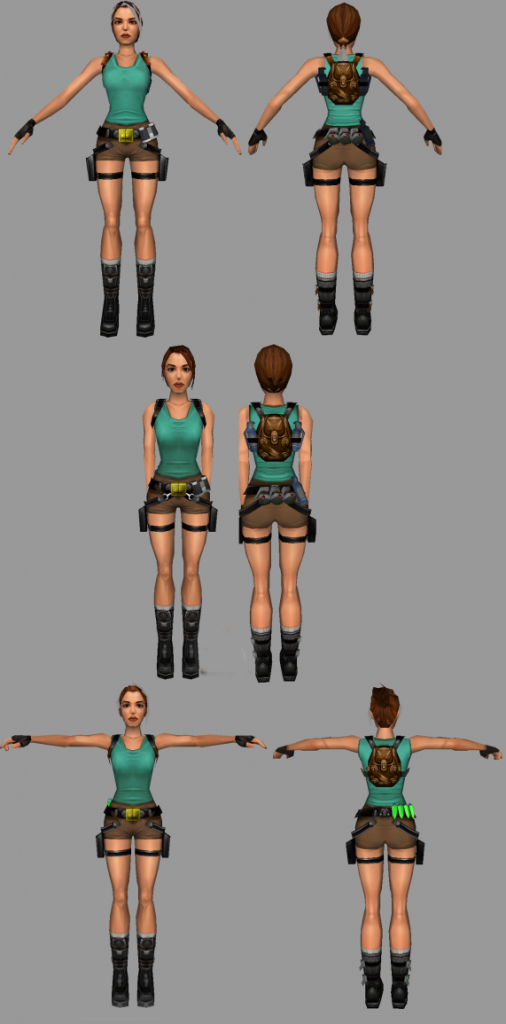
Various variants of the Lara Croft model and how it changed during development
The leaked trailer:
Press releases:
By Core Design (www.core-design.com) – 15th June 2006, 11:02:06.
Following speculation on the internet, we would like to offer the following clarification.
The video of Tomb Raider: 10th Anniversary Edition that appeared on certain sites was an unauthorised release of an internal presentation of a game that was being developed by Core Design until very recently. It was running on PSP and used a Core-developed engine. However, following a recent review this project has been officially cancelled by SCi.
Core is alive and well and working on some great new projects, and we are still planning to announce some exciting news very soon!
By Former Core Dsign Arist Carl released a fly through video of a level he worked on:
By Eidos – June 16th, 2006
Eidos Interactive, one of the world’s leading publishers and developers of entertainment software, confirms today that they are developing a special ’10th Anniversary Edition’ of Tomb Raider. The new game is being developed by Crystal Dynamics, who recently launched Lara Croft Tomb Raider: Legend on Xbox 360, PS2, Xbox, PC and PSP, with versions on Nintendo DS, GBA and GameCube later in 2006. “Our ’10th Anniversary Edition’ of Tomb Raider, is a one-off title to celebrate both Lara and Tomb Raider, it will appeal not only to the loyal fans of the Tomb Raider series but will also attract a totally new audience.” Said Larry Sparks, Head of Brands Management at Eidos. Tomb Raider originally launched in 1996 and is still one of the best selling videogame franchises of all time, with over 30 million copies sold. The special ’10th Anniversary Edition’ of Tomb Raider will be available on PlayStation 2, PSP and PC.
Core Design’s opinion:
In 2016 an interview with Gavin Rummery was published by arstechnia. It provided some details as to how the game started and speculation as to why it was cancelled:
He put the pieces together in his head and pitched Eidos/SCi (SCi having taken over Eidos in 2005). They loved it, so a team of Tomb Raider veterans at Core set about remaking the original game in the new engine. It was going well, Rummery recalls—both looking and playing great. But Crystal Dynamics didn’t want Core back in the picture, and the American studio built a rival demo.
“They convinced whatever the politics in SCi was like that it made more sense to just keep it all in one studio,” says Rummery. “Keep the franchise in one place. And so ours was killed, and you’d have never heard if it hadn’t been leaked by someone.”
Steve Pritchard responded to Gavin’s claims with the following:
Steve Pritchard (Producer) via Facebook
No worries. It was a tricky time in the studio when Crystal were doing Anniversary – a lot of hard work had gone into that idea and to have it taken away and handed to Crystal was a painful thing.
Crystal Dynamics are in no way at fault for this – Eidos had become SCi at this point and that whole Eidos/Core/Tomb raider multi-brand was something that hung a little heavily around a few necks. Someone, somewhere, realised that handing a TR title back to the now-not-Core guys would have seemed like a strange commercial move, and with CD having a lot of cool tech all ready to go, it was a straightforward choice for them.
Yeah, it was a massive, massive kick in the nuts for those of us who had done a lot in a very short space of time to get Anniversary running, but from a business perspective it was understandable.
Gav was right to be angry about the way the whole thing unfolded and he’s also right in saying that SCi were up for it – Ian Livingston grinned a smile a mile wide when I described the concept as a “director’s remastering” of the original, with additional content filling out the whole TR1 game. So yes, it was a winner and yes, at the time it looked like me might claw it back. But someone, somewhere realised the media issues that might arise from the old Core lads doing another Lara game . . . and that was where the split began, not with CD.
I put more hours into the Core version of Anniversary than anyone else on the team – production tend to do that – and as we had such a small team most of what is seen in the leaked video was stuff I pulled together across a couple of evening shifts, the thing cut together by Gaz Tongue later. We were all gutted when the project went away. Projects do, all the time, but this one really felt like the last chance to grab back a bit of TR.
The last presentation to the SCi board had Gav and I demoing the Playstation version AND the PSP version, both of which had co-op gameplay in it. They were rough around the edges, still some way from alpha, but if you knew the original game well you could see where we had added real fan service, extra content and just cool stuff that expanded on the original narrative. It felt good to show off, it was received well, but that last presentation had us re-introduced to Toby Gard and some of the CD team who were there to see it. Two days later we got the news that they were going to do the Anniversary project, using their engine and tech from TR Legend. And that was that.
Horrible end to the story but I find it really difficult to lay the blame at Crystal’s door. SCi made the decision, and they really weren’t very good at decisions. They are not there for good reasons.
Not too long after that the studio was sold to Rebellion, Gav moved on and I ended up running the show for the next 18 months to two years. By then Core were a bit battered and bruised and being asked to shift their skills to “quick and dirty” work that was almost outsourcing saw all the talent start to pour away to other companies. “Corebellion” fought on for a while but the writing was on the all by then.
The PC-FXGA is a computer add-on card that can be plugged into a NEC PC-9800 or a computer with ISA slot. Along with the included software, the PC-FXGA acts as a development kit for the PC-FX.
Overview: Tomb Raider Legend is the first game developed by Crystal Dynamics. Crystal Dynamics worked along side with Toby Gard (the original Tomb Raider designer). They wanted to reboot the game after the failure of Tomb Raider Angel Of Darkness. Development of this game started in 2004 just after Eidos transferred the Tomb Raider development rights to Crystal Dynamics.
There are trailers from around the E3 2005 time which show various different levels which were not present or drastically changed for the final release. Around this stage of development it is confirmed that most of the areas were just for proof of concept and used for testing for example, Lara’s Beach House. There were weapons which were cut from the final release: Smoke Grenades, Rocket Launcher, Revolver.
Early Alpha Stage – Date, May 2005 Platform: PS2
This is the build which was shown at E3 2005.
—-
Alpha Stage – Date, August 2005 Platform: PS2
This is the build which was shown at GC 2005.
—-
Editors: 1. Gh0stblade
Change log: Gh0stblade – Added PSP info and cleanup with dates 14/01/2013 Gh0stblade – Updated basics of post, removed all old info and updated 20/03/2013
This website uses cookies to improve your experience, by continuing to browse the site you are agreeing to the use of cookies. Find out more about cookies.Hide
Privacy & Cookies Policy
Privacy Overview
This website uses cookies to improve your experience while you navigate through the website. Out of these, the cookies that are categorized as necessary are stored on your browser as they are essential for the working of basic functionalities of the website. We also use third-party cookies that help us analyze and understand how you use this website. These cookies will be stored in your browser only with your consent. You also have the option to opt-out of these cookies. But opting out of some of these cookies may affect your browsing experience.
Necessary cookies are absolutely essential for the website to function properly. This category only includes cookies that ensures basic functionalities and security features of the website. These cookies do not store any personal information.
Any cookies that may not be particularly necessary for the website to function and is used specifically to collect user personal data via analytics, ads, other embedded contents are termed as non-necessary cookies. It is mandatory to procure user consent prior to running these cookies on your website.