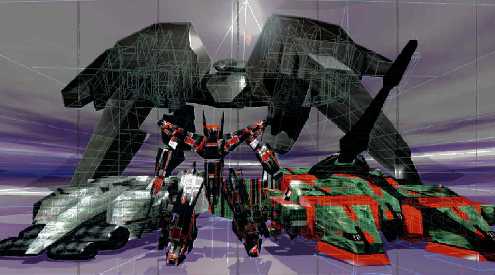
BioTech: Liberator is a cancelled first person action game in development around 1998 by australian studio Beam Software (AKA Infogrames / Atari Melbourne House and Krome Studios Melbourne), planned to be published on Playstation and PC. Previously the same studio developed and released KKND2: Krossfire for PC and Playstation.
BioTech: Liberator was quite original for its time, with players using morphing mechs / vehicles to resolve different missions in a strange gameplay mix between “Soviet Strike”, “Blast Corps” and Lemmings. Some details about the project can be found in an old press-release:
“You’re stuck in a steaming alien jungle with nothing but your own sweat for company. The enemy has a lock on your position and they’re rapidly closing in. Your shields are down to 14%, you’ve got just two guided missiles left in your BioTech Assault Tank, and if you stay put you’re dead meat. So, what are you going to do? Panic and start crying? Or do you get a little creative… ?
In BioTech: Liberator you take control of a single combat vehicle, but one capable of morphing into widely differing forms, providing you’re carrying the relevant Transform Pod to make the change. Each form has its own unique abilities and weapons and since you’re up against an entire planet of warmongering nasties, you’ll be needing them all if you want to get out of there in one piece.
It’s partly about blowing the enemy into gooey, bite-sized chunks, but it’s also about using the different forms of the biotech vehicle to the best effect – transformations are limited. Much as we hate to use other games as a point of reference, think Soviet StrikeTM meets Blast CorpsTM, with just a pinch of LemmingsTM. In short, a killer mix of strategic problem solving, white-knuckled action and hefty explosions!
Key Features are:
A wide range of unique and awesome weapons, a deadly enemy and fiendish puzzles to solve
Fully deformable true 3D landscape – if you don’t like the way something looks, blow it up!
Multiple 2 player modes. Choose from Deathmatch, Conquer and Chase variations
The game consists of at least 30 missions (20 standard, 5 bonus and a few secret ones), which often require not only shooting, but also finding items, saving hostages, capturing enemy bases, and much more.
BioTech: Liberator was planned to be released in 1999, but the same year the studio was sold to Infogrames. It’s possible that Infogrames decided to cancel the game to switch resources on more safe and profitable projects, as GP 500 and Le Mans 24 Hours.
If you know someone who worked on this lost game, please let us know!
Thanks to Visurox & Edward Kirk for the contribution!
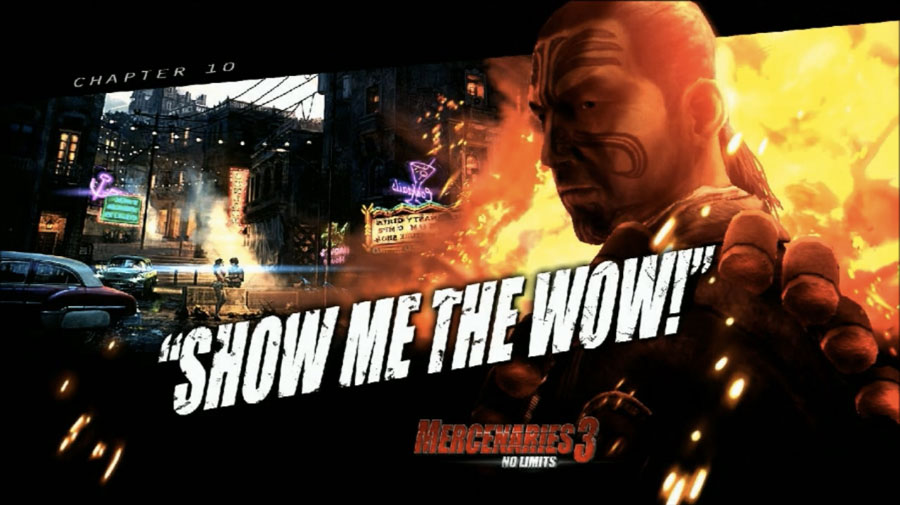
Pandemic Studios was the company who developed the Mercenaries series and unfortunately it was shut down in 2009, forcing the studio to cancel 2 projects they were currently working on at the time: Mercenaries 3: No Limits and Mercs Inc.
It is sad and frustrating that Pandemic was shut down as there clearly was a passion behind the creation of this new project. EA boss John Riccitielo at the time really wanted Mercenaries 3 to be released and he confirmed during an interview that if it was up to him that it could go on for a very long time.. going as far as a Mercenaries 10 release.
An article by Cnet explains well the financial struggles EA endured in 2009 and the reason why they felt the need to close Pandemic:
“An Electronic Arts spokesperson confirmed the news to CNET, but called it a consolidation rather than a closing, saying that the company merged Pandemic with EA’s nearby LA campus. The core team of developers integrated into EA will continue to work on Pandemic properties.
Hit by weak game sales, EA has been hurting since last year when it warned that 2009 would be a tough one. The company said at the time that it would need to cut staff, trim product lines, and close studios. EA initially announced job cuts of 10 percent of its workforce, then later revised that to 11 percent. In January, EA also jettisoned Pandemic’s studio in Brisbane, Australia.”
Since the studio closed in 2009 and their last game was released in 2008, Mercenaries 3 didn’t go very far into development. For that reason, not much is known about the game and most of it is sadly up to speculation. Fortunately, we do have a little video showing gameplay footage of what could have been, showing off core mechanics for a few minutes with audio commentary.
During the video, there is a radio conversation between the main character and what we can presume is their boss giving them the mission. The game is set in Cuba 2017 and the protagonist is given directives to meet and escort a journalist for the Russian mafia. You meet her inside a church in an animated black and white placeholder cutscene and shortly afterwards they both drive to where the journalist needs to find proof that ‘Blackfire’ has deployed combat drones. The video ends abruptly with the main character trying to shoot a drone with a machine gun and then with a bazooka.
Since the main character in that video is a character never before seen in the series, it is very likely that its model was a placeholder used for testing purposes until they would have finished creating the real main character for this new game, or maybe it was meant to be a different hero this time around. Sadly we do not have more information about this.
David Siller was the original creator of the Aero the Acrobat series and he later bought back his Aero IP and sold it to Universal Interactive Studios, when he was hired to produce two new 3D platformers: Crash Bandicoot and Aero the Acrobat 3D. In the mid nineties 3D platformers where one of the most successful genres and Universal Studios wanted to to take advantage of the profitable Playstation market to make some money.
As wrote by David in his (now deleted) Facebook page “Crash Bandicoot Untold Story” (archived by Crash Mania):
“Tension was heighten at Universal as they bought from me an IP that I had created at SUNSOFT called “Aero the Acrobat”. I had just bought it from Sunsoft as I departed there for the Universal lot! Rubin and Gavin again went on the extreme offensive believing that Universal’s new acquisition would become more important than Crash or Willy. I began also designing the new AERO 3D polygonal video game to be added to the line-up.”
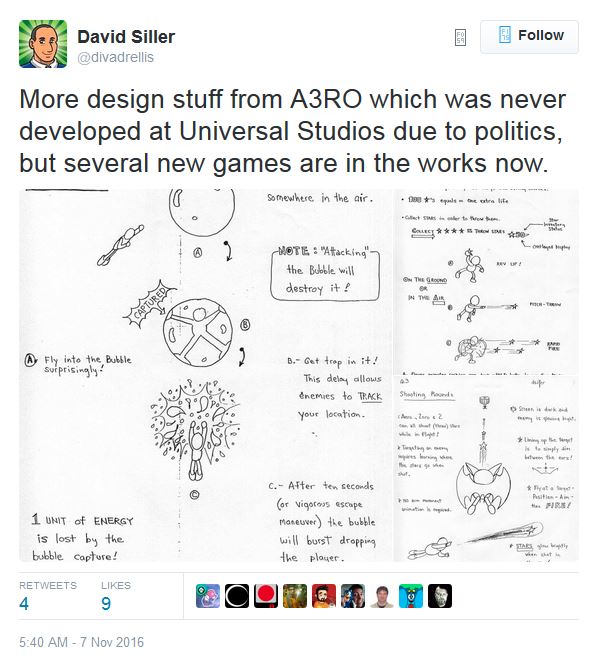
In 2016 David shared a few pages from the Aero the Acrobat 3 design doc in his Twitter account (now deleted):
From these documents it seems the game would have had multiple playable protagonists and 3D flying levels.
From what we know the game was still in early conceptual phase when it was canned. We can speculate that the success of Crash Bandicoot and the internal issues between David, Universal Interactive Studios and Naughty Dog put and end to the project. As we can read from the same archive at Crash Mania:
“Back in Rubin’s office, he was angry at me about “this letter” and then threaten my life! He said I was going to be sorry! I did NOT report this to management or anyone one else at that time. I was a mature adult who could take this and I wasn’t afraid of Rubin as I came from a tough neighborhood and had loads of associates myself. Rubin’s father was a lawyer and I suppose told him to always act tough or people will shit on you. Those tactics do NOT work, but that was the final straw. Mark Cerny then used this severed relationship to get involved as Sony had just arrived. He said quote “They don’t like you!”….”
“When I was hired to join Universal Interactive Studios, it was owned by Matsushita Electric, the largest Electronics manufacturer in the World located in Japan. It was run by the longest in place Management team in all of Hollywood, Lew Wasserman and Sid Sheinberg! It was utopia as far as I was concerned. Everything was so damn cool, everything the Studio did was classy and first rate. Soon as Crash Bandicoot was approaching completion, Matsushita sold their majority interest to the Canadian distillery Seagrams! Everything then became chaotic and all the top tier managers were fired. Sony then came into the picture and that caused even more chaos. This of course played into Rubin and Gavin’s agenda and the s*** hit the fan!”
It’s currently unknown what happened to David after he deleted all his online profiles and if he’s still working on video games.
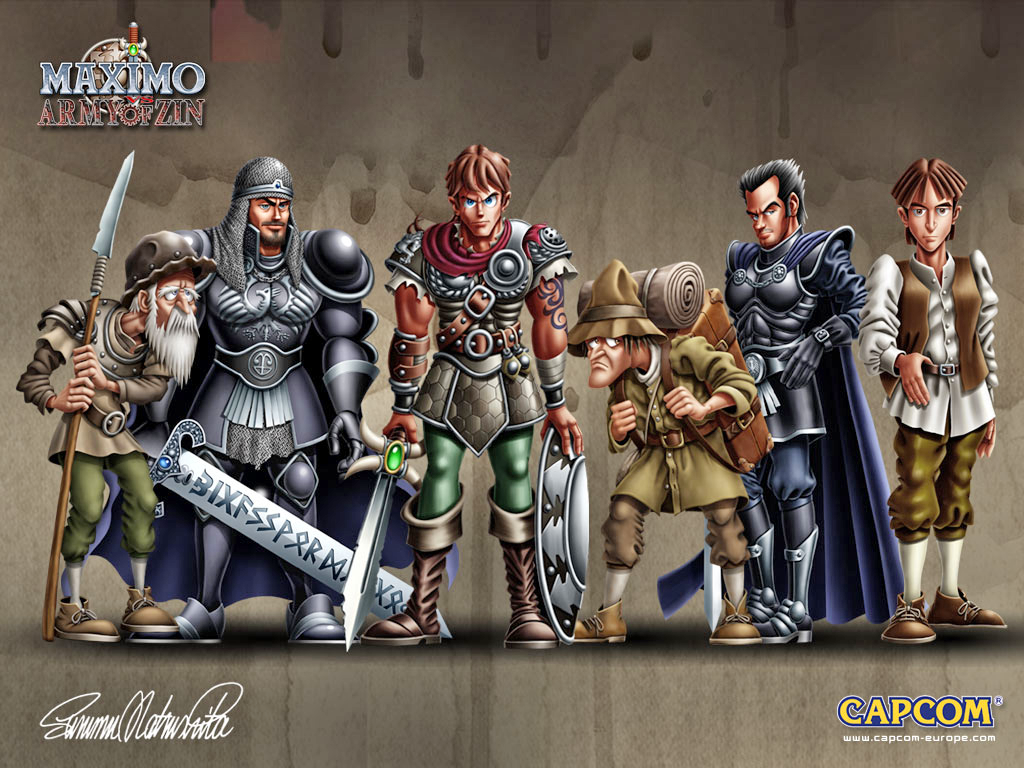
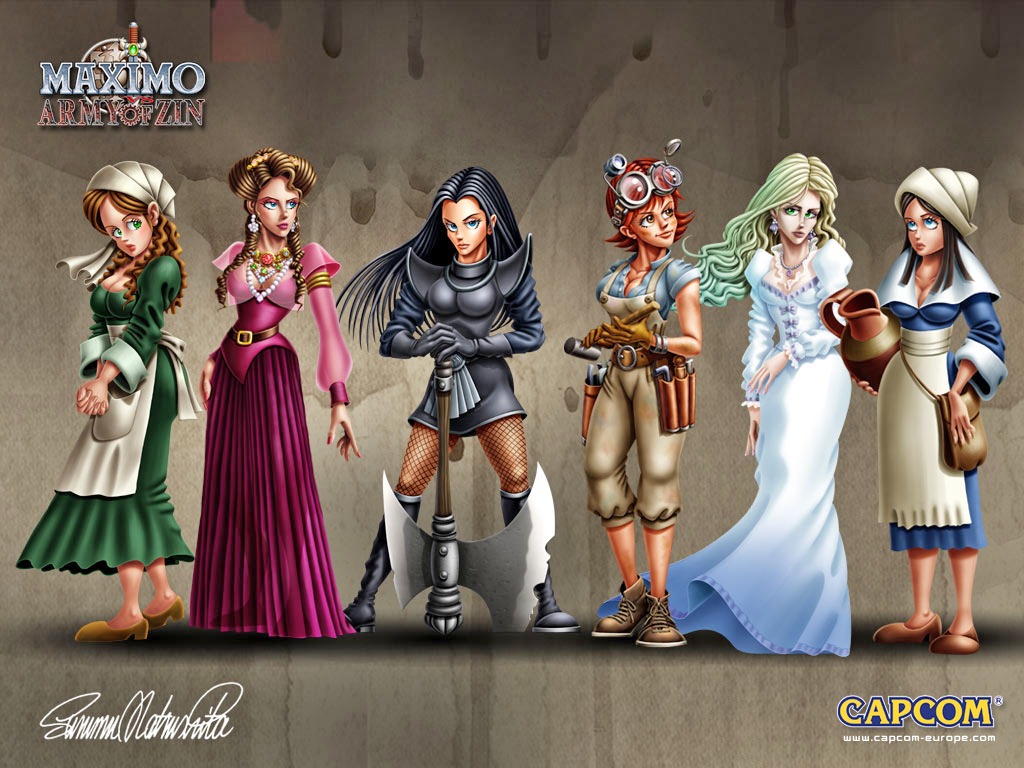
Maximo: the Dark Knight is a cancelled “Adults Only” (AO) game pitch that was considered by Capcom USA to develop as a spiritual sequel to the Ghosts ‘n Goblins series. After Capcom of Japan shown their Ghosts ‘n Goblins N64 prototype to the press in 1996 (a game that was never released), a year later Capcom USA conceived their own pitch for Maximo on the Nintendo 64. As revealed by William (Bill) Anderson (Senior Game Designer for Maximo) in an interview published in our book “Video Games You Will Never Play”:
“Bill: When I came to Capcom to develop Maximo the N64 was still the hot market, but Capcom USA only had one development team at the time and they were all working on Final Fight Revenge, which I was told would wrap up soon. Well soon doesn’t mean the same thing in Japan I guess for FFR had a producer over here from Japan and he wasn’t in any great hurry to finish the game. So it took a really long time to finally get a start date for the production and by then the N64 wasn’t king anymore and I was asked to change all of my designs to Playstation.”
Final Fight Revenge was available in the arcades in mid 1999, but Capcom USA already started their new Playstation 2 pitch for Maximo: the Dark Knight in late 1998, to be able to start development before Sony’s second console would be released in March 2000. Their idea was to create an action game for adult gamers, with violent gameplay, realistic visuals and a mature storyline. To conceive a dark medieval fantasy setting suitable for their new game, David Siller (Creative Concept and Studio Director for Maximo) got in contact with Joe Pearson, writer and producer for such series as Roswell Conspiracies and Kong: The Animated Series. As written by Joe to Ross Sillifant:
“It all took place in 1998. This was a paid gig from Capcom who approached me through a contact via David Siller whom I had worked with on the first Crash game. At the time, Capcom was seriously considering doing a hard R-rated for violence and sex dark Maximo medieval fantasy game and they wanted me to write up a concept Bible and opening game cinematic/introduction.
This was a dream come true as I was a big fan of Michael Moorcock’s brilliant Elric book series and a real opportunity to delve into my own dark side and cut loose with some edgy over-the-top world building and scenarios. The result you can read for yourself. I think it’s pretty, horrifically successful in a dark fantasy way.
It wasn’t easy as I was in full production as the Show Runner on the 40 episode animated Roswell Conspiracies series, but it was such a rare opportunity to cut loose, I made the time over a long weekend to write it up. Well, Capcom paid me for it, and then shifted over to the G-rated mode for the game itself so I never got to write out the script scenarios for the sexed up “Princess reward levels”. Oh well, that’s entertainment.”
In this opening scene written by Joe for the undeveloped Maximo: the Dark Knight pitch we can read:
“FADE IN on a tortured landscape of jutting rocks and twisted trees. Flames burn from crevices torn in the barren earth. Smoke and fumes fill the screen. Distant, giant shapes can be dimly seen dwarfing the stunted trees. As the narrator speaks we slowly PUSH IN. The shapes emerge from the smoke—a deformed, one eyed cyclops with huge, misshapen hands and a second, tusked face embedded in its chest, a dead white giant worm, with the multiple legs and clawed tail of an earwig and the face of a baby, a jet black female Centaur with red burning eyes and hair, a sickly green, multi-limbed octopus with the face of a beatific, painted geisha (each tentacle ends in a lamprey toothed mouth), and a hairy, spider-like creature with the head of a ravening wolf, etc. (go wild, use your imagination)
We move past the monsters to reveal Lilith on her titanic obsidian throne. She is supremely beautiful and terrifying. A giant, red skinned demoness, with black bat shaped wings and huge bull like horns (I’m picturing a beautiful female version of the Tim Curry character from “Legend”. Her lower legs and feet are goat-like. She caresses the head of a massive catlike creature with the spiked tail and armor of a stegosaurus. Piles of thousands of human skulls form pyramids on either side of her throne.”
The original draft script for Maximo: The Dark Knight’s prologue is preserved in here.
In the end Capcom USA sent their pitch for this adult-only Maximo to Capcom of Japan, that unfortunately rejected their idea. As told us by William:
“No, no prototype of a realistic Maximo was ever produced. Once we submitted the full game design document to Capcom Japan, along with the concept art we produced they pushed back and said that they wanted all of the realistic looking games to come out of Capcom Japan, so that’s when we had to change the look and feel of the game. It was our intent to make a gritty and dark game from the start, so we were a bit ticked off when our producer rep from Japan showed up with a first playable demo of Devil May Cry, for it had the look and feel of what we had originally proposed. Oh well, nonetheless we ended up with a game more successful than even Capcom Japan had expected, so much so that they asked us to convert the game to Japanese first, so they could do a big launch of the game in Japan, before here in the US.
“BEOWULF is a third person action adventure with role-playing elements. Explore the northlands, fight enemies both natural and supernatural, and prove your worth among the heroes of old.
BEOWULF is based on a nordic saga that dates back to the 6th century AD. The game captures the adventure spirit of the early Viking Age, creating a unique visual interpretation of the world of norse legends with state-of-the-art 3D graphics.
BEOWULF is very combat-driven, and features a unique and innovative melee fighting system. It is the first game to bring an authentic simulation of medieval sword-fencing to the computer game medium. The advanced physics simulation system provides a high level of realism and dynamic gameplay.
Features that make the game stand out:
* combat system that faithfully emulates medieval sword-fencing
* vivid characters and beautiful 3D environments
* cutting-edge 3D technology with striking visual effects
* integrated realtime physics for action-packed gameplay
* well-known name and scenario (especially among the Tolkien fan community).”
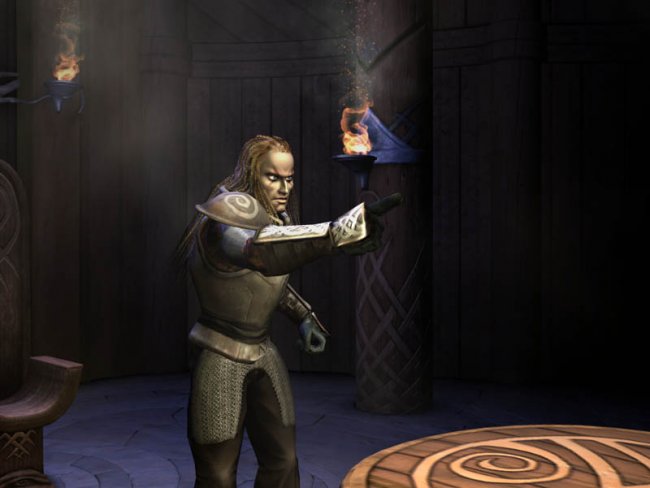
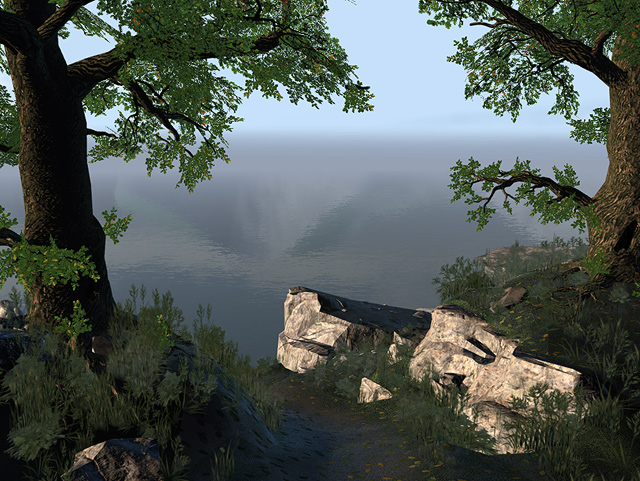
Images shared by 4HEAD Studios show a few concept art and early renders depicting the most iconic characters and places of the original Beowulf legend, such as the protagonist itself, the monster Grendl, his mother, the Dragon, the Mead Hall. However, no actual gameplay is seen so we can assume the team was still in early development.
Gamespot used to have two teaser trailers of the game, but they are currently unavailable. Beowulf’s tie-in game released by Ubisoft in 2007 was a very different product, since it relied on the latest movie version of the Beowulf character, instead the original poem. Gameplay also deviated from 4HEAD’s concept with RPG elements, and Ubisoft’s game was more an hack ‘n slash similar to God of War.
As we can read on IGN, after Ubisoft announced their game based on the movie, 4HEAD was not able to find a publisher interested in their own version, so it had to be cancelled:
“So today 4Head (now part of DTP Entertainment) announced that its Beowulf project is no more. The company sold its trademarks, web domains and other assets related to the game to Paramount.
“With the announcement of Ubisoft’s offical game based on the movie and the conceivable competitive situation, we were seeing publishers unwilling to support our game,” said the game’s Executive Producer, Gustaf Stechmann. “We thus lacked the resources needed to drive the project’s development forward. Luckily, we had the older rights to the use of the name. The buy-out deal with Paramount was therefore the logical exit strategy.”
This website uses cookies to improve your experience, by continuing to browse the site you are agreeing to the use of cookies. Find out more about cookies.Hide
Privacy & Cookies Policy
Privacy Overview
This website uses cookies to improve your experience while you navigate through the website. Out of these, the cookies that are categorized as necessary are stored on your browser as they are essential for the working of basic functionalities of the website. We also use third-party cookies that help us analyze and understand how you use this website. These cookies will be stored in your browser only with your consent. You also have the option to opt-out of these cookies. But opting out of some of these cookies may affect your browsing experience.
Necessary cookies are absolutely essential for the website to function properly. This category only includes cookies that ensures basic functionalities and security features of the website. These cookies do not store any personal information.
Any cookies that may not be particularly necessary for the website to function and is used specifically to collect user personal data via analytics, ads, other embedded contents are termed as non-necessary cookies. It is mandatory to procure user consent prior to running these cookies on your website.