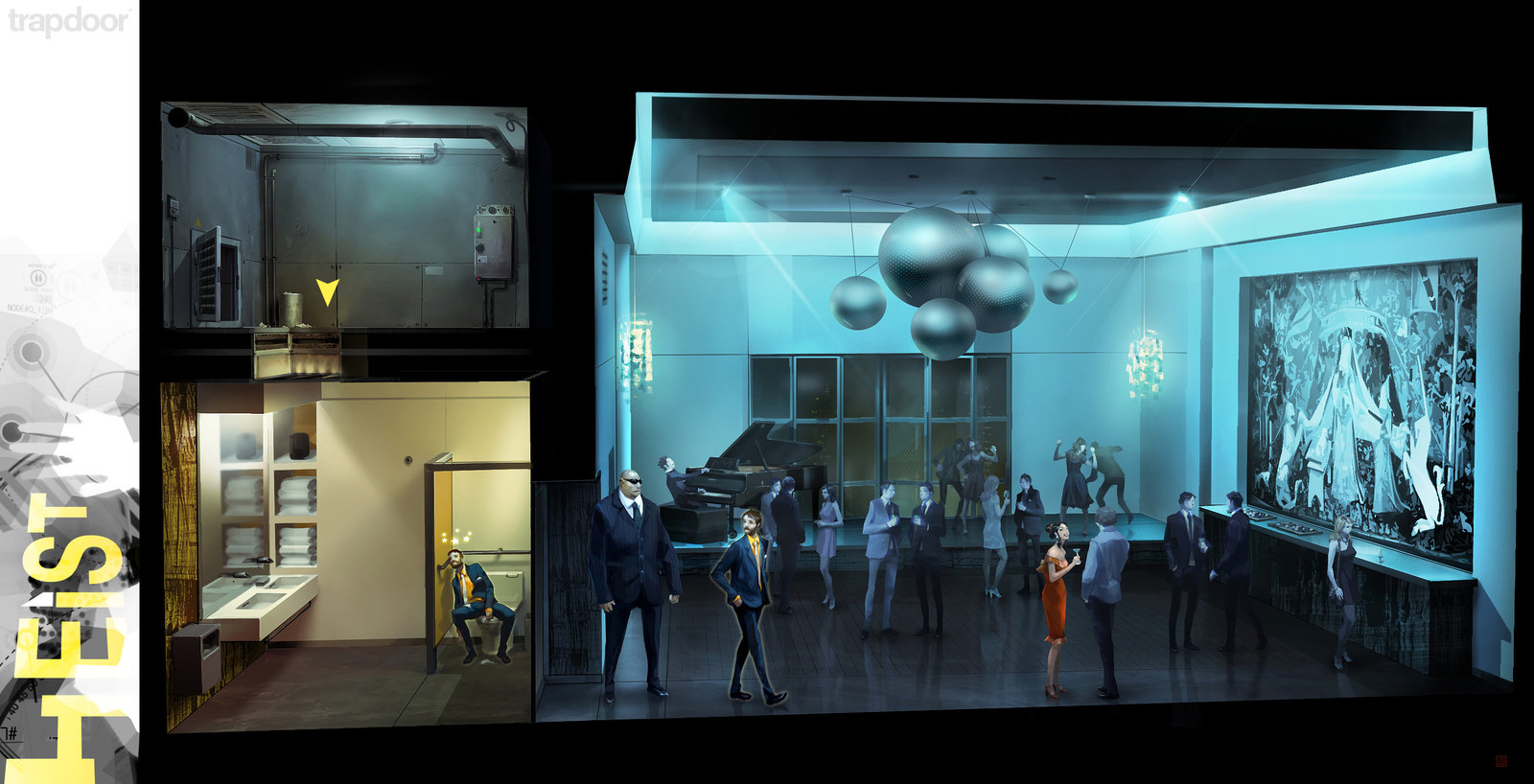
Heist was a stealth action/adventure game being developed by TrapDoor, the independent studio responsible for 2012’s Warp. It was planned as a digital title for Xbox Live Arcade, Playstation Network and PC platforms.
The Indie Stealth Game That Never Was
Work began on the project codenamed Heist in early 2012, “almost immediately after” development on Warp had commenced, according to one former Trapdoor employee. The game was a high concept, ambitious experiment in creating a 2D stealth experience with slick visuals, seamless combat and intelligent, dynamic AI.
The greater narrative planned for Heist still mostly eludes us, but the central premise revolved around the player assuming the role of a nameless thief to infiltrate a number of top security complexes, stealing valuable items of interest and escaping undetected. Enemy forces carried taser weapons capable of downing the player in a single hit, meaning stealth was key.
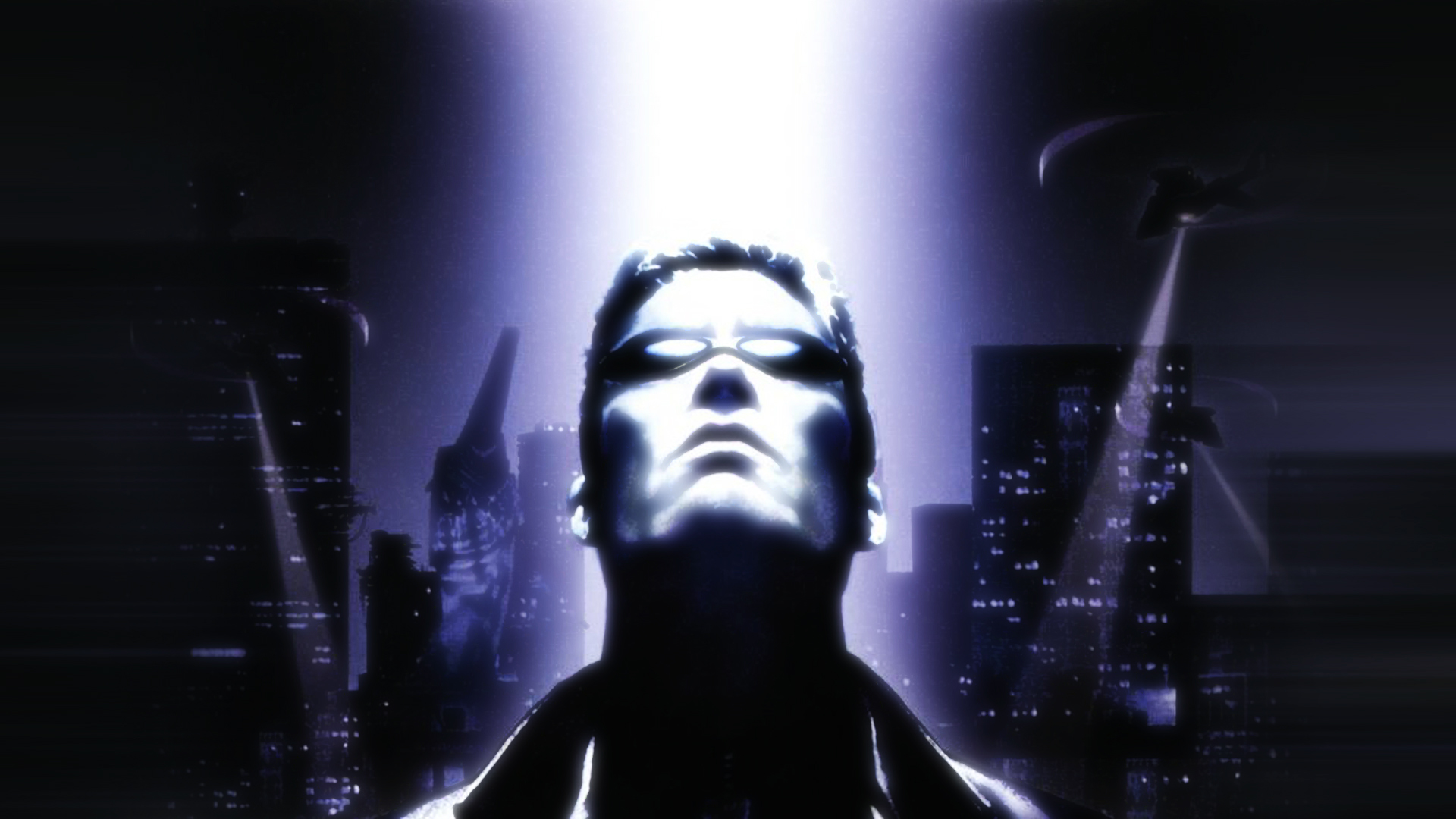
Deus Ex is a highly popular sci-fi first person action RPG set in a dystopian future on Earth. There are currently four games in the series: the first two were developed by Ion Storm, while the third and fourth games were developed by Eidos Montreal. However, it was Ion Storm who worked on two ultimately scrapped, alternative versions of the third installment, which were called Deus Ex: Insurrection and Deus Ex 3 respectively.
Art Min was a programmer on the second game in the series Deus Ex: Invisible War, as soon as development was finished on this he became project lead on Insurrection. There were at least four different story lines set out for this iteration of the game and many of the core concepts, were thought out.
In a initial design document submitted in February 2004 many of these concepts can be seen with the team vision for the game being to create an accessible and believable Deus Ex game with emotional depth and epic choices. It was slated to be released on both the Xbox and PC platform but what is interesting is, it is noted that a PS2 version would be made if an external team could be found to make it, and the “Xbox 2” for launch if green lighting was approved as soon as possible.
At the time of writing this document the team were in pre-production and were ready to go to full production by July 1st, 2004, it was written that they would have the game finished by January 2005. There is a very high concept for the game that is described, the game was to be based in 2027 and that there were five superpowers in the world who would either rise or fall depending on the intelligence that you would give to them.
The game setting was that America was falling into bankcruptcy and the other rising superpowers like China and Russia were trying to utilise this and bankrolling insurgents on U.S. soil. The EU was also trying to bring the U.S. under the jurisdiction of international bodies like the UN. The U.S. is also split in two with patriots who want to keep the U.S. as is and the globalists who want the EU control.
Hammer Away is an unreleased arcade shoot ’em up game for the System-18, which was being developed by Santos in partnership with SEGA in around 1990-1991. It was intended to be launched in ’91, but ultimately never made its way to arcades for unknown reasons.
The title was a military-themed vertical scrolling shoot ’em up in which the player controls a helicopter, facing off against all manner of hostile army forces, like stationary turrets, tanks, battleships and other choppers. There were two modes of attack available: rapid-fire machine guns for ground targets and missiles for air ones, in addition to a powerful bomb attack which instantly wipes the screen of all enemies.
It featured music that is believed to have been created by former Santos composer, Hirofumi Murasaki, who also worked on other SEGA project such as Clockwork Knight and Shinobi III.
A month later, the ROM was extracted and made readily available online. There is a total of five different levels in the build found, including environments such as a railroad and an oceanic section. There is a checkpoint system in place and in the event that you lose a life, you are sent back to one of these; as opposed to resetting the game. Once the five stages are over, the game restarts itself from the opening stage.
As we can read on Rage Wiki, John Carmack stated that he still plans to do a sequel to RAGE after Doom 4 ships:
“After Rage certifies, the heavily-lifting code team will be migrating over to do new systems (for the Doom team). Building up the new team has been challenging to bring that many new people in and bring them up to speed” […] “We’re going to migrate more of the RAGE 2 team people, and then we’re going to roll onto RAGE 2.”
On August 4th, 2013 at Quakecon 2013, RAGE co-founder Tim Willitshas mentioned that RAGE 2 is “Not dead”.
“I’m proud of what we did, I’m proud of the universe that we built. The franchise is not dead. We’re not doing anything immediately with it, but when I designed the universe, I designed it in such a way that it would be easy to step back into. I’m still proud that we did something that was different – it wasn’t like the games that we’ve done in the past.”
Willits also said that Rage’s development fueled innovations in ID Tech 5 that continue to pay off as the engine is adapted for use on next-gen consoles and in other Bethesda products.
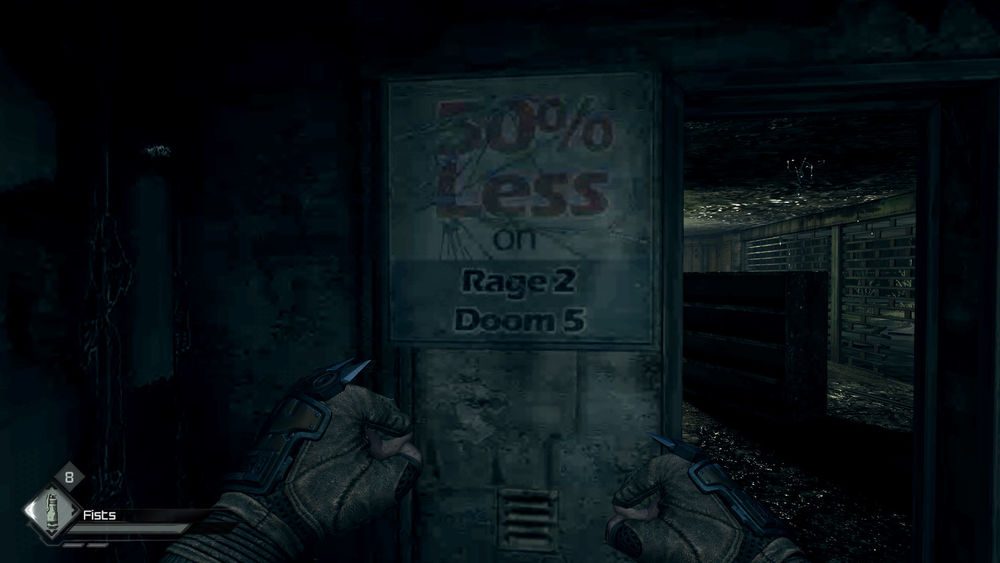
As ID Software are now dedicated to create games for the new consoles (PS4, Xbox One, PCs), probably if / when RAGE 2 will ever be released it would be much different from its PS3 / Xbox 360 version. It’s fun to notice that there is an hidden Rage 2 Easter Egg in the original RAGE. During one of the missions in Dead City Centrall, a poster can be seen with “50% less on Rage 2, Doom 5!” on it.
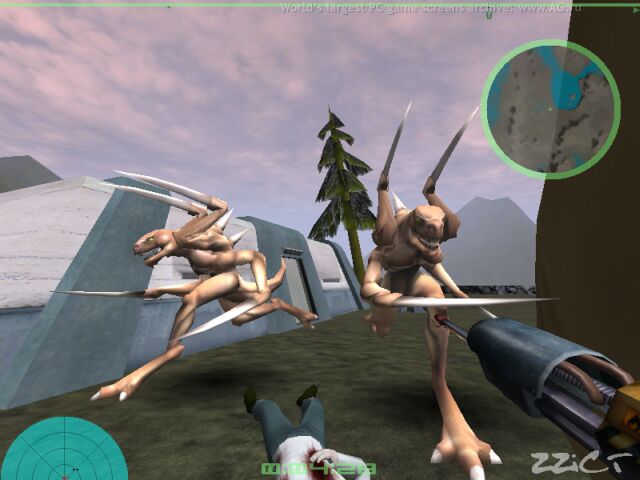
Lost Legion was set to be a squad orientated first person shooter game based in a sci-fi world on a desert planet set in the year 2563, being developed by ZZICT, a studio founded by former Crytek developers that worked on the cancelled ‘Silent Space’ game. It would have marked ZZICT’s first game for PC platforms and was being developed around 2001 onwards.
Lost Legion was intended to concentrate heavily on providing a realistic combat experience. As such, players would die very easily from enemies and would be quickly overwhelmed in close-quarters.
Players would issue commands to a squad under their command, made up of 5-10 troops. This would be handled in a similar way to Unreal Tournaments GUI, using a hot key the player would bring up a list of commands that they could then issue to all or some of their squad. There was to be several different mission objectives for the player such as reconnaissance (photographing the aliens) rescue missions, search and destroy, capturing and holding a position and capturing aliens for study. As the player could quite quickly become overwhelmed this missions were going to rely heavily on stealth and forward planning.
Lost Legion was said to be based on Starship Troopers, Aliens, Rainbow six and Counter Strike, ZZICT also wanted to tap into the current market trends of the time of outdoor scenarios, teamwork based action and a fear inducing atmosphere.
There is very little information on ZZICT and their company website is no longer available. It can be accessed using the Wayback Machine, but there is no more information about the game. This was the developers’ first and last game, as they never developed anything since.
This website uses cookies to improve your experience, by continuing to browse the site you are agreeing to the use of cookies. Find out more about cookies.Hide
Privacy & Cookies Policy
Privacy Overview
This website uses cookies to improve your experience while you navigate through the website. Out of these, the cookies that are categorized as necessary are stored on your browser as they are essential for the working of basic functionalities of the website. We also use third-party cookies that help us analyze and understand how you use this website. These cookies will be stored in your browser only with your consent. You also have the option to opt-out of these cookies. But opting out of some of these cookies may affect your browsing experience.
Necessary cookies are absolutely essential for the website to function properly. This category only includes cookies that ensures basic functionalities and security features of the website. These cookies do not store any personal information.
Any cookies that may not be particularly necessary for the website to function and is used specifically to collect user personal data via analytics, ads, other embedded contents are termed as non-necessary cookies. It is mandatory to procure user consent prior to running these cookies on your website.