Microsoft

Banjo X (Threeie) [Xbox – Cancelled]

Banjo X was to be the third installment to the Banjo Kazooie franchise, slated to be released for the original Xbox. Initially the game was being developed in 2004 by Rare as a straight remake of the first game, with enhanced graphics and gameplay for the new console.

Supposedly, the characters in Banjo X were to break the 4th wall, so to speak, and gradually become aware that the game was a remake of the original Nintendo 64 version.  The farther along the player got in the game, the more things would shift directions from the original Banjo Kazooie.  It would have been at this point when the characters would become aware that they were in a remake of the original game and attempt to alter the plot in a different way. Rare had already experimented with the remake of Conker’s Bad Fur Day, adding a few different situations in the early parts of the game to surprise players who knew the original version, it seemed only right to expand a similar concept in Banjo X.

The world found out about this lost game in late 2011 / early 2012 when Xbox executable files (dated June 2004) for a title named “Banjo X” were found by PtoP Online on an old Xbox development kit. These files were missing many of the characteristic that would have been needed to run the prototype, but someone managed to break them open and find some clues. Unfortunately, the game doesn’t do much when attempting to access it.

Depending on the file launched, a black command screen will pop up, showing files missing and an error message. It was expected that the game wouldn’t work due to these missing assets, but the fact that it boots shows that something was being worked on at some point. One user was able to extract an early 3D model of Mumbo.

Names for new Banjo abilities and items were also discovered in these executable files. Some of these include: Springy Shoes, Rocket Sneakers, Metal Feathers, Aviator Goggles, Invisibility Chocolates, Big Feathers, Bag of Eggs, and Diamond Beak.

During Banjo X’s development, the idea of having Gruntilda and Banjo attempting to accomplish the same task at the same time was attempted. Gregg Mayles wanted Gruntilda to interfere with Banjo during gameplay and make things much harder for the player.  However, the team at Rare thought the idea would have required a very complex AI in order for it to do what they wanted.  This concept was quickly scrapped after this realization.

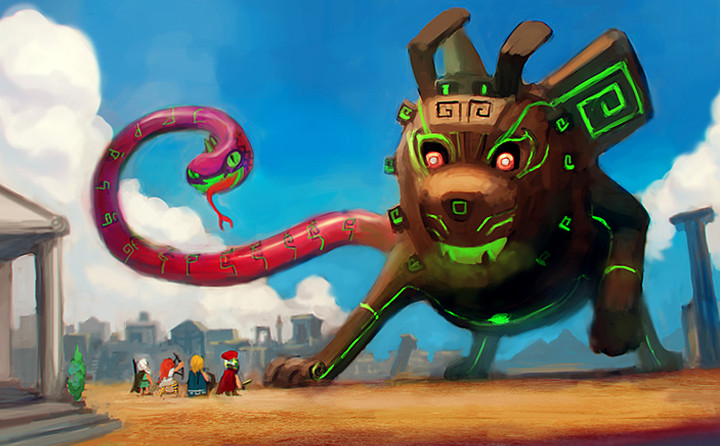
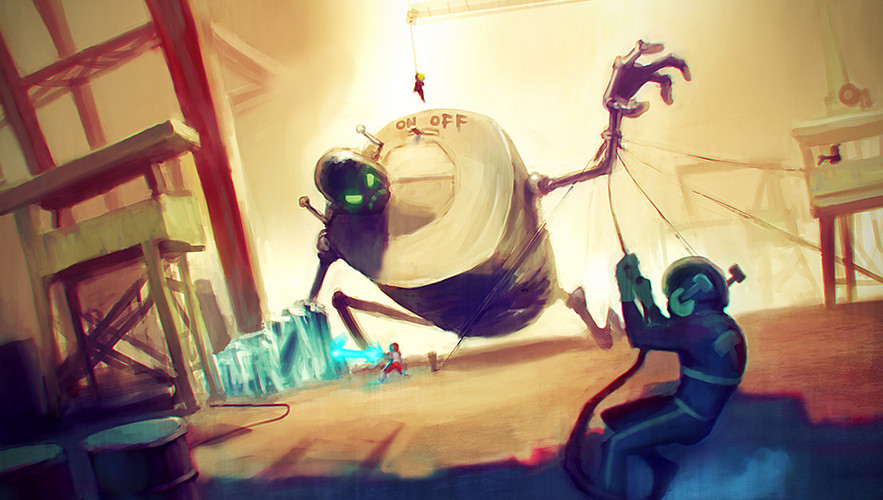
Even though the game supposedly didn’t get very far into development, Steve Mayles tweeted out early character models he made for Banjo X. One was Mr. Termite, and the other was Conga.

Designer Ed Bryan also tweeted out a rendition of a reimagined Mumbo and Tiptup, made around 2004 .

Steve Mayles also confirmed in a twitter response that he remembers seeing a 4 player co-op mode during Banjo X’s development. It was during this time that a separate team at Rare began working on a Mario Kart style game with the Banjo Kazooie IP, under the name “Banjo Kazoomie”.  The major concept that made it stand out was the fact that the player was able to build their own vehicle to use.

Banjo Kazoomie didn’t get very far in development but many of its ideas were later reused in Nuts & Bolts. According to designer Gregg Mayles, “Rare thought this would be a “hard sell,”, and that “players would expect a whole new game”.  It was clear that there were not many reasons to continue working on Banjo X for the original Xbox and the team soon moved their plans to the new Xbox 360.

The new Banjo game would have been a completely different game and Rare began brainstorming ideas of how players traveled in platformers. They wanted to make the trip to the overall objection as fun as possible. This is when they decided to combine the Banjo Kazoomie idea with the worlds for Banjo X.  The team only got as far as the first level and as soon as vehicles became incorporated with the game, Mumbo’s Mountain had to be altered to a much larger size in order to have proper usage of the vehicles.

Unfortunately, the interesting idea of a breaking-the-4th-wall remake with multiplayer coop for Banjo Kazooie never saw the light of day. But in the end, Rare was still able to release a third entry in the Banjo series with Nuts & Bolts, even if feedback from the fans was mixed.

Article by Karl Gutierrez & monokoma

Images:


Farnation (Sega) [Dreamcast, Xbox – Cancelled]

Farnation (sometime spelled Far Nation) is a cancelled online RPG that was going to be published by Sega, initially for their Dreamcast and later for Xbox. The game was somehow announced in mid 2000, when its title was found in a document released by Sega Enterprises discussing the company’s overall business strategy.

Some more details about the game were published in December 2000 by Gamespot:

“With its upcoming massively multiplayer network RPG, Farnation, Sega plans to take the first step in introducing the concept of persistent online worlds to the console market. Farnation gives a nod to such successful PC games as Ultima Online and – more recently – Everquest by letting players interact with other human players across a large universe.

Farnation contains five different terrains, and in these areas, you will have the ability to cooperate with other human players in building towns – complete with casinos, libraries, restaurants, hospitals, banks, and residences. Of course, you aren’t limited to these towns. You can build stations that house airships, boats, and stagecoaches so that you can travel around the entire Farnation world to advance the game’s story arcs and events. In fact, there are several special events that occur throughout the game for plot advancement and, according to Sega, to make the game easily navigable for beginning players.

However, Farnation’s emphasis is on human interaction. Communicating through the use of the game’s chat function, you can buy, sell, and trade items with others. You can also form parties and head out in search of battles and adventure. In total, the game’s play modes include party battles, simultaneous online battles, weapon and item creator, town development, and story elements.

Aside from its gameplay features, Farnation looks to be one of the most visually impressive massively multiplayer online RPGs on the market. After briefly seeing the game in action, we came away thoroughly impressed with the amount of detail in the characters and environments, particularly in the towns. In one scene, there were at least a dozen generously modeled polygonal characters onscreen at once, and the environments were cluttered with several building structures and residences. Graphically, Farnation is favorably comparable to the currently available online RPGs for the PC platform.”

While the Gamespot Staff was able to take a look at the game, unfortunately Sega never officially released any image or footage to the public. From what we can read in this preview, it sounds the game would have been an original mix between Sim City and a traditional MMORPG.

In February 2001 on Dreamcast Magazine Issue 19 Farnation was named again in a list of future Dreamcast games. On March 2001 Sega discontinued the Dreamcast, restructuring itself as a third-party publisher. Many Sega games in development were then moved to Xbox, GameCube and Playstation 2. In May 2001, Gamespot kinda confirmed that Farnation was then in development for Microsoft’s Xbox.

Still Sega did not shown anything from the game, not even officially announce its release. After a while Farnation vanished forever and the only proof we have of its existence is a prototype seen at the Sega of America office, in a photo they published on Flicker in July 2008.

farnation dreamcast sega of america prototype

Between many other Dreamcast games, released and unreleased, we can see a jewel case labeled “Farnation, PT-ROM 1/12/01”. This could have been an updated version of demo that Gamespot seen in December 2000.

We can only hope someone at Sega of America saved this Farnation prototype, to release it online in the future. If you know someone who worked at Sega in 2000 / 2001 and may have more details about Farnation, please let us know! 

Beowulf: Viking Warrior [Cancelled – PC, PS3, Xbox 360]

Beowulf: Viking Warrior is a cancelled video game based on the Old English epic poem, in development in 2006 for PC (and possibly Playstation 3 and Xbox 360) by German team 4HEAD Studios (now known as Cranberry Production) before the 2007 animated movie directed by Robert Zemeckis and before Ubisoft’s own Beowulf 2007 tie-in game.

As we can read in its original press-release:

“BEOWULF is a third person action adventure with role-playing elements. Explore the northlands, fight enemies both natural and supernatural, and prove your worth among the heroes of old.

BEOWULF is based on a nordic saga that dates back to the 6th century AD. The game captures the adventure spirit of the early Viking Age, creating a unique visual interpretation of the world of norse legends with state-of-the-art 3D graphics.

BEOWULF is very combat-driven, and features a unique and innovative melee fighting system. It is the first game to bring an authentic simulation of medieval sword-fencing to the computer game medium. The advanced physics simulation system provides a high level of realism and dynamic gameplay.

Features that make the game stand out:

* combat system that faithfully emulates medieval sword-fencing

* vivid characters and beautiful 3D environments

* cutting-edge 3D technology with striking visual effects

* integrated realtime physics for action-packed gameplay

* well-known name and scenario (especially among the Tolkien fan community).”

Images shared by 4HEAD Studios show a few concept art and early renders depicting the most iconic characters and places of the original Beowulf legend, such as the protagonist itself, the monster Grendl, his mother, the Dragon, the Mead Hall. However, no actual gameplay is seen so we can assume the team was still in early development.

Gamespot used to have two teaser trailers of the game, but they are currently unavailable. Beowulf’s tie-in game released by Ubisoft in 2007 was a very different product, since it relied on the latest movie version of the Beowulf character, instead the original poem. Gameplay also deviated from 4HEAD’s concept with RPG elements, and Ubisoft’s game was more an hack ‘n slash similar to God of War.

As we can read on IGN, after Ubisoft announced their game based on the movie, 4HEAD was not able to find a publisher interested in their own version, so it had to be cancelled:

“So today 4Head (now part of DTP Entertainment) announced that its Beowulf project is no more. The company sold its trademarks, web domains and other assets related to the game to Paramount.

“With the announcement of Ubisoft’s offical game based on the movie and the conceivable competitive situation, we were seeing publishers unwilling to support our game,” said the game’s Executive Producer, Gustaf Stechmann. “We thus lacked the resources needed to drive the project’s development forward. Luckily, we had the older rights to the use of the name. The buy-out deal with Paramount was therefore the logical exit strategy.”

Thanks to AkitoKuno for the contribution!

Images: 

Serengeti [Xbox, PC – Cancelled]

Serengeti is a cancelled adventure / simulation game originally in development for PC and Xbox in 2001 by Masa Group, a small French company focused on AI-based modeling & simulation software for defense, public safety and games-related markets.

This was an ambitious game that would have been played somehow like Afrika for Playstation 3, but conceived 7 years before Rhino Studios’ own project. You would play as a photographer and wildlife specialist, working in an African natural reserve set in the plains of Serengeti.

Serengeti was about exploring the African savanna, discovering its wildlife and preserving it from dangers (such as illegal poachers). The animal simulation was groundbreaking for its time, using an innovative AI engine that would fully simulate a complete ecosystem, with animals having up to 7 “motivations” (hunger, thirst, territory, mating, etc.). You could sneak on a cheetah and see it start chasing a gazelle, then resting and heading back to the shade. Every time the animals would move and react in a different way, following their “motivations” and creating a living environment to explore.

After a while Masa Group moved its gaming development team into a subsidiary named “Oiko Entertainment”, to expand their video game projects while the main company would continue working on simulation softwares.

More details about Serengeti were found in an old press-release by NatFX, a dynamic 3D plant modeling software that would have been used by the team to generate the game’s savanna with realistic african trees and plants:

“Serengeti’s numerous missions intertwine the player with the life of the park, from capturing sick animals, to recuperating the park’  tourism industry, to tracking rare animals and neutralizing poachers, mercenaries and even kidnappers.

Serengeti’s gameplay is essentially founded on the near-perfect representation of the natural world. The ability to hide behind bushes, tall grass, to take cover in groves and behind tall trees demonstrates the vital importance and direct implication vegetation plays in Serengeti. The vegetation is more than just scenery,  it’s really something that serves a purpose in terms of gameplay.

Set to release in the beginning of 2004 on PC and Xbox, Serengeti will certainly be a first of its kind. Set in Africa, it is an opportunity to use an original universe, different from the usual ultra-realistic war games  which typically occur in similar settings.”

Serengeti’s gameplay and AI-simulated wildlife was way ahead of its time on many aspects, and today it would probably be recognized for its interesting mechanics. Unfortunately in the early ‘00s it was hard to find a publisher for the game.

In the end Serengeti only reached an alpha stage before the team had to stop working on it. It seems Masa Group later closed Oiko Entertainment and Serengeti’s concept could have been sold to Atari / Infogrames, but nothing ever come out of it. The only released game by Masa / Oiko was Conflict Zone, a war-themed RTS published by Ubisoft for Dreamcast, PlayStation 2, and PC.

Images: 

Brooklyn Stories [Cancelled – Xbox 360, PS3, PC]

Brooklyn Stories is a cancelled adventure game that was in development in 2008 / 2009 by French team Lexis Numérique, planned to be released on Playstation 3, Xbox 360 and PC. The project was quite ambitious and original for its time, mixing interactive storytelling, several playable characters, multiple narrative paths and some kind of “time travel” mechanic in which you could go forth and back in time to modify the fate of its protagonists.

Brooklyn Stories would have been played somehow like a mix between The Sims, Disgaea Infinite, Shadow of Memories and games by Quantic Dream (Omikron, Heavy Rain, Detroit: Become Human) and Telltale (The Walking Dead, Batman: The Telltale Series). Players would have been able to play as many different characters living in Brooklyn in the same townhouse building, following an intricate storyline spanning from the 1930s to the ‘00s.

Each character had their own life and problems to resolve. You would have been able to observe them living in their apartment and listen to their thoughts or dialogues with other characters, to help them or interfere with their actions by choosing how they would react or which item to use in different situations. Each choice would then change the course of the following events and each event would affect other characters and their related events, until reaching one of the many different endings. You could always go back in time to make different choices and see different reactions to each different action.

The game was divided into chapters set in several years, but always following the lives of the inhabitants of the same townhouse building. Each chapter had many endings which would then affect what would happen in the following ones. It was quite the intricate and epic storyline, touching the daily lives of normal people but also political, social and criminal intrigues. You could interact with the characters living in Brooklyn Stories to trigger funny and comical skits but also to save their life from violent murders.

Unfortunately after 2 years of development Brooklyn Stories was canned by its publisher, leaving Lexis Numérique with an incomplete project and without funds to continue working on it. In the following years the team developed less ambitious games such as Tales of Elastic Boy (2010, WiiWare) and  Amy (2011, Xbox 360, PlayStation 3, PC), but with low sales and without publishers backing up other major projects they had to close down in 2014.

Only a few images and a short trailer are preserved below to remember the existence of this promising, lost game.

Video:

Images: