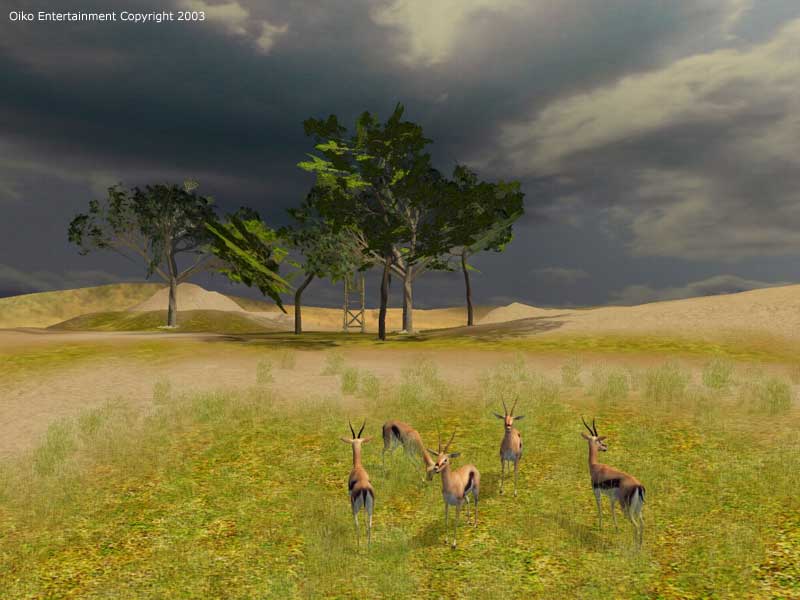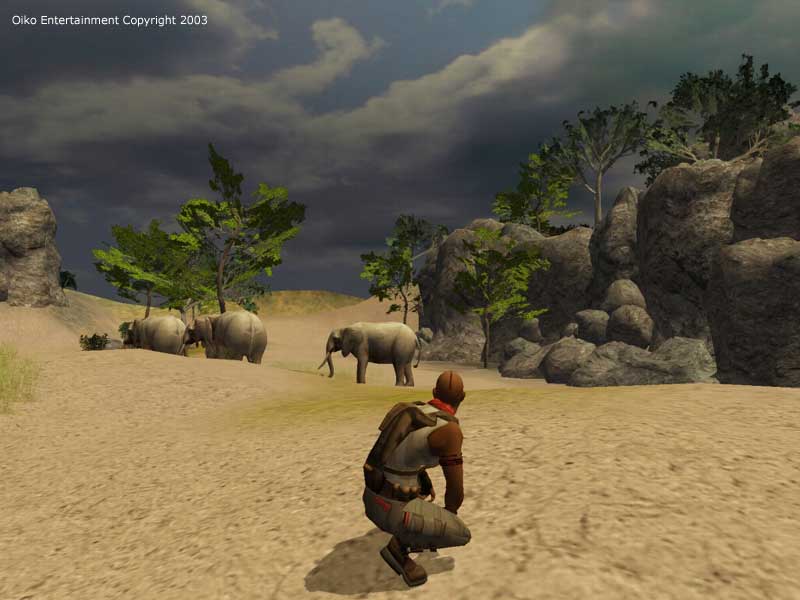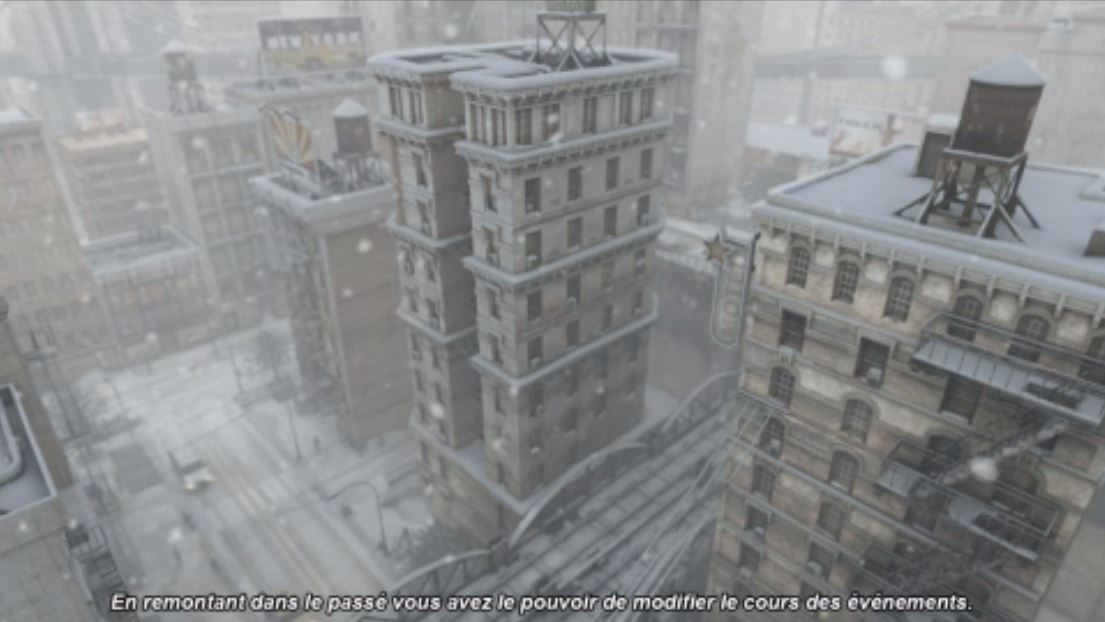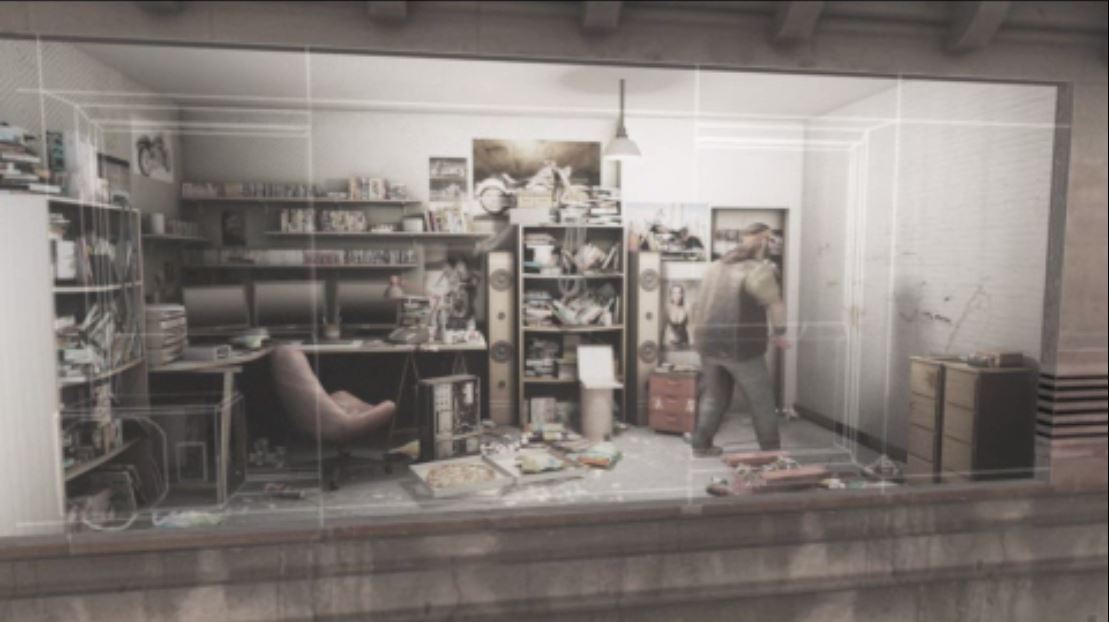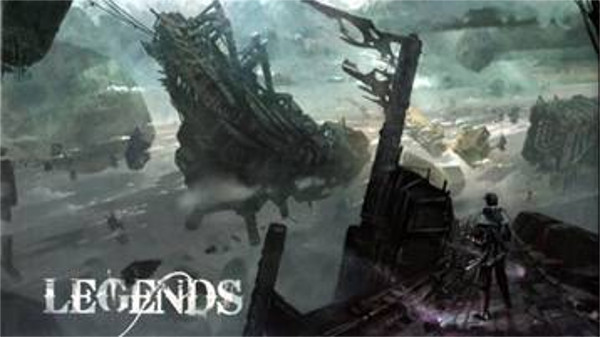
Project X is a cancelled third person action game for Playstation 3 and Xbox 360, which was in development around 2005 / 2007 by Z-Axis studio (later known as Underground Development) for Activision. The game was never officially announced by the company and it’s just one of many more unreleased games (such as Call of Duty: Devil’s Brigade) the team was working on, before Activision decided to close them down in 2010.
Only a few screenshots and a short video remain to remember the existence of this lost game. By looking at these, we can assume the game would have been somehow similar to other action games with super-powers like Prototype and Infamous. The main protagonist was able to morph itself into different forms of elemental energy, for example a body of ice or fire. By switching elements it would have been able to easily kill different kinds of enemies of the opposite element.
It seems only an early prototype was developed before Activision cancelled the project, maybe to switch the team to work on the PS3 version of Enemy Territory: Quake Wars.
Dark Matter: The Baryon Project is a cancelled sci-fi shooter RPG that was in development by Pixelcage, planned to be released for PC, Xbox 360 and PS3. The project was quite ambitious for a rather small and obscure team, promising to offer both on-foot first-person shooting and third person spacecraft combat.
The development of the game started around summer 2003. The game was planned to be released in 2007.
In their old – now closed – website, we can read they wanted to create a vast universe in which to freely fly around, inspired by such games as “TIE-Fighter” and “Freespace”. You would fight in space against huge spacecrafts planned to be up to 100 km (62 miles) in size – something that would be considered a massive open-world even by today’s standards (SKYRIM’s world is about 5 km wide), gigantic spaceships-worlds in which you could also break-in to continue attacking your enemies on foot.
“When playing such games in the past, I always wondered how it would be to just ram one of that bigger vessels and just “clear the bridge manually”. With today’s hardware capabilities, we now do a swing on it. – Marco Sobol, former Pixelcage developer”
If this was not enough to hype up the project, they also wrote about “graphic details up to a grade of millimeters!”, “experience speeds of up to 3000 km/h!”, “have a million polygons on your screen – in realtime!” and “can you handle hundreds of enemies?”. For sure the team had big dreams for their first project.
For this objective the studio created it’s own ambitious 3D engine, during 3 years of development. Their expectation for the game’s graphic was quite high.
Thanks to an old interview with Pixelcage by Gengamers, we can read that work for the game began in 2003 with a core team of only 7 people, with plans to expand the studio to more than 40 people when they would finally find a publisher.
The game also didn’t want to limit itself to a “pure space shooter”, planning more ambitious features such as directing a vessel and fighting against other space ships. Marco Sobol (former developer of the game), described Dark Matter’s gameplay as follows:
“Dark Matter is a first person shooter/ space shooter with some RPG elements, such as an inventory and improving skills, but without the flaws of pondering about tables and character sheets. It will feel much like a common FPS when it comes to game controls and speed, but comes with hours of dynamic scripted scenes, a non-linear storyline and state-of-the-art sound effects and music.”
Not only gameplay and huge environments would have been quite ambitious for its time, Dark Matter: The Baryon Project was also planned to have a open-ended storyline with different endings. Pixelcage wanted to have several playable characters appearing in the game and time travelling would have played an important role, featuring morphing aliens and fierce “time warriors”.
Its settings were heavily inspired by such movies and agems as The Matrix, Ghost in the Shell, TIE-Fighter and Freespace. Aliens, humanoids and shape-shifters would have been some of many characters and enemies players had to face. Plenty of NPC‘s would have behaved depending on players’ action, whether being friendly or evil towards them.
If such an immense game like this was not complex enough to develop, the team also wanted to add online multiplayer:
“We will put much efforts in the multiplayer part. There will be several deathmatch and teamplay modes, we even plan to include a mode in which you can play the single player campaign together with your friends. This is generally possible because there is more than one prime character in the game.”
They also wanted to publish a playable demo but we don’t know if they ever got something playable to release to the public.
It’s easy to see how Pixelcage were a passionate team with many ambitious ideas for their project, but unfortunately it seems they never found a publisher interested in funding it. In the end they had to abandon Dark Matter: The Baryon Project to work on other, simpler games such as Switchfire (published in 2006) and Jekyll & Hyde (2010), before to close down the studio.
If you know someone who worked on this game and could help us to preserve more screens, videos and details, please let us know!
HiTech is a cancelled action / stealth game that was planned for Playstation 3, Xbox 360 and PC in 2006 / 2007 by Illusion Softworks (now known as 2K Czech), the team mostly known for the Hidden & Dangerous and Mafia series. The project was still in early development and without a playable prototype when it was canned. Only a concept video was created to pitch the game to publishers, but unfortunately they did not find any company interested and had to cancel it. Instead, they continued working on Mafia II, later released in 2010.
The project was lead by Daniel Vávra, game designer who worked at Illusion Softworks since 1998 on Hidden and Dangerous and Mafia I & II. Vávra shown the HiTech concept footage in 2007 during his presentation titled “How to make a game” and the video was later uploaded on Youtube. From what we can see in this pitch video, HiTech’s gameplay could have been similar to other action / stealth games such as Metal Gear Solid or Splinter Cell, but in a sci-fi setting.
As we can read in the video intro:
“Year 2025. A group of terrorists sabotaged military robot tests inside Adler Group production facility. The robots went out of control and slaughtered AG staff. Terrorists provided media with video footage of this massacre. The facility has been evacuated and the nemesis team has been called in. The objective is to regain control and cover up the incident.”
D4: Dark Dreams Don’t Die – Season 1 – was an awesomely weird adventure game by Access Games and Swery65, released after their cult – Twin Peaks inspired – Deadly Premonition. While the game was announced by Microsoft at E3 20013 as a “kinect waggle game for hardcore gamers” in the end D4 can also be played with a traditional controller and the first episode was also released on Steam in June 2015.
Unfortunately D4 was meant to be divided into different “seasons” (with a few episodes each), as a TV series. Only the first two episodes (Season 1) were ever released, while D4: Season 2 was sadly cancelled when Swery65 had to take a break from Access Gamesin November 2015 to recover from a serious illness and then definitely left the company for internal reasons in October 2016.
We should also consider that D4 did not sold much on Xbox One (and neither on PC) and that’s probably the major reason why Season 2 / Episode 3 was canned. For sure Access Games and Microsoft would have developed other episodes without Swery if the first one would have been a huge success.
Season 1 of D4 is still an original – short – game full of strange characters and it’s worth playing if you love weird games, but it ends with a huge cliffhanger that will probably never be resolved. Swery and Access Games had a few months to work on the sequel, but unfortunately we don’t know how much was ever done on it. Only a single scene of D4: Season 2 was ever shown, thanks to an interview with Swery by Gamasutra:
“D4 sells well on PC, can we expect future episodes?
Swery: It’ll be a little longer until I can start talking about new episodes, but I’m doing my best. The next season will be even better than you’re all expecting, so please keep cheering me on.
…no?
…You can’t accept that answer?
…Uuuh…
Okay, then. Just this once, just for you, I’ll show you a single picture.”
Horror films directorJoerg Buttgereit, who worked on such movies as Nekromantik and Schramm, was the one who created Game of Death’s concept and characters, a psychological horror game with an original gameplay mechanic.
The game’s protagonist is a young man sent to a hospital after a lethal car accident. While doctors try to save him, he dreams of a strange world in which you have to defeat evil serial killers to survive. Each homicidal maniac must be killed by their own method – choked, cut to pieces with a chainsaw, shot with a shotgun, crucified and so on.
You had to obtain the right weapons able to kill each boss by taking them from the less powerful monsters found in each level. It was necessary to learn and exploit the bosses weaknesses to survive, otherwise it would have been impossible to beat them. Players would have been able to read through the case files for those serial killers, to find clues about their modus operandi and weakness.
At the same time players should try to not became a murderer themselves, by killing bosses only during special circumstances, for example for self-defense, through the release of their kidnapped victims and so on. This would permit to eliminate the serial killers without losing your “innocence”, otherwise you could also lose your life at the end of the game.
More than 40 maniac bosses were planned for the game, each on with their own level accessible from a HUB zone, a giant bone cathedral.
Thanks to an interview with Burns Entertainment by Golem.de (in german, translated with Google Translate) we can learn some more details about this lost game:
Golem.de: How did the cooperation between BURNS and Jörg Buttgereit come about?
Winkler: I thought you’d have to do a horror game, in which you would like to go to bed after a gamble, but not in the basement. But this is hardly feasible as a pure game developer. Since you have all sorts of experiences, but none in terms of horror dramaturgy, effects and suspense. That’s why I contacted Jörg, who in Germany is something like the grandmaster of the horror and trash movie. I knew his necromancy films and the reviews he published in the Berlin press about movies. He has a wonderfully laconic writing style, I immediately liked that. Jörg found the idea exciting to play a game and immediately pledged.
Golem.de: Where do you see the most serious differences between Game Of Death and current action titles?
Winkler: Most action games are in fictitious worlds. The player fights against fantasy monsters or anonymous mercenaries. In Game Of Death, however, the player encounters negative characters in contemporary history who are firmly rooted in the memory of their nations. Many Germans know Fritz Haarmann, and many Americans know who Charles Manson or Jeffrey Dahmer is. Dealing with the abysses of the human psyche is exciting for most people, whether they admit it publicly or prefer to watch “The Silence of the Lambs” at home alone, and we are openly dealing with that. Another difference is the awareness of physical decay. The hero is not a superman. If he is injured, the player can actually see the consequences of this injury. The hero loses physical substance with each injury until he becomes disabled as a skeleton. Of course, he can regenerate his energy and his physical substance during the game in various ways.
Golem.de: Do you think that Game of Death is at risk of being indexed?
Winkler: No. The game definitely will not be a splatter orgy and will not provide any instructions to finally get rid of your unloved neighbor, who has always annoyed you. It may of course be that someone alone calls for the keyword “serial killer” after indexing. This happened only recently before the cinema start of “Hannibal”, and that will happen again and again. But we aim for a USK release from 16 years. This is far from an indexing game.
Golem.de: Where do you set the limits with regard to the biographies of serial killers? What will you learn about the characters in the game, what will you be able to re-enact?
Winkler: In the game every mass murderer and serial killer dies according to the method with which he has killed his victims. As a result, the player becomes a hero and avenger on behalf of the defenseless victims. In order to fulfill this role, the player learns the most important information about the killer’s deeds and psyche in a “Serial Killers Dictionary” (SDK), which is constantly available as an inventory component. Not every detail of the life of mentally disturbed child molesters is spread in it. The SDK limits itself to key data relevant to the game.
The historically accurate course of the murders is not reconstructed in the game. This is not necessary for the gameplay. I also do not think anyone is really interested in slicing up the guts of a highly pregnant woman like the Manson gang did with Sharon Tate. That’s where we set very clear limits.
As far as we know, Burns Games were not able to find a publisher for Game of Death, maybe because of its settings. In the end the game was cancelled and the company vanished forever after a few years. Game of Death’s soundtrack would have been composed by Rod Army.
This website uses cookies to improve your experience, by continuing to browse the site you are agreeing to the use of cookies. Find out more about cookies.Hide
Privacy & Cookies Policy
Privacy Overview
This website uses cookies to improve your experience while you navigate through the website. Out of these, the cookies that are categorized as necessary are stored on your browser as they are essential for the working of basic functionalities of the website. We also use third-party cookies that help us analyze and understand how you use this website. These cookies will be stored in your browser only with your consent. You also have the option to opt-out of these cookies. But opting out of some of these cookies may affect your browsing experience.
Necessary cookies are absolutely essential for the website to function properly. This category only includes cookies that ensures basic functionalities and security features of the website. These cookies do not store any personal information.
Any cookies that may not be particularly necessary for the website to function and is used specifically to collect user personal data via analytics, ads, other embedded contents are termed as non-necessary cookies. It is mandatory to procure user consent prior to running these cookies on your website.