Ready 2 Rumble Boxing was a fighting game developed by Midway San Diego and published in 1999 initially for the Dreamcast. In 1998 the same team conceived another similar 3D fighting game, set in old-school sci-fi / fantasy settings.
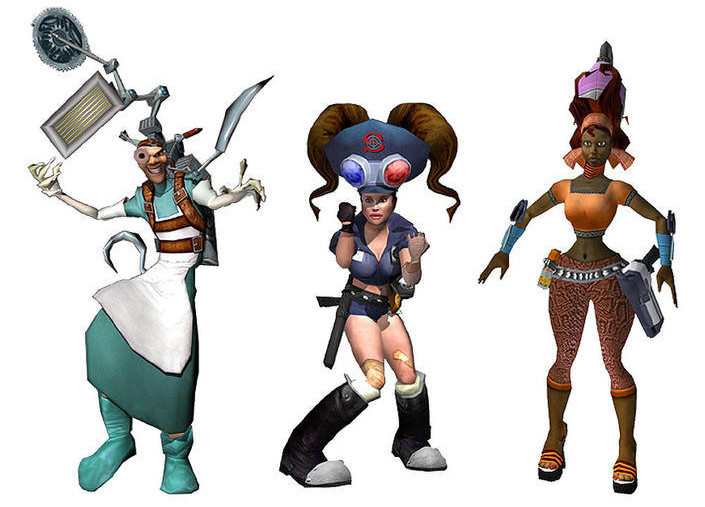
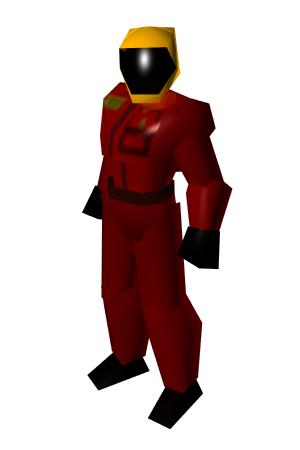
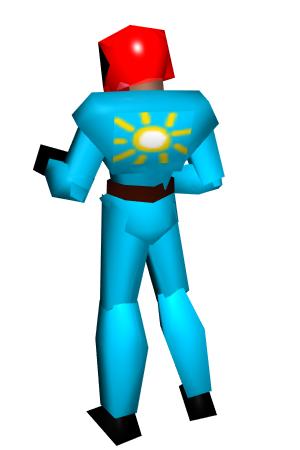
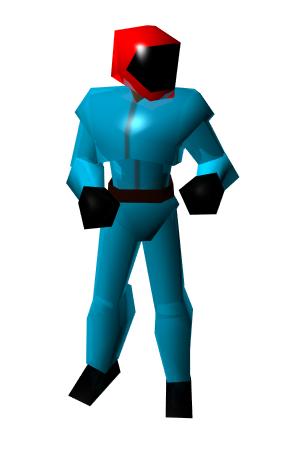
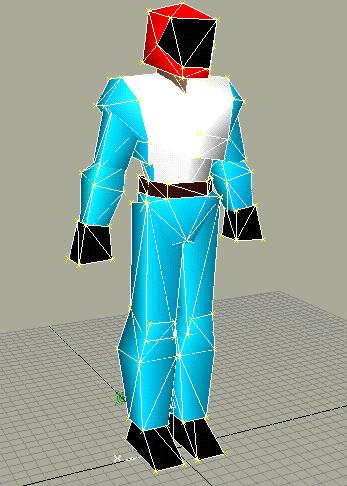
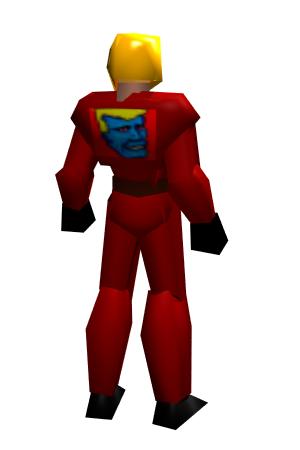
This cancelled project was titled “X-Fighters” and would have featured such characters as a mad scientist, space-cop girls and warriors from alien planets. Only a few renders of these characters are saved in this page, to preserve the existence of this lost game.
By looking at these models and by reading its title, we can speculate X-Fighters would have been an arcade fighting game, with over-the-top battles between weird characters. Imagine a mix between Power Stone and Star Gladiator. Unfortunately the game was never announced by Midway and there are basically no more details about it.
Midway was one of the most prolific developers on the Dreamcast, with such arcade classics as NBA Showtime, Hydro Thunder, Gauntlet Legends and San Francisco Rush 2049. We can assume X-Fighters would have been another fun title to play with friends on our beloved Dreamcast. In the end the project was never fully developed after their initial pitch. Midway decided to make the team work on a different kind of fighting game, and the result was Ready to Rumble.
If you know someone who worked on this lost project, please let us know!
In the ‘90s Rare was one of the favorite developers for Nintendo fans, publishing such cult classic titles as Donkey Kong Country, Battletoads, GoldenEye 007 and Banjo-Kazooie. When the company was acquired by Microsoft in 2002 many things changed. In 2010 Scott Henson became the new Rare studio manager and for a few of years they mostly worked on Kinect Sports, Kinect pitches and Xbox Live Avatars for Xbox 360. Unfortunately many of their original ideas for new gamesnever seen the light of day.
“The new studio will be structured in a different way to most, however, and work more along the film production model in which teams scale up and down regularly according to the needs of projects being created.
Among the duties to be undertaken in Fazeley will be testing for Natal products – something which requires more space than traditional Xbox 360 games – while the decision is also part of a bid to stem the relentless increase of development costs over the years.
The process, which is similar in some ways to outsourcing, is labelled “insourcing” by Betteridge, and he cites past successes such as Xbox Live Avatars and the Sky link-up design as projects that were completed in this way.”
“They set up an off-shoot studio in Fazeley. It was where the graphics went. Quite a few people didn’t want to make the move because it’s the centre of Birmingham as opposed to Twycross, which is a bit of a wrench. But I thought, I’m all right, I’ll go for that. So I did that for nearly a year. And I went back to doing graphics again. “
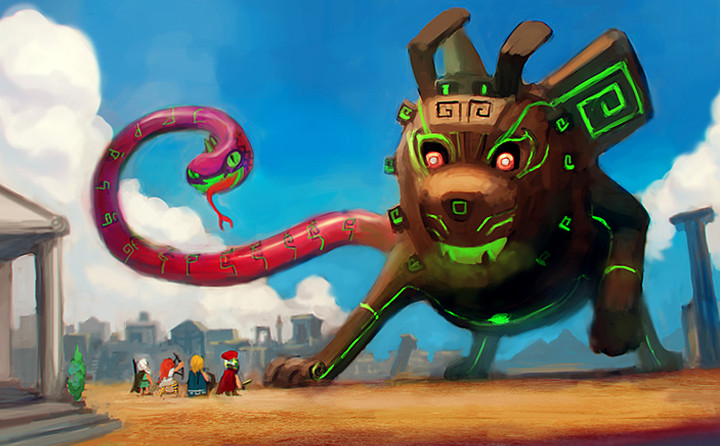
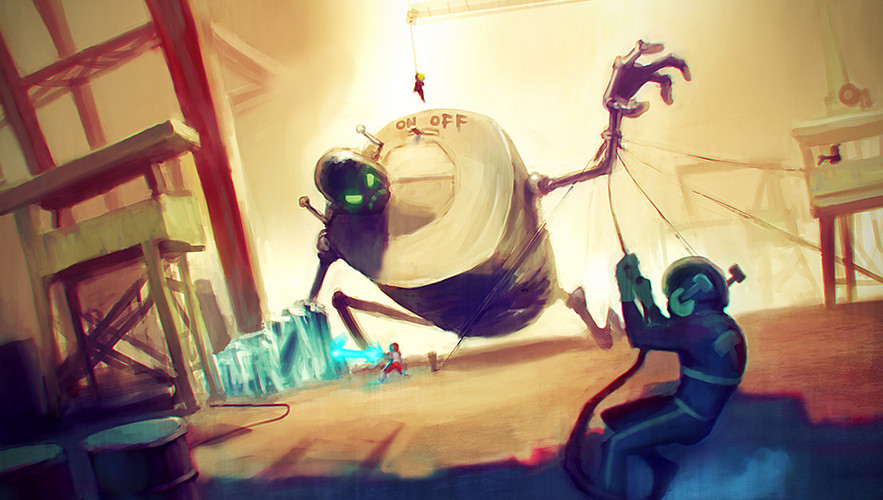
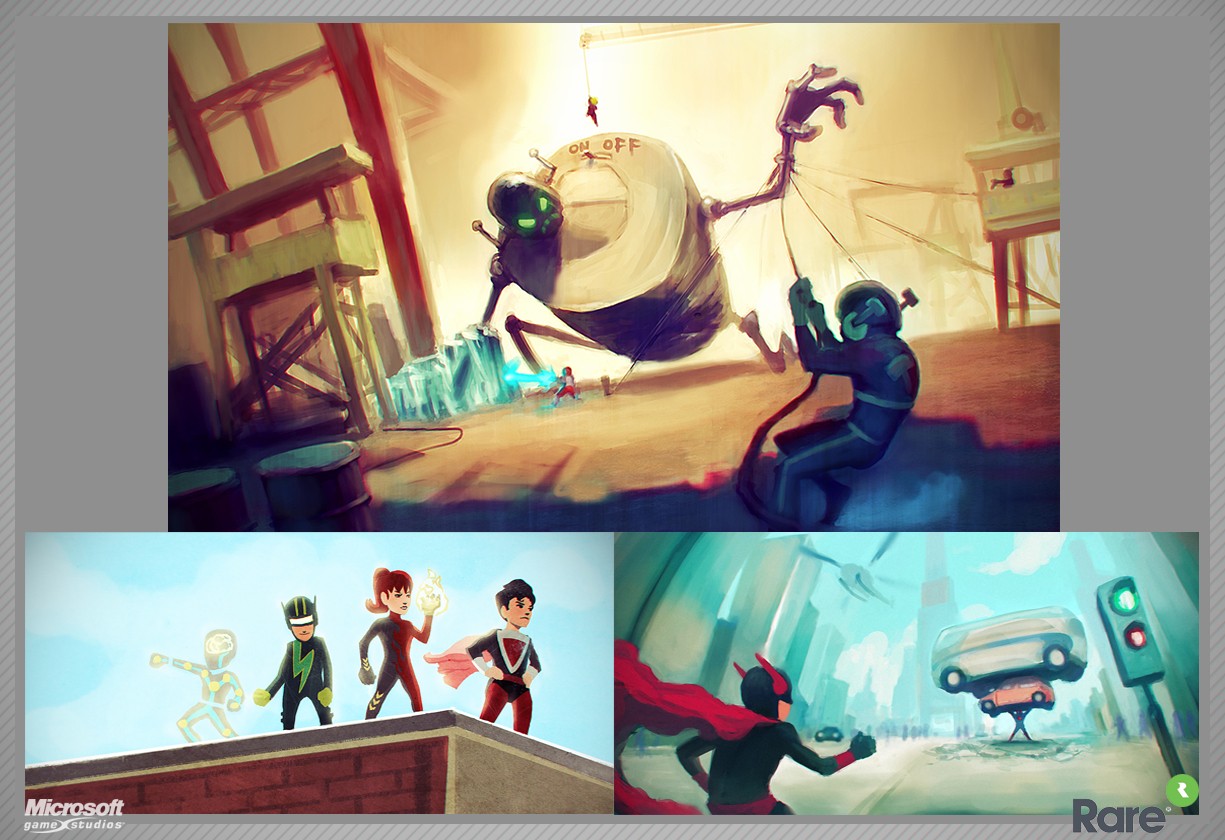
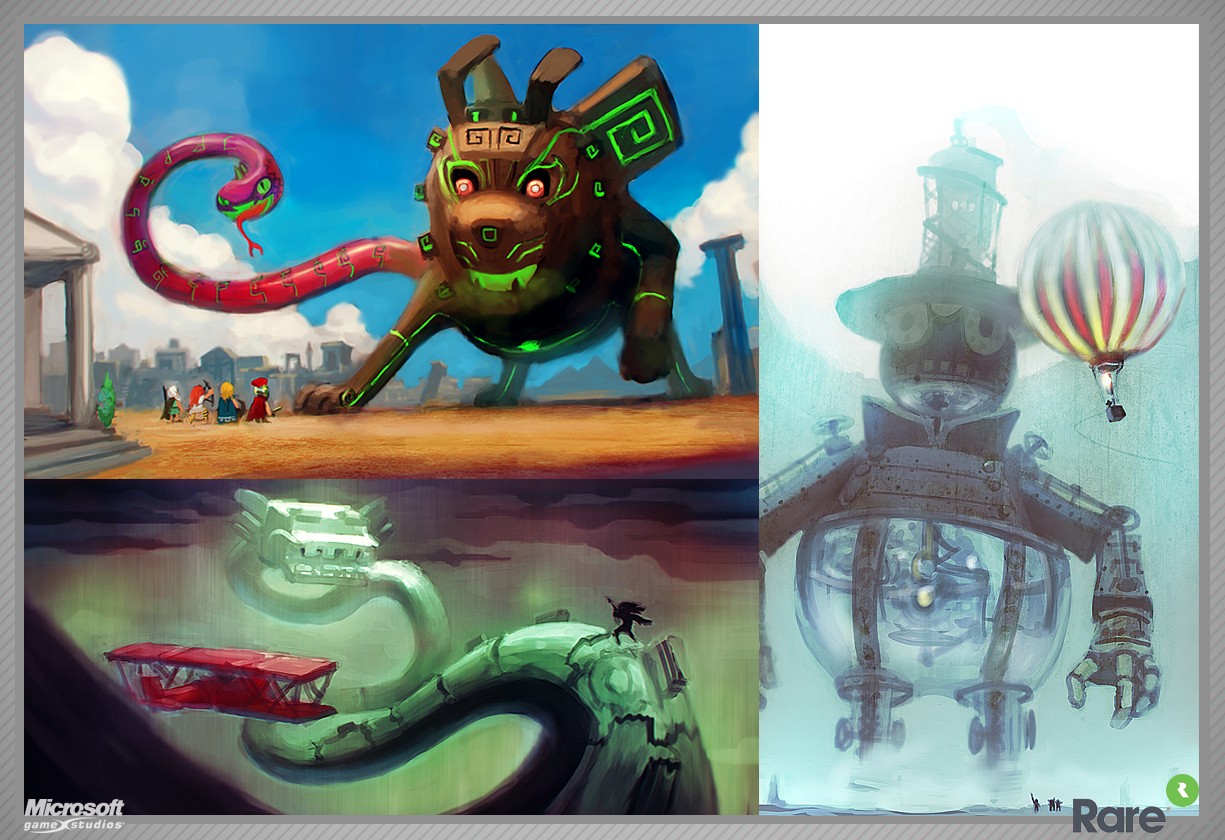
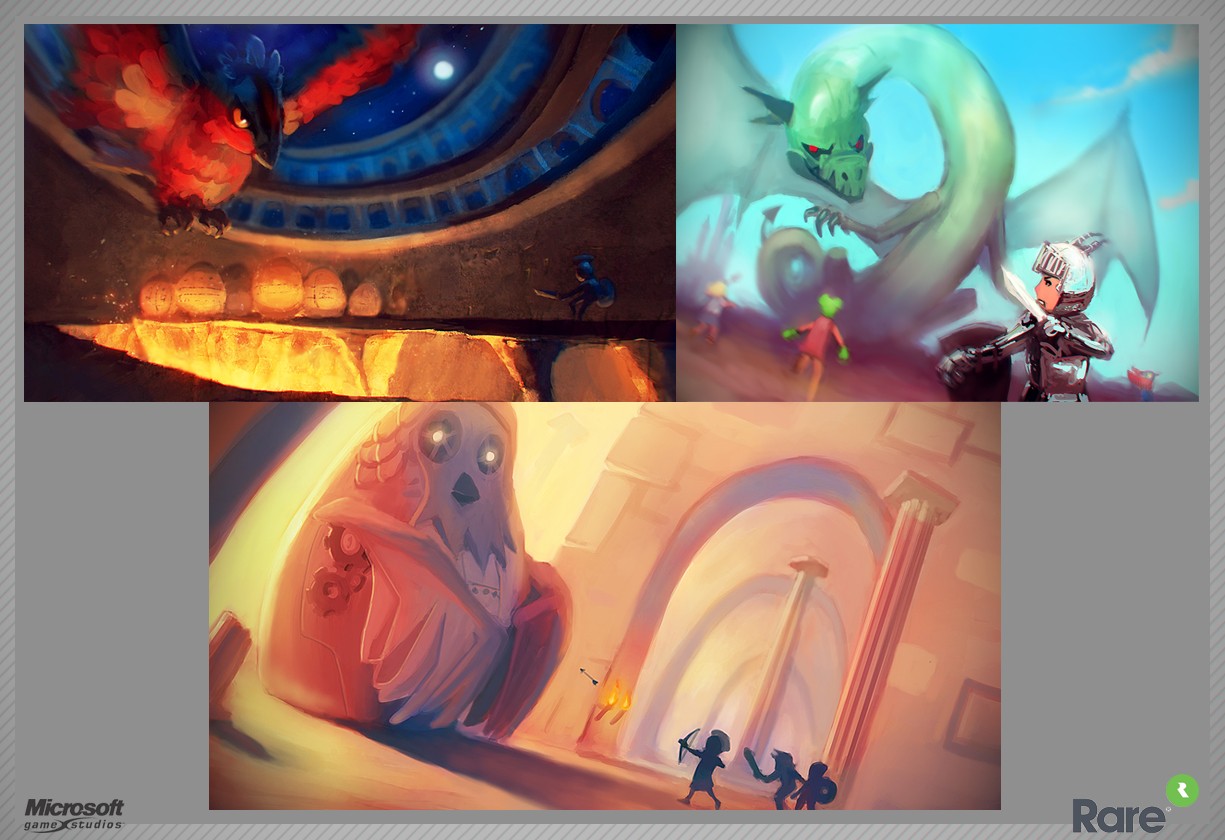
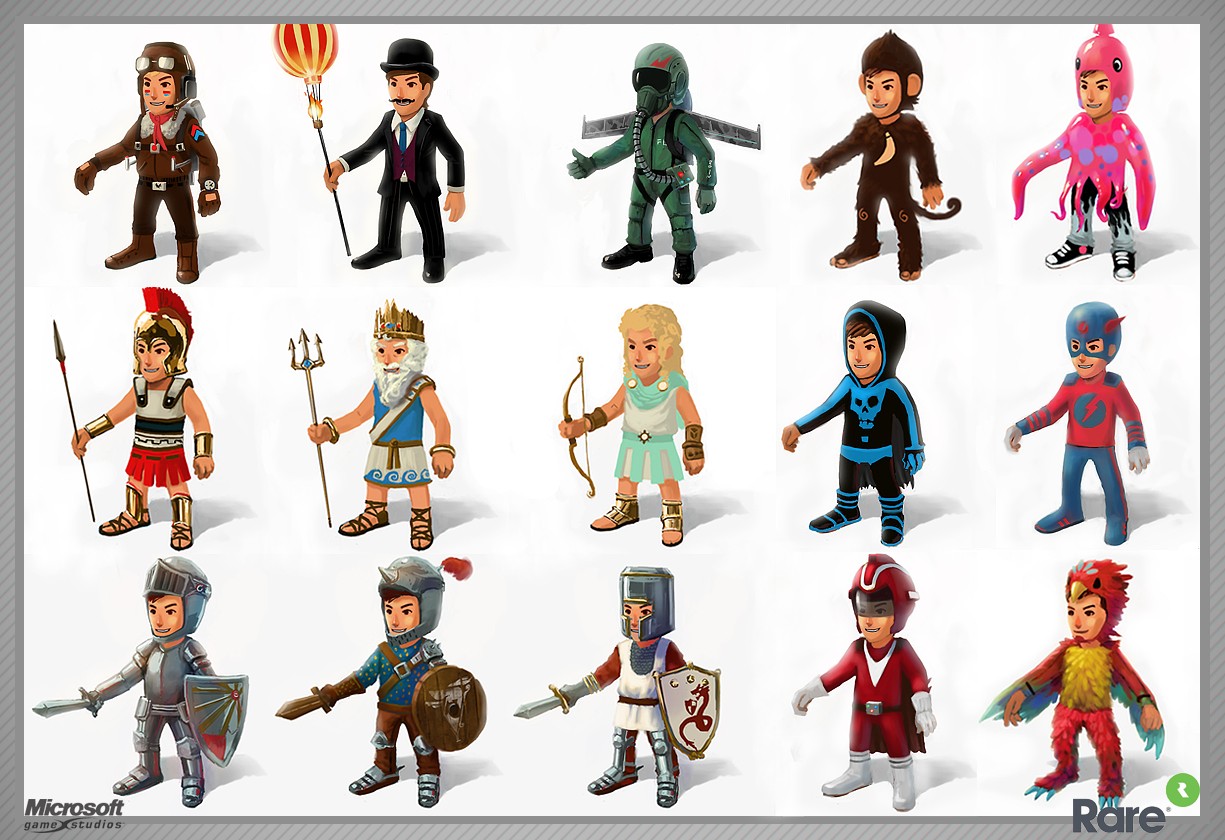
One of Rare’s lost “casual” projects conceived at the Fazeley Studios was some kind of “The Wonderful 101” meets “Monster Hunter” multiplayer adventure, in which players could work together to hunt down huge bosses. You would use you own Avatar as the playable character, dressed-up as superheroes or fantasy knights depending on the settings of the mission. This would have been a “casual” game, but with many epic battles and interesting ideas to hunt down bosses, such as your friends blocking a huge robot while you would try to turn off the switch on its back.
Only some concept art from this lost project is currently preserved on Unseen64, to remember its existence. As far as we know this was never implemented into a playable prototype and could only have been one of the many undeveloped pitches proposed by the Rare team during their “Casual Gaming Years”.
If you know someone who worked at Rare’s Fazeley Studios, please let us know. We’d love to save more memories about their cancelled ideas.
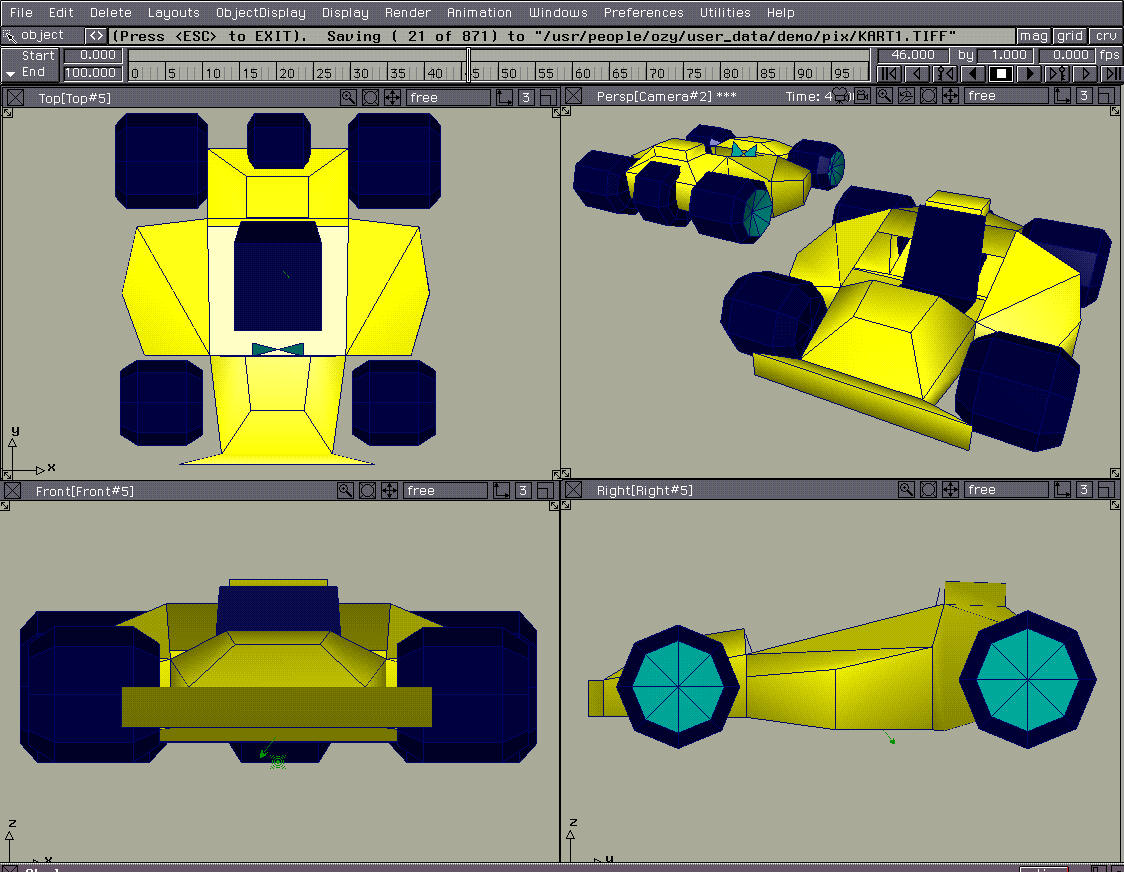
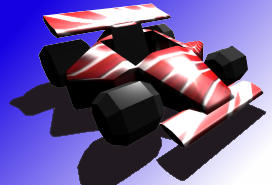
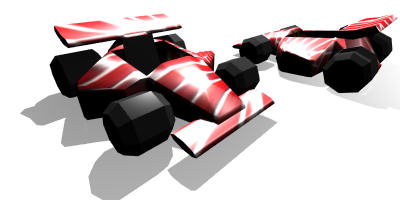
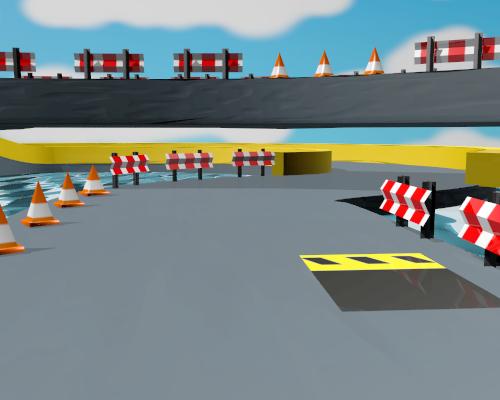
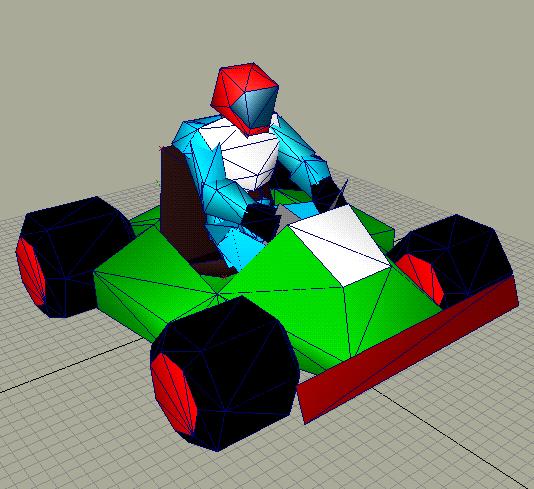
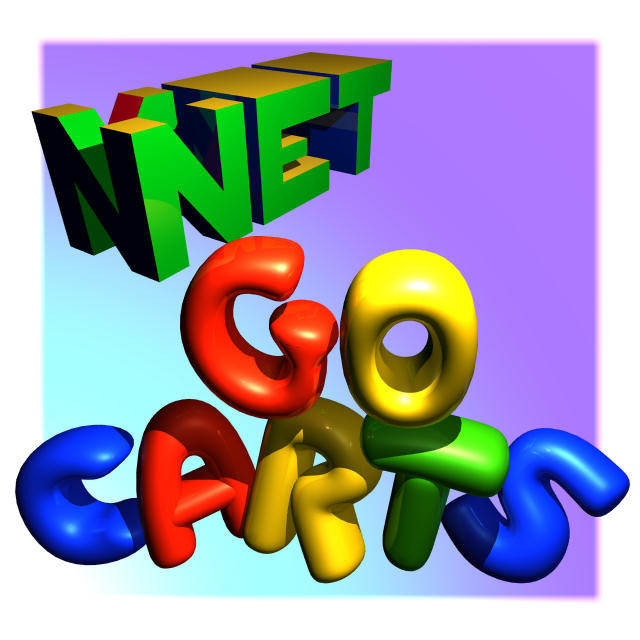
Go Carts is a cancelled racing game planned for Nintendo 64 that was in development by DMA Design, the studio that created such popular games as Lemmings and the first Grand Theft Auto, other than cult titles asSpace Station Silicon Valley andBody Harvest. Before working on the new 64 bit console, DMA already had a successful collaboration with Nintendo on the SNES with Uniracers, an original racing game in which players use unicycles to compete in high-speed tracks while doings tricks to gain more acceleration. In mid ‘90s DMA pitched a new racing project for the yet-to-be-released Ultra 64: Go Carts. Unfortunately it was never released and only a few prototype images remain to remember the existence of this lost project.
The game was never officially announced and probably it was just one of the many ideas that DMA had to develop a new game for Nintendo’s 64 bit console. We can speculate their plan was to create a fun go-kart racing game, somehow similar to Mario Kart, but with a more realistic look and feel. In the end Nintendo did work with DMA Design on a new game, but that game was Body Harvest.
Go Carts was quietly cancelled and we’ll never know what it could have been if only completed.
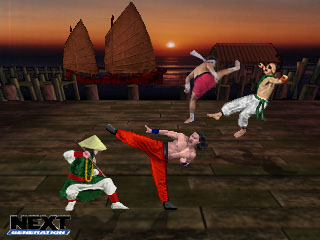
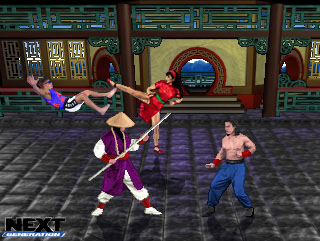
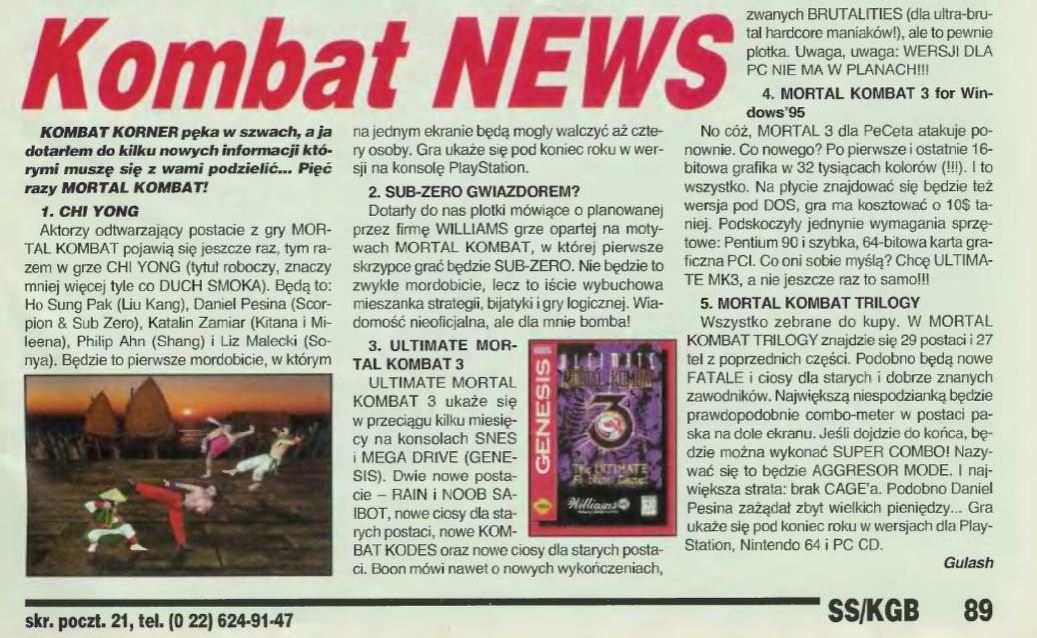
Chi Yong is a cancelled fighting game in development by Lightspeed Productions for the original Playstation in 1996. This is quite an obscure and forgotten project: we can’t even find any detail about its developers. Chi Yong was officially announced in a few websites and gaming magazines in late 1996. It was meant to be a 4 players fighting game game featuring digitized actors, similar to Mortal Kombat. Some of the actors were even the same.
As we can read in an old press release:
MK Actors to Star in New Fighting Game
Martial arts actors used in the Mortal Kombat series are being digitised again for forthcoming title Chi Yong. HoSang Pak, Daniel Pesina, Katalin Zamier, Phillip Ahn and Liz Malecki all featured in various Mortal Kombat incarnations. They have been picked to show off their martial arts prowess for Lightspeed Productions forthcoming beat-’em up.
Chi Yong (a working title which means ‘spirit of the dragon’) is a four-play multi-tap fighting game for PlayStation. Right now it’s about 20 per cent complete and should be available by the end of this year. A spokesperson for the company commented: “Most of the actors digitized are black belts in martial arts. We feel that using real martial artists with experience gives realism and authenticity to the fighting game.”
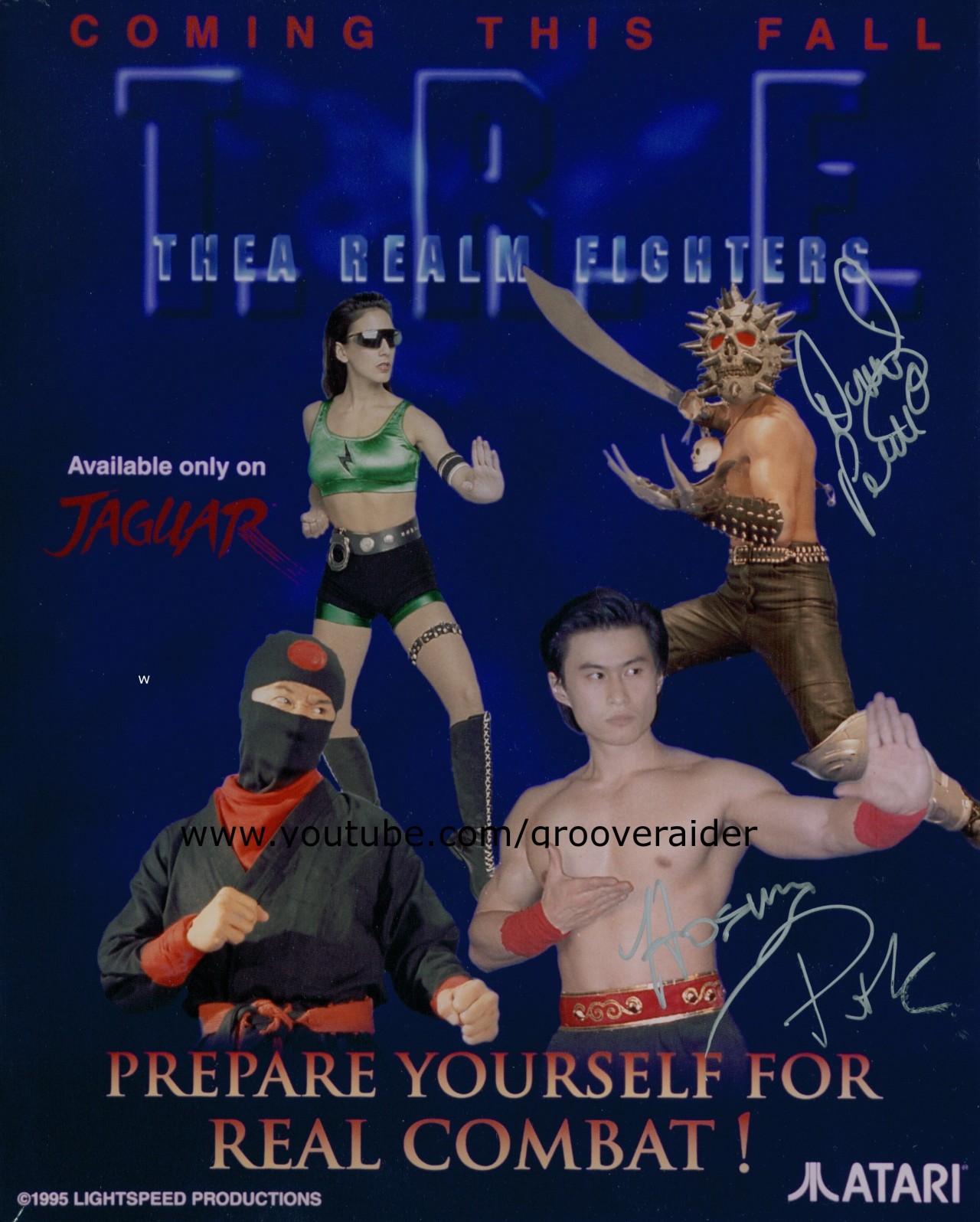
The story gets even weirder when you find out that the same actors were already planned to be featured in “Thea Realm Fighters”, a cancelled 1 VS 1 fighting game in development by High Voltage Software for the Atari Jaguar (later leaked online). There’s even a TRF promotional poster given away at E3 1995 in which we can read “ⓒ Lightspeed Productions” written in the bottom-left. We don’t know what kind of relationship High Voltage Software had with Lightspeed Productions. We can’t find any more details about who Lightspeed Productions were or what happened to them.
It seems TRF was almost complete in 1996 when Atari cancelled it alongside other upcoming Jaguar projects. We can speculate that its assets (such as the digitized actors) were kept by Lightspeed Productions to develop Chi Yong for Playstation. While the two games used the same characters, Chi Yong was expanded to become a 4 players fighting game, a nice addition for a Mortal Kombat clone.
If you know someone who worked at Lightspeed Productions, please let us know!
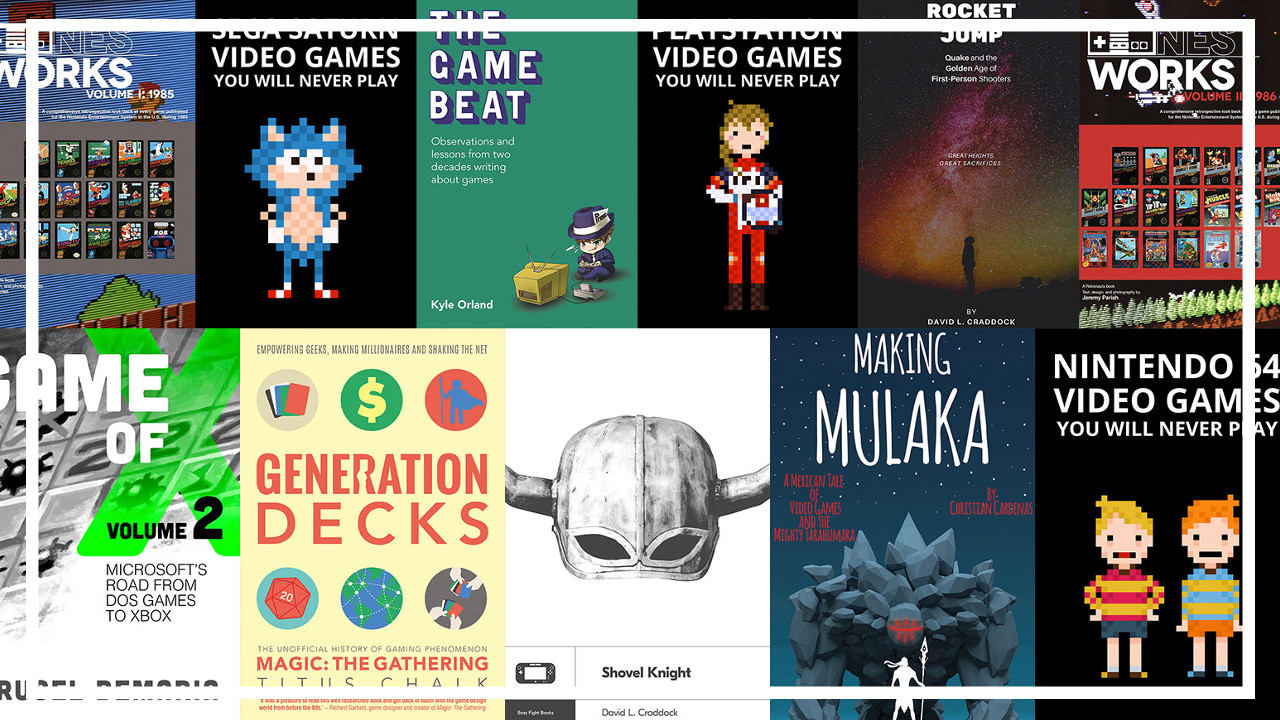
We are happy to announce 3 eBooks taken from our “Video Games You Will Never Play” physical book are featured in the latest eBook bundle by Story Bundle! Our “Sega Saturn Video Games You Will Never Play”, “Nintendo 64 Video Games You Will Never Play” and “Playstation Video Games You Will Never Play” can be found in this bundle in their exclusive ePub and Mobi versions (our full book is available in physical form on Amazon and in PDF on Patreon), so you can easily read them in your eBook reader.
In the same bundle you can also find many interesting eBooks about less known video games and their history, such as “Game of X v.2” by Rusel DeMaria, “NES Works” by Jeremy Parish, “Rocket Jump: Quake and the Golden Age of First-Person Shooters” by David L. Craddock, “Making Mulaka” by Christian Cardenas and many more.
Funds raised with this eBook bundle will support Unseen64, the other books authors and you can also choose to donate 10% to Pixelles, a non-profit initiative committed to helping more women make and change games.
StoryBundle is sending off 2018 with one of our best collections of books about video game history and culture yet: The Winter Power-Up Game Bundle, available now for a limited time on www.storybundle.com.
For StoryBundle, you decide what price you want to pay. For $5 (or more, if you’re feeling generous), you’ll get the basic bundle of four books in any ebook format – WORLDWIDE.
The Game Beat by Kyle Orland
PlayStation Games You Will Never Play by Unseen64
NES Works Volume 1: 1985 by Jeremy Parish
Sega Saturn Games You Will Never Play by Unseen64
If you pay at least the bonus price of just $15, you get all four of the regular books, plus SEVEN more!
Generation Decks: The Unofficial History of Magic the Gathering by Titus Chalk
Making Mulaka by Christian Cardenas
Game of X v.2 by Rusel DeMaria
NES Works Volume 2: 1986 by Jeremy Parish
Rocket Jump: Quake and the Golden Age of First-Person Shooters by David L. Craddock
Boss Fight Books: Shovel Knight by David L. Craddock
Nintendo 64 Games You Will Never Play by Unseen64
This bundle is available only for a limited time via http://www.storybundle.com. It allows easy reading on computers, smartphones, and tablets as well as Kindle and other ereaders via file transfer, email, and other methods. You get multiple DRM-free formats (.epub and .mobi) for all books!
It’s also super easy to give the gift of reading with StoryBundle, thanks to our gift cards – which allow you to send someone a code that they can redeem for any future StoryBundle bundle – and timed delivery, which allows you to control exactly when your recipient will get the gift of StoryBundle.
Why StoryBundle? Here are just a few benefits StoryBundle provides.
Get quality reads: We’ve chosen works from excellent authors to bundle together in one convenient package.
Pay what you want (minimum $5): You decide how much these fantastic books are worth. If you can only spare a little, that’s fine! You’ll still get access to a batch of exceptional titles.
Support authors who support DRM-free books: StoryBundle is a platform for authors to get exposure for their works, both for the titles featured in the bundle and for the rest of their catalog. Supporting authors who let you read their books on any device you want—restriction free—will show everyone there’s nothing wrong with ditching DRM.
Give to worthy causes: Bundle buyers have a chance to donate a portion of their proceeds to Pixelles!
Receive extra books: If you beat the bonus price, you’ll get the bonus books!
StoryBundle was created to give a platform for independent authors to showcase their work, and a source of quality titles for thirsty readers. StoryBundle works with authors to create bundles of ebooks that can be purchased by readers at their desired price. Before starting StoryBundle, Founder Jason Chen covered technology and software as an editor for Gizmodo.com and Lifehacker.com.
This website uses cookies to improve your experience, by continuing to browse the site you are agreeing to the use of cookies. Find out more about cookies.Hide
Privacy & Cookies Policy
Privacy Overview
This website uses cookies to improve your experience while you navigate through the website. Out of these, the cookies that are categorized as necessary are stored on your browser as they are essential for the working of basic functionalities of the website. We also use third-party cookies that help us analyze and understand how you use this website. These cookies will be stored in your browser only with your consent. You also have the option to opt-out of these cookies. But opting out of some of these cookies may affect your browsing experience.
Necessary cookies are absolutely essential for the website to function properly. This category only includes cookies that ensures basic functionalities and security features of the website. These cookies do not store any personal information.
Any cookies that may not be particularly necessary for the website to function and is used specifically to collect user personal data via analytics, ads, other embedded contents are termed as non-necessary cookies. It is mandatory to procure user consent prior to running these cookies on your website.