
RTS

Star Wars Outpost [PC / Mobile – Cancelled]

Star Wars Outpost is a cancelled Real Time Strategy/simulation social network hybrid game developed from 2011 to 2012 by LucasArts Entertainment Singapore for browsers based PC and mobile devices. It was based on the eponymous movie franchise.

The existence of Star Wars Outpost was revealed after its cancellation alongside many others cancelled Star Wars related project during the closure of LucasArts, back in April 2013. At first, it was initially briefly mentionned by an article from Kotaku wrote by Jason Schreier back in September 2013, when we simply could read this:

The list of cancelled projects goes on and on. (…)

There was Outpost, the Star Wars take on Zynga’s FarmVille that would let players build empires, one click at a time.

It is only in January 2016, almost 3 years after the shutdown of LucasArts, that more details, alongside a couple of artworks, about the game emerged. Eurogamer was the first to relay those information:

A long time ago, before Disney‘s acquisition of Star Wars, LucasArts spent two years developing a “hardcore” strategy simulation for PC and mobile devices. And then it quietly cancelled the project, four weeks from completion.

This game was Star Wars Outpost, which was being built by a team of 30 working out of LucasArts’ Singapore office.

We were told Outpost was canned shortly before Disney’s acquisition – at which point other Star Wars games were halted, too. (…)

If you’re thinking you’ve heard Outpost’s name before, then you’re right – reports on the canning of 1313 and First Assault mentioned this third game, although at the time it was only referenced in the vaguest of terms – and described as a Farmville clone.

“The previous leaks mentioned a social game that was supposed to be Star Wars’ answer to Farmville,” the tipster said. “This is absolutely wrong.

“The people who thought [Outpost was a] Farmville game were from the US office. They had no idea about this game either – except just a few key people. This was being made 100 per cent in Singapore.”

At the time of its cancellation, Outpost was “about 90 per cent done”.

“We were just looking for approval to start public beta testing. Instead we got a call they were going to kill the project.”

Rather than a social game clone, Star Wars Outpost was designed to be a “very hardcore” experience. And despite the fact it might look like a game you’d find on Facebook, the title was canned because it was considered too niche.

“The best way to describe the game is if Star Wars met Settlers of Catan/EVE Online,” said the source. “You would take control of an Outpost on a planet within [the Star Wars galaxy]. The land on the planet was finite and so were the resources, so you were forced to search out and find other players. You had choices to either work with them or betray them for their resources.

“You could then start supplying weapons/ships/tools etc. to either the Rebels or the Empire. Supporting each side would control a balance of power where that side could start taking over the Galaxy.”

Nearby players who were allies would slowly become connected to you via networks of roads and trade routes. A world completely controlled by the Rebels or Empire would grant bonuses to the appropriately-aligned Outposts on it.

“It was a very deep game and always running like an MMO, we wanted players to really invest a lot in time,” the source continued.

Outpost also had a working day/night cycle, and an overworld populated by characters who would wander around and interact with the settlements and other characters in it.

But despite its hardcore aspirations, LucasArts was building the game to be as accessible as possible – coded in HTML5 and playable via a browser.

“We did it in 3D but everything was hand painted by artists to make sure we had a nice art style.”

There were deeper plans for Outpost, too. The game’s original design was for it to connect with Star Wars: First Assault, and allow you to create weapons or ships for use in the shooter.

“We had the back-end working but not in-game,” said the source. “Then the players from First Assault could buy those unique weapons and equipment. You could also send in dropship supplies to help a side during the fight.”

All of which makes it more of a shame we’ll never see Outpost. After the game’s cancellation its team was moved on to casual mobile games (“which all got killed also right at the Disney purchase”) while a few were shuffled onto the similarly-defunct Star Wars 1313. After two years of work, Outpost was dead.

In May of the same year, a short trailer showcasing some gameplay leaked onto the internet. According to the main source, the video was part of larger vertical slice demo that’s yet to be found:

When LucasArts still was a company not acquired by Disney, a real time strategy (RTS) Star Wars game was about to be released on PC and mobile devices.

(…)

Now, thanks to Elise Baldwin, who was the Audio Director on Star Wars Outpost, we are able to see a slice demo illustrating the combat mode of the game:

I was the Audio Director on this unannounced title which did not make it to marketplace. It was in development for over a year, during which time it went through three platform/engine pivots. It featured a simulation mode and a tactical combat mode. This video was part of a vertical slice demo illustrating the combat mode.

The death of LucasArts was truly a tragedy for many people, starting with the numerous employees worldwide who were laid off, and many projects, whether or not based on Star Wars, were cancelled both before and during the acquisition by Disney. In addition to Star Wars Outpost, and Star Wars 1313 and First Assault already mentionned above, we can add:

  • a game based on Indiana Jones
  • a 2D physics-based shooter called Caveland that was meant to be an experimental digital title
  • Smuggler, a game designed for cross-platform multiplayer that would let you play as a customizable character within the Star Wars universe, smuggling and trading between Facebook, tablets, and consoles
  • An iOS game called Death Star in which you’d get to control your very own version of the Empire’s space station
  • A Wii U project code-named Wingman that was modeled after the TIE Fighter and X-Wing games. This project would later evolved as Star Wars: First Assault “Version Two” which featured prototypes and elements that didn’t go to the “Version One”.
  • A Star Wars based open world RPG that was led by Clint Hocking
  • A Star Wars take on Grand Theft Auto that was based on a cancelled live action TV show named Star Wars: Underworld. The project would later change direction and evolved as a co-op shooter game similar to Gears of War, that would eventually lead to the first design of Star Wars 1313.

In the recent years, a tech demo of First Assault, alongside the complete Nintendo Wii version of Star Wars: Battlefront 3 leaked online. We can hope that, some day, others cancelled projects may be made available online to allow players to test them or learn more about them.

Images:

Video:

 

End of Nations [PC – Cancelled]

End of Nations is a canceled Free-To-Play Massively Multiplayer Online Real-Time Strategy game, which was later a Multiplayer Online Battle Arena game, published by Trion Worlds and developed by Petroglyph Games from 2009 to 2013, exclusively for PC.

This project between Petroglyph and Trion Worlds was first mentionned in April 2009 by its publisher, as we can read on Gamespot:

(…) Trion World Network has announced that it has partnered with Petroglyph on an as-yet-to-be-named massively multiplayer online real-time strategy game.

Aside from talking up the Petroglyph team’s previous work on such titles as Command & Conquer and Dune II, Trion revealed no relevant gameplay details about the upcoming project. However, Petroglyph appears to be taking an ambitious approach to the project, with Trion CEO Lars Buttler saying of the game that it will be “the world’s first truly high-end MMORTS.”

The game was officially revealed in April 2010:

Trion’s MMORTS collaboration with Petroglyph is also expected to arrive for the PC next year. Titled End of Nations, the RTS features a persistent online world in which gamers can engage in solo or multiplayer combat with “thousands of other gamers across the gigantic battlefields.”

Details on Petroglyph’s latest effort remain light. However, Trion did note that players will be able to develop their own commanders and establish a headquarters. Gamers will also be able to unlock new vehicles, weapons, and technologies through combat, as well as crafting and researching.

Further details about its background emerged later:

We are introduced to the universe of End of Nations with a synopsis of the events leading up to the present conflict. 50 years into the future, a worldwide economic crisis and collapse has resulted in a cascade of shortages and conflicts. This coincided with the failure and dissolution of almost all of the world’s governments. As the world descended into anarchy, a savior emerged. The United Nations stepped in to restore order through aid and military force. The public reaction to this was initially enthusiastic. As the governments of the world had failed, the United Nations, now renamed the Order of Nations (ON), became the sole government of the world. To the shock and horror of the populace, this new government began to abduct people in the middle of the night and execute its citizens for asking questions. As a result of this oppression, resistance movements emerged.

When the game begins, the resistance has been underway for quite some time. The Liberation Front, led by American war hero General Alec Chase, and the Shadow Revolution, led by former Order of Nations assassin Monkh Erdene, are part of the Coalition, an alliance against the Order of Nations. The commander controls part of the Coalition forces sent to assault the Typhoon Cannon, a massive artillery turret, at the Order of Nations base at Widow’s Wall. The leader of the Order of Nations, General Sevastian Korvus, is also present, residing within the Typhoon Cannon. The assault on the Typhoon Cannon is successful. The cannon is destroyed and Korvus is killed. Yet, the allies bicker. With the destruction and collapse of the Typhoon Cannon, there is now a giant breach in Widow’s Wall. Alec Chase of the Liberation front wishes to advance further into the base, but Monhk Erdene of the Shadow Revolution counters that their coalition has captured the Siege Cortex and that further advance into the base is not part of the mission. Land battleships from the Order of Nations, known as Assault Panzers, approach from both sides of the breach outside the wall. General Chase asks Monkh to engage the enemy forces so that he can assault the inner base. Monkh apologizes to Chase, reiterates that it was not part of the mission, and the Shadow Revolution forces withdraw. Outflanked and without sufficient support, General Chase is forced to withdraw as well, sustaining casualties in the process. Allies no more, the Liberation Front and Shadow Revolution continue to fight the Order of Nations while also fighting and sabotaging each other for control of territories and influence over populaces. And thus the stage was set for further conflicts between the three factions.

Factions

There are three factions in End of Nations. Two of those are playable; the Liberation Front and the Shadow Revolution. The third faction is the unplayable computer controlled Order of Nations, the main antagonist of the game.

Liberation Front – Increasing chaos led the world leaders to give up control to the Order. The Lord Chancellor of England, Mary Dickinson, refused to give up control of her people. She decided to fight against this regime, and began distributing a digital pamphlet codenamed “The Sentinel”. She began to coordinate these dissidents. The Liberation Front believes that people should be free to elect their leaders and form their own governments. They will go to the grave to fight for this right. The Liberation Front has two classes: Spartan and Patriot, each with their own advantages and special abilities. The Spartan is all about heavy armor and point defense. The Patriot class is more of a support class, and with their support powers, they are able to greatly influence the battlefield.

Shadow Revolution – A few people believe that the new regime’s oppression of the people was far too violent. These dissidents were killed, including Donald Poole who oversaw the rule of Eastern Europe. His son, Robert Poole, and Sabal Dasgupta came together and secretly formed an army of their own known as the Shadow Revolution. As former members of the Order of Nations, they arm themselves with weapons and technology stolen from their former organization, along with knowledge of the inner workings of the Order. They are trying to realize Pierre Frenay’s vision of a firm but benevolent rule. The Shadow Revolution has two classes, the Wraith and Phantom classes, each having their own advantages, and special abilities. The Wraith class is all about fast hit-and-run tactics. The Phantom class is all about stealth tactics and ambushes.

Order of Nations – Perverted from one man’s dream of a peaceful world government, the Order of Nations rules the globe with violence, oppressing the masses and crushing any in their path. The Order possesses extremely advanced weapons systems, developed using siphoned off money and resources, in hopes of creating an army dedicated to establish a one world order. This army was advanced and powerful enough to overwhelm the militaries of the world’s nations and take control with ease. Order of Nations is the AI controlled, third faction in End of Nations. Order of Nations units can be seen in most PvE and some PvP maps. Order of Nations units and buildings have darker color scheme than Liberation Front or Shadow Revolution.

During its development at Petroglyph, the title was showed numerous times at the press, during E3 2010, Gamescom 2010 and E3 2011, and Gamespot was able to write several previews for the game: 

Terra: Formations (Starcave Entertainment) [X360/PS3/PC – Cancelled]

Terra: Formations is a canceled first-person shooter with real-time strategy elements developed by Cellien Studios, a two men team subdivision of game company Star Cave Studios, for PC, Playstation 3 and Xbox 360 systems, from 2004 to 2017.

The game was first revealed in the beginning of 2005 by Cellien as a multiplayer FPS using the Torque Engine:

“We at Cellien Studios are developing a game on the Torque game Engine from www.garagegames.com. Terra: Formations is a Sci-Fi FPS game that will be played online much like Unreal Tournament style. The project website is www.terrathegame.com and our studio website is www.cellienstudios.com. So far our studio only consists of two people but for a two man team and only 5 months of development I feel confident that we will be able to release a demo in the coming months so keep an eye out.”

After a year of silence, Gamesindustry announced Terra: Formations, now headed by Star Cave Studios:

“Irish Star Cave Studios Limited proudly announces the development of its first “AAA” title and first multiplatform game, Terra: Formations! In Terra: Formations, players have the freedom to select their preferred style of game play, ranging from high action First Person Shooter (FPS) to more strategic Real-Time Strategy (RTS) in a ranking system set up much like a Role-Playing Game (RPG)! It’s the clash of the titans when it comes to game genres; FPS, RTS and RPG – all tied together in this awesome looking fast-paced, action packed, futuristic Massive Multimedia Online Game (MMOG), also featuring single-player options and adventure elements!

By the year 2157, mankind had depleted the resources of planet earth with his lust for power, technological advancements and greed. Ironically, the very machines that played a role in mankind’s irrevocable position were the only chance of survival! After several years of uncertainty, hope was reborn with the efforts of the Global Military Alliance to Terraform one of earth’s celestial neighbours, Jupiter’s moon called “Europa”. It wasn’t until the excavation of the satellite’s icy crust that mankind learned the truth; he was not alone and something, somewhere, was waiting, watching, learning and preparing for battle!

As a player in Terra: Formations, you join the ranks of an elite military force with the objective of reshaping the environments of inhospitable worlds, experience the evolution of a developing planet, and take command to become humanities only hope for survival in an epic struggle for control of the solar system.

Four classes of characters offer different insight to the chaotic world, each providing a unique blend of interaction. The Soldier faction allows for adrenaline pumping action that players have come to expect from traditional FPS games. As a member of the Engineer class, the player becomes the key element in the development of the environment by constructing and repairing mankind’s lifeline to the world. The Researcher class explores the evolution of the world to enhance society’s tools and develop new technology, and finally the player can opt to take command of the action from the perspective of the Commander class to bring order to an uncertain future, tying RTS elements into Terra: Formations.

Star Cave Studios Limited is a privately owned game development studio based in Ireland, and the cream of Irish developers! Founded in June 2004 by industry veteran Keith Killilea, CEO, its focus is to create state-of-the-art computer games targeted not only at the PC platform, but also the next generation gaming consoles! During the course of 2005, Star Cave Studios Limited acquired Cellien Studios, based in Austin Texas, and Single Cell Games, based in Australia, and has now become the leader of Irish game development!”

After that announce, however, the game was put on-hold indefinitely, before surprisingly coming back from the dead in September 2012 on platforms such as Steam Greenlight and Indiegogo, using this time the Unreal Engine 3:

“In Terra: Formations, players have the freedom to select their preferred style of game play, ranging from intense action First-Person Shooter to more strategic RTS planning in an online multi-player universe.”

The key concepts of Terra can be summarized by the conflicting species, player classes, life forms, technology, locations, and gameplay that are designed to make a genre hybrid, player driven world possible.”

Terra: Formations main features:

Rich, highly detailed, atmospheric and wonderful alien enviroments

Changing environments reflecting your terraforming progress, becoming more habitable and supportive of your species requirements. Tug of War gameplay.

Permanent changes in environments – terraforming levels will remember your changes.

Groundbreaking genre crossing gameplay, combining First Person Shooter with Real-Time Strategy.

Highly detailed player characters, with customizable appearances

RTS online gameplay where you give real players control commands.

Advanced AI Droids for FPS defending & RTS resource play.

4 distinct classes of characters; Soldier (FPS), Commander (RTS), Builder (FPS+RTS), and Medic (FPS).

Hi Tech Weaponry & Several Ground / Air Vehicles

Commander Special Attacks such as air-strikes, cloaking, superweapons.

Aliens have the ability to turn Humans by infestation into fellow Aliens.

Global online points & stats system.

Open Mod System allowing map makers to create new worlds.

“The game was announced back in 2006 for all major platforms from PC to Consoles and the screenshots you see in the Gallery tab at the top of this page is the playable demo from back then! We spared no expense to create “AAA” class graphics, code, game-play and pulled all-nighters with barely no lives at all. To develop the whole game we needed a publisher and in the end Terra needed to be put on hold – until now!

On the Indiegogo page, we could read further details on the company and some ideas behind that game:

“Based on our funding target, we would expect to nail the deadline for Beta Release in late 2013. We know exactly what we are doing, and as Terra has been many years in the making, we are confident in our deadlines! We will keep you in the loop with our development at all times, and give you a look into the process and progress we are making.”

“Example of how amazing Terra will be, your playing on the multi-player level and the world around not just changes due to the terra-forming but stays changed even when you return later to it! We want to bring you an experience of game-play not done before and a dynamic living world you would expect to be on.”

Unfortunately, the crowdfunding campaign wasn’t a success, the game only collected 75$ on a fixed goal of 175,000. After this failed campaign, Terra: Formations disappeared again, but attended a third comeback, this time in the beginning of 2014. Rebranded as T.E.R.R.A. and using Unity as new engine, the project was slightly different about what was initially planned from it’s former form and was, once again, put on Steam Greenlight:

We are an small team of 4 so far working on this title but if we are funded we can bring in extra help from our peers to bring the game to an completion stage. For the past few years the game evolved from it’s concept of different demo versions towards today, believe me we have had plenty of time to do trial & error on blending the genre’s! We ended up with the finish concept after all of this to what it is now, so much had changed we changed the name to the current form to represent this.”

The developers managed to release it in Early Access around Spring 2016, but in April 2017, as we could read on the comments section, Starcave decided to rebuild the game to it’s core in order to get significant improvements:

“There was a break in the development, where we were reviewing everything of the Early Access release build and have decided to rebuild the core to make better improvements for between EA to Full release to be as smooth as possible. More updates will appear as soon.”

It will never materialize and, since then, Starcave disappeared from the picture alongside T.E.R.R.A. which isn’t playable anymore.

Images:

Videos:


Cry Havoc [PC – Cancelled]

Cry Havoc is a canceled sci-fi multiplayer First-Person Shooter and Real Time Strategy hybrid game developed around 2004-2005 by Artificial Studios for the PC, as well as a potential Xbox 360 version.

The project initially began as Helix Core, another multiplayer title inspired by Tribes whose main feature was the high number of players who could frag together in a single arena: up to 64 players. Somewhere in 2003, this title vanished, and former members of its developer, Bright Light Productions, created a new entity named Artificial Studios.

Using Artificial in-house engine called Reality, Cry Havoc took a different approach that its predecessor and mixed FPS genre with RTS games, somewhat similar to titles like Natural Selection and Savage. The project was revealed in September 2004, for a release planned for 2005:

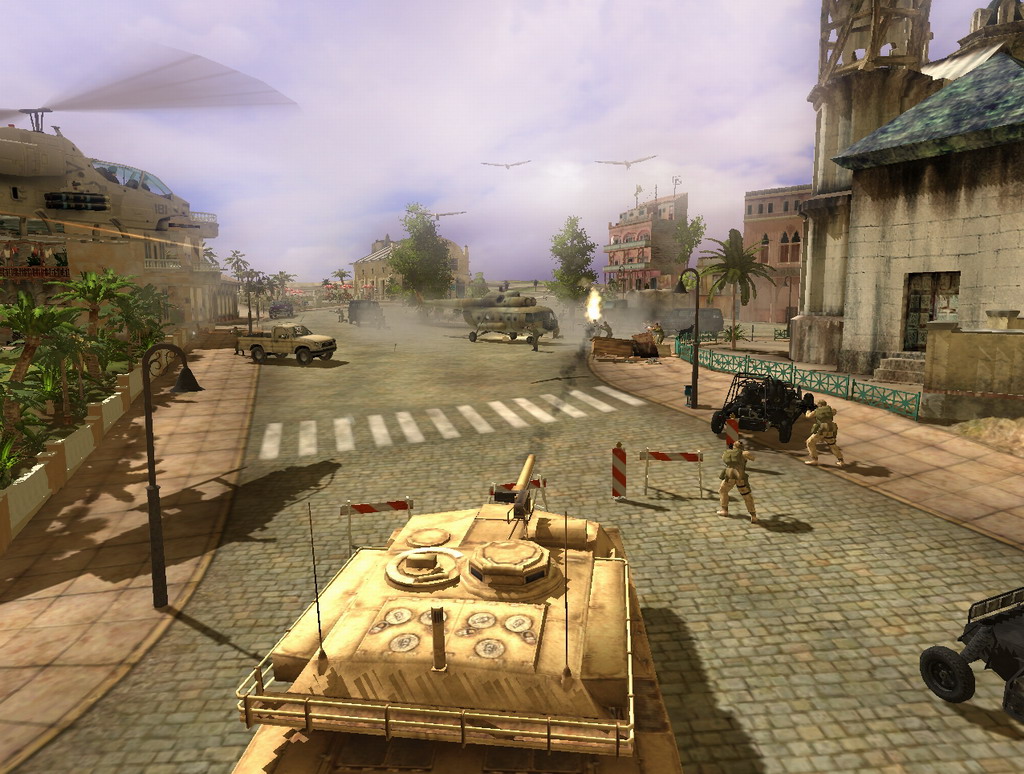
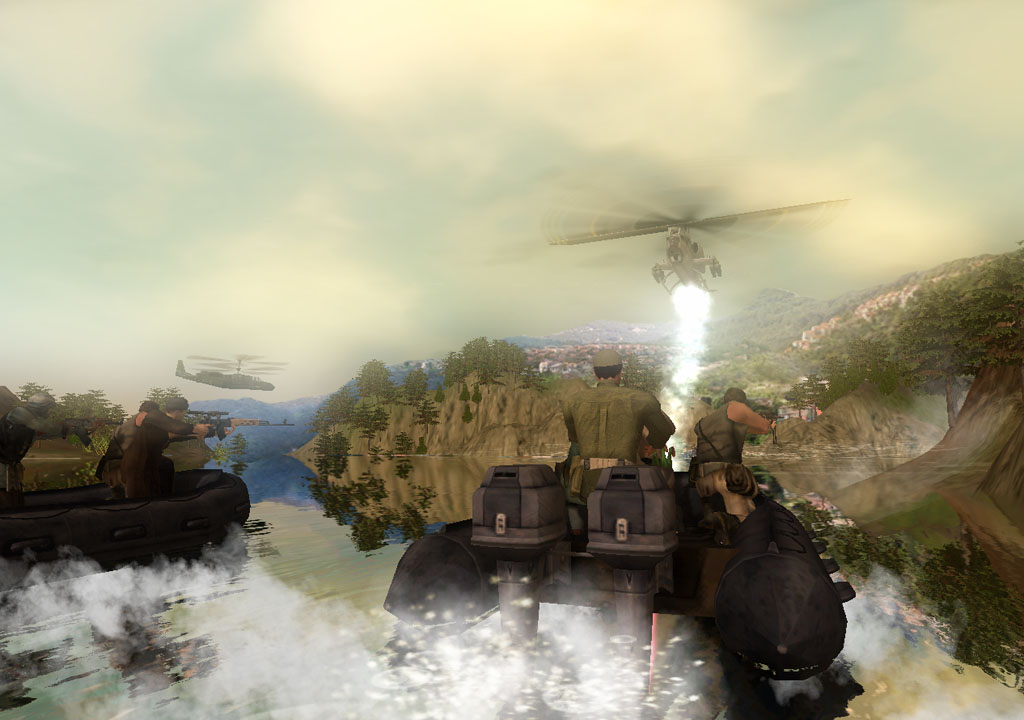
Cry Havoc is conceived as a multiplayer 4-team First Person Shooter based on modern war tactics, combined with a deep Real Time Strategy layer. Through success in teamwork and combat, FPS players advance up the ranks of their own team, gaining more RTS decision-making capability along the way. The primary objective, like traditional RTS games, is to defeat all the enemy teams by choking their resources and destroying their bases. The methods are unique to Cry Havoc, with fast-paced FPS action, upgradable character abilities, 3D real-time base construction, and advanced vehicle physics on land, sea, and air. Battles take place within seamless environments powered by the Reality Engine, including detailed natural landscapes, moody close-quartered interiors, and large-scale urban warfare.

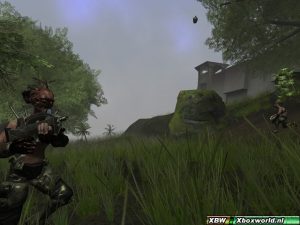
In December 2004, Dutch website Xboxworld shared screenshots from the game and revealed that this project will be up to 128 players in a single map, although to this day, this information was never confirmed by its developers. An Xbox 360 version was also announced, but it’s also something that never had any confirmation.

But in April 2005, cgonline interviewed staff members from Artificial who revealed that the Cry Havoc prototype was retooled as a development kit for the Reality Engine:

C.G. – Will Artificial Studios also used their technology to create their own in-house game and if so what can you tell us about it?

J.S. – Artificial Studios does indeed have a game in development on Reality, one which is quite different from the “Cry Havoc” prototype that has been previously been mentioned in public (that prototype, in fact, became the Reality _Eval Kit).

A month later, Epic Games purchased every rights from the Reality Engine and included its technology into the Unreal Engine 3:

Epic has purchased the Reality Engine outright, including intellectual property rights, trademarks, and copyrights. Epic does not intend to continue sales, development, or support of the Reality Engine, but will review its technologies for inclusion into Unreal Engine 3.

Video:

Images

Ghost Wars/Field Ops (Digital Reality) [PC – Cancelled]

Ghost Wars (later named Field Ops) is a cancelled strategy shooter that was in development around 2004 by Digital Reality (mostly known for Imperium Galactica and Sine Mora), planned to be published in 2006 on PC by Hip Interactive. The game was quite ambitious for its genre, as you would have been able to play it as a traditional real-time strategy game or impersonate each soldier in your unit to play it as a first / third person shooter.

“Based on the Government Special Operations Group, “Ghost Wars” takes players into the clandestine and secret war against terrorism. Players take control of air, land and sea units of an Elite Special Forces group across multiple top secret missions. With the graphical quality of a first person shooter, “Ghost Wars” will offer gamers the most accurate depiction of modern day warfare to date.

Through Battlefield View, “Ghost Wars” brings the theatre of war to life. Gamers are not only tested on their strategic senses, but also on their ability to react quickly under enemy fire by directly controlling individual units. By setting up, equipping and planning troops’ activities, gamers will need to utilize state-of-the art weapons and technology to defeat terrorist networks.”

The game was also playable at E3 2005, GameSpot published some favorable comments on the demo:

“You’ll have the typical type of units, including soldiers, tanks, helicopters, and such. However, what makes Ghost Wars unique is how you control them. While you can just use the typical kind of point-and-click movement, you can also select a specific unit and zoom the camera in to take its viewpoint. If you choose a soldier, you’ll go into first person, and if you pick a vehicle, you’ll go to third person. From there, you can control that unit manually, attacking whatever you like. Soldiers can also get into parked vehicles on the field and drive them.”

“Units in the game will be upgradable in a number of ways, letting you specifically level up individual units to improve their performance on the battlefield. And you’ll need to level up, because Digital Reality is endeavoring to make the opponent AI in the game quite challenging. AI units will run for cover and hide inside buildings, meaning you’ll have to bring in your tanks and choppers to take those buildings down. And boy, can you. Though not all the deformable objects were in, the developers showed us quite a number of big-time building and vehicle explosions that looked pretty impressive.”

While Ghost Wars looked promising, Hip Interactive closed for bankruptcy in late 2005. The game was canned, with many more of their projects, such as “Call of Cthulhu: Destiny’s End” and “George Romero’s City of the Dead”.

Nonetheless, following the cancellation of Ghost Wars, former members from Hip Interactive Europe formed a new entity named Freeze Interactive to ensure the development of the game, rebranded as Field Ops, and still developed by Digital Reality, in 2006:

“Swiss-based publishing house Freeze Interactive, and developer Digital Reality are proud to announce Field Ops the first PC Real-Time-Strategy Shooter !

Field Ops brings together, in a unique presentation, the two favourites genres of PC gamers;Real-Time-Strategy and First-Person Shooter.

Field Ops is the perfect mix between strategy and fast-paced military action. Move into the fascinating world of anti-terrorism and manage every aspect of gameplay from strategic planning to taking out the main bad guy with your sniper rifle.

What Field Ops brings, to the genre and to games in general, is a genuine revolution that combines immersion and strategic thinking.”

Game features:

  • 5 Unique locations
  • More than 8 different classes per side
  • First-Person shooter AAA quality graphics
  • True to life Physics engine
  • Immersive and exciting multiplayer modes featuring a worldwide ranking system
  • Real vehicles and weapons for the most authentic Special Forces experience
  • Fight on the ground, in the air and over water
  • Motion-captured animations for the most realistic experience ever
  • Tactical A.I. allowing for exciting gameplay in both RTS and FPS views

The game was showed at the Game Convention 2006, where Gamespot managed to write a preview for the multiplayer mode:

“The game features three different multiplayer modes that will be familiar to fans of FPS games, namely VIP rescue, bomb run, and conquest. Before you set up a multiplayer game, you have to create a customised team squad, built using an allocation of multiplayer points that you can spend on different skilled individuals. In the demo that we saw, we could choose from medics, snipers, and special-operative soldiers, although more classes will be available in the full game.”

“With one team playing as US counterterrorists and one as the terrorists, the conquest game requires you to capture key places on the map in order to take over, although killing off all of the opposing team will also earn victory for the map. As in most strategy games, units can be deployed individually or in groups. Fog of war affects the battlefield in multiplayer, so you can’t monitor your opponent’s movements until your units actually see them firsthand.”

“While you can leave the killing to the AI, it’s much more effective to control the engaged units yourself, especially if you can perform headshots. While the combination could ultimately turn out to be a gimmick, combining your skills in the two genres is an essential part of the gameplay. Though you could stick to one discipline, you’ll ultimately suffer unless you embrace the advantages that each perspective has to offer.”

The full game will feature online and LAN play for up to six people, and because the game scores you on your losses and victories, you should be able to match up to players of a similar ability. A number of different character classes will be added that we didn’t get to see in the demo, including heavy machine gunners, technicians, engineers, and demolition experts.

The mix of two complementary genres in Field Ops makes it an interesting proposition, especially for fans of the two styles. While the multiplayer demo had its share of problems at this stage, such as slowdown in the first-person mode and a lack of playable classes, there’s plenty of time for Freeze to tidy it up before the Q1 2007 release.”

In the beginning of 2007, Gamespot again was also able to write a preview on the campaign:

“The story goes that a failed coup d’etat on the island of Cuba has split the country in two, and Santiago de Cuba has become the new base for the rebels. Our task in the mission was to head over to a checkpoint outside a ruined church and sit tight while reinforcements made their way to us. Once that was accomplished, we were required to make our way over to the building that the rebel leader was holed up in and capture him by eliminating his troops.

The map itself is set out very much in the style of games like Ghost Recon Advanced Warfighter, with dusty, mazy streets and rebel soldiers hiding around every corner. To begin with, it’s tempting to try and play through the game by jumping into the shoes of a single soldier and clearing the way in first-person mode, only zooming back out every so often to get your medic to heal you.

We found that a much better tactic was to move our men around in the zoomed-out strategy setting, as it was much clearer to work out not just where to go but also which direction the bullets were coming from. Our small team could be split up into two-man designations of Alpha and Bravo, used as a group of four, or even as individuals when necessary, and it’s possible to jump into any soldier’s shoes in first-person mode at any time.

Just by looking at the map, we could tell that there were usually two or more routes through any part of the section of city we were in, and therefore it made sense to split the team in two to try and outflank the opposition where possible. However, although that sounds simple in principle, the game still currently suffers from some issues with the artificial intelligence. Because the use of cover is vital, the general behaviour of your soldiers is crucial, and at this point some of the pathfinding is a little out.

It’s clear there’s plenty of potential for Digital Reality to produce an absorbing, compelling action strategy game that will force you to think carefully about how to progress through each part of a level. As long as the AI gets a hefty polish, and the frame rate picks up, we’ll be looking forward to seeing more.”

However, it seems that more troubles occured for Field Ops after those presentations. Initially planned for a release in the beginning of 2007, the game simply disappeared without a trace, just like it’s publisher. A year after that, French website Jeuxvideopc.com received the confirmation by Take-Two Interactive, who had the rights to publish the game in French speaking countries, that it was definitely canceled without much information:

“Field Ops, Digital Reality’s FPS / STR, has just been canceled. Take-Two confirmed this information to us without giving us any further information. We therefore do not know the exact reasons for the cancellation of this project but the implementation of a complex gameplay is probably the cause.”

Oddly enough, a few months after that announcement, a small company named Atomic Motion, created by some developers from Digital Reality, revealed their first and only game: Raven Squad: Operation Hidden Dagger, which was eventually released in 2009, with a lots of concepts and design ideas taken from what was supposed to be Ghost Wars/Field Ops.

Videos:

Images