Ninety-Nine Nights is a crowd combat game that is played similarly to the likes of Dynasty Warriors/Warriors Orochi and other Musou titles. Microsoft had big plans for this game at the time, but it didn’t hit its ambitious goal largely because of how Ninety-Nine Nights veered too far from its original vision. Information about this game is scarce, but we can a couple of screenshots from an early build shown at the Tokyo Game Show 2005.
Scivelation is an obscure third-person shooter that spent years in development hell under TopWare Interactive and Black Wing Foundation. The project was first unveiled in October 2009, when TopWare announced the title alongside an interesting overview of its premise. As originally reported by IGN:
“Set in the distant future, Scivelation’s universe is a world born out of the ashes of conflict and misery. An oppressive global dictatorship, known as the Regime, has risen to power after the aftermath of the Apocalypse; aggressively seeking out and eliminating any opposition to their tyrannical government. With this capricious, dystopian reality as a backdrop, the player will take his or her place amongst the ranks of the resistance, waging war throughout the furthest reaches of the globe in this action-packed battle for freedom and survival.”
Beyond these early press releases and promotional trailers—which largely recycled the same high-level plot summary—TopWare Interactive released very little public information. Actual gameplay footage remained virtually non-existent.
Surprisingly, the game’s official product page remains live on TopWare Interactive’s website today. The listing on the website outlines the core mechanics and introduces its two primary protagonists:
Mikhael Ivanov :
Captain of GRN, Mikhael is a decorated veteran of the Tribulation War. Due to injuries sustained in combat, much of his body is made up of Zionetric implants, improving his combat skills and allowing him to evolve above the level of a simple soldier.
… and Elisha Amano :
A former geneticist for the Regime, she joined the Resistance to justify her guilt for having worked on the Omega sequence of the Ascension program, a project aimed at creating a genetic panacea with the aim of curing human mortality. This program, however, was used by the Regime for much darker purposes. Elisha not only brings a brilliant scientific mind to the Resistance, but also his research…”
Now onto the gameplay features:
Double play – Move solo or evolve with others through the different levels. As a team, characters support each other using various special mechanics and abilities. The feeling and importance of teamwork should not be underestimated, as it represents the heart of Scivelation’s main campaign.
Augmentation and genetics – Both characters have synthetic abilities, one thanks to his very powerful Zionetric implants, and the other thanks to his modified genome. Each improvement and mutation forces them to renounce their humanity… This battle is fought as much outside as inside themselves.
Special skills– Characters can project holograms, be unleashed, slow down time, activate shields, deploy turrets and much more… A number of special abilities are available for each of the two main characters.
Scattered events and territories – From the heights of London to the ruins of Moscow and beyond, the free city of Prague and Vienna, the pre-war city lost in time, all roads lead to the Secret and Underground Archives of Bethlehem. Experience a futuristic sci-fi experience with Scivelation.
Not a second of respite – Knowledge is key to the Scivelation storyline. A story-rich world was created to give the game a level of depth never before seen in the TPS Action/Adventure genre, usually reserved for RPGs.
Futuristic sounds – Atmospheric, sharp and apocalyptic: all these feelings were mixed with classical music, orchestrated and composed by American heavy metal legend John Moyer of the world-famous band “Disturbed”.
Cinematic experiment – Over an hour of cutscenes for an even more realistic gaming experience.
While these concepts looked promising on paper, TopWare never released concrete gameplay footage beyond a handful of screenshots. To add salt to the wound, the project suffered numerous delays: initially scheduled for a 2010 release, it was pushed to 2011, and eventually delayed to Q1 2014, with TopWare aiming to target PlayStation 4, Xbox One, PC, PlayStation 3, and Xbox 360.
That target passed without a word. Following the release of Renoir in 2016, Black Wing Foundation suddenly vanished too, which ultimately meant that Scivelation was done for. Today, the project exists only as a mere publisher listing, a pre-rendered trailer, and a small collection of promotional assets you can check below.
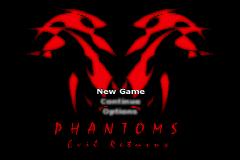
While the Middle East is gradually witnessing a resurgence in the gaming industry, with investors across the globe channelling their time and capital in hopes of nurturing their stakes into something more prosperous, there remains a conspicuous scarcity of knowledge surrounding the history of Middle Eastern-made games from the 1980s through the early 2010s. You might be surprised to learn that the region has been attempting, for many years, to infiltrate and establish itself within the industry, albeit with limited success. For today’s occasion, we will be looking into Phantom, the first Game Boy Advance title purportedly developed in the Middle East.
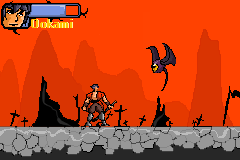
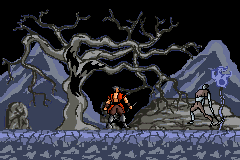
It began in 2003, when a cohort of developers from Jordan, fresh out of university, coalesced to form Element Team. Their early attempt would see them stepping into the then-fresh-to-the-market Game Boy Advance market with a project known as Phantom — a 2D action title that played similarly to the likes of Castlevania: Dracula X.
Operating within the severely constrained toolset available at the time, the team managed to assemble only a short Pre-alpha demo. Unfortunately, Phantom never progressed beyond this stage, as no publisher was willing to finance or shepherd the project into full production. The idea of a Middle Eastern studio attempting to carve out space in an already ravenous, hyper-competitive market felt, to many at the time, like a science fiction film.
Ultimately, Element Team was unable to sustain itself, and the project was quietly shelved before it could properly materialise. The game was cancelled, leaving only a demo build behind.
Inversion was an impressive and ambitious third-person shooter that allowed players to control gravity. While the concept was over-the-top for its time, it wasn’t really appreciated. This is a short article that delves into the beta content and includes some concept art found online.
Concept Art:
Beta Content:
Point of Action
Different Shirt Colour
Different Davis Russell and Leo Delgado Model
Different Inversion Symbol
Early Inversion Tool Colour
Other differences:
Assault Rifle has different SFX and recoil
The energy rifle doesn’t burn enemies when you shoot them
Leo and Davis’ grunts when shot are different
Gravlink has a different look
Early Inversion Bar (image TBC)
A short documentary containing information on the early story and what didn’t make it past the prototyping phase
Tork: Prehistoric Punk was a fun platformer released exclusively on the Xbox. This game was made by ex-Rayman developers and, early in development, was supposed to be a big triple-A contender against other competitors like Jak and Daxter and Super Mario. Unfortunately, things didn’t work out. Below, we can see some of the beta footage taken from the E3 2002 showcase and some press releases related to late 2003 and 2004.
This website uses cookies to improve your experience, by continuing to browse the site you are agreeing to the use of cookies. Find out more about cookies.Hide
Privacy & Cookies Policy
Privacy Overview
This website uses cookies to improve your experience while you navigate through the website. Out of these, the cookies that are categorized as necessary are stored on your browser as they are essential for the working of basic functionalities of the website. We also use third-party cookies that help us analyze and understand how you use this website. These cookies will be stored in your browser only with your consent. You also have the option to opt-out of these cookies. But opting out of some of these cookies may affect your browsing experience.
Necessary cookies are absolutely essential for the website to function properly. This category only includes cookies that ensures basic functionalities and security features of the website. These cookies do not store any personal information.
Any cookies that may not be particularly necessary for the website to function and is used specifically to collect user personal data via analytics, ads, other embedded contents are termed as non-necessary cookies. It is mandatory to procure user consent prior to running these cookies on your website.