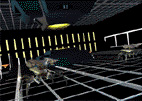
Ghosts ‘n Goblins 3D (AKA Makaimura 3D in Japan) is a cancelled chapter in the titular Capcom series that was planned in 1994 for the original Playstation, 3 years after the release of Super Ghouls ‘n Ghosts for the Super Nintendo. As far as we know this canned PS1 game was never officially announced by Capcom (but they did announce Ghosts ‘n Goblins for Nintendo 64) even if rumors about a 32-bit Makaimura were around at the time. In September 2020 a former Capcom artist shared a few pieces of concept art on Twitter, but later removed their message: those drawings are preserved in the gallery below, to remember the existence of this lost game. By looking at one of the remaining drawings, we speculate the game may have had an isometric top-down view.
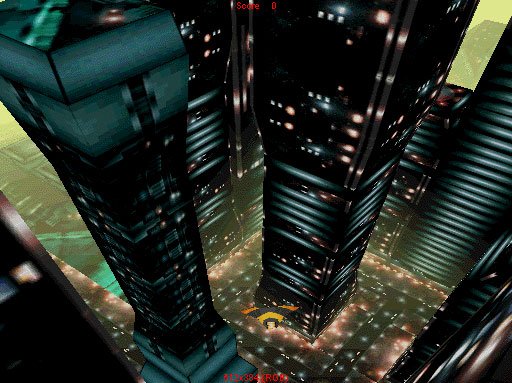
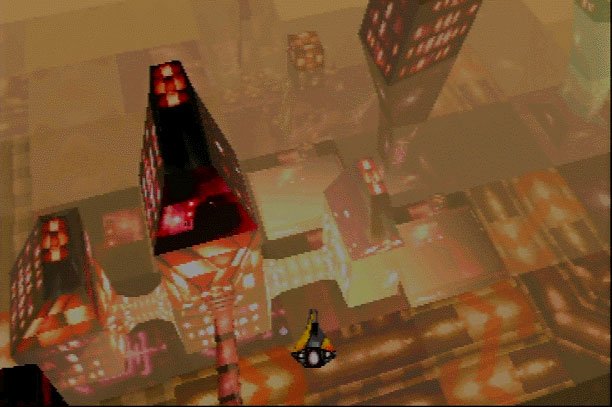
Lunatik is a cancelled shoot ‘em up that was in development around 1997 by Pure Entertainment, planned to be published by Eidos for Playstation, Sega Saturn and PC. The team wanted to develop something similar to a 3D Defender, while showcasing their gorgeous (at the time) 3D engine, featuring dozens of enemies on screens, high number of polygons and detailed textures.
Unfortunately gameplay was not as fun as they hoped for: the project needed more time to be improved, but Eidos did not want to invest any more money into it. In the end Pure Entertainment reworked Lunatik as some kind of ATI Graphic Cards tech demo, and this version was released in limited quantities in ATI bundles. We can assume this ATI Edition was much different from what the team had originally conceived for Lunatik. As we can read on Sega-Saturn.net:
“But ultimately the project failed because the original concept (3D Defender) was next to impossible to do really well. We tried many different gameplay mechanisms to make it work, and none were working. Ultimately we ran out of time to make it work and Eidos cancelled the project. The game did get a limited release for the PC. It was bundled with graphics cards as a graphics showcase, but the game itself was poor.”
We were also be able to gather some early PR text shared when Eidos were promoting the game to gaming magazines and websites:
“Little known London-based Pure Entertainment is the developer behind the project. They are striving to update the genre with a true 3D engine, giving the player full freedom of movement within Lunatik’s 3D world. LUNATIK is a 3D Shoot ‘Em Up, drawing on the addictive gameplay aspects of classics such as Defender and Zaxxon for inspiration, and merging them with a uniquely dramatic look and feel, the combination of which has never been seen before.
Drawn with strong Manga cartoon influences, the 3D real-time graphics have paved the way for an unusual ‘above and behind’ perspective, which will be backed by some in-house techno tunes.
Lunatik will sport eighteen levels, a barrage of Armageddon-like weaponry (including a heat seeker), power ups galore, shields, cloaking devices to collect and bosses that appear at designated times throughout the game.
One interesting touch is the boss timer. Each of the 18 levels features a construction area, where the enemies are busy building a boss monster. If you fail to complete the mission before the timer ticks down, the boss monster is built, and immediately comes looking for you. Gameplay is very much a case of fire or be fired upon, and if you do succeed then the nastier and smarter the AI of the bad guys gets.
The game itself has 8 large levels, each one being a man made ‘moon’ orbiting the decaying relic that was once Earth. All out war is occurring between 7 of the Corporation Dominated Moons and one other, Nu Earth 3, an indomitable civilization holding out against everything the Corporate armies can throw at them. Your mission? Quite simply, wipe the floor with the enemy.”
Images:
Footage from the released ATI Tech Demo (Thanks to Liqmatrix!):
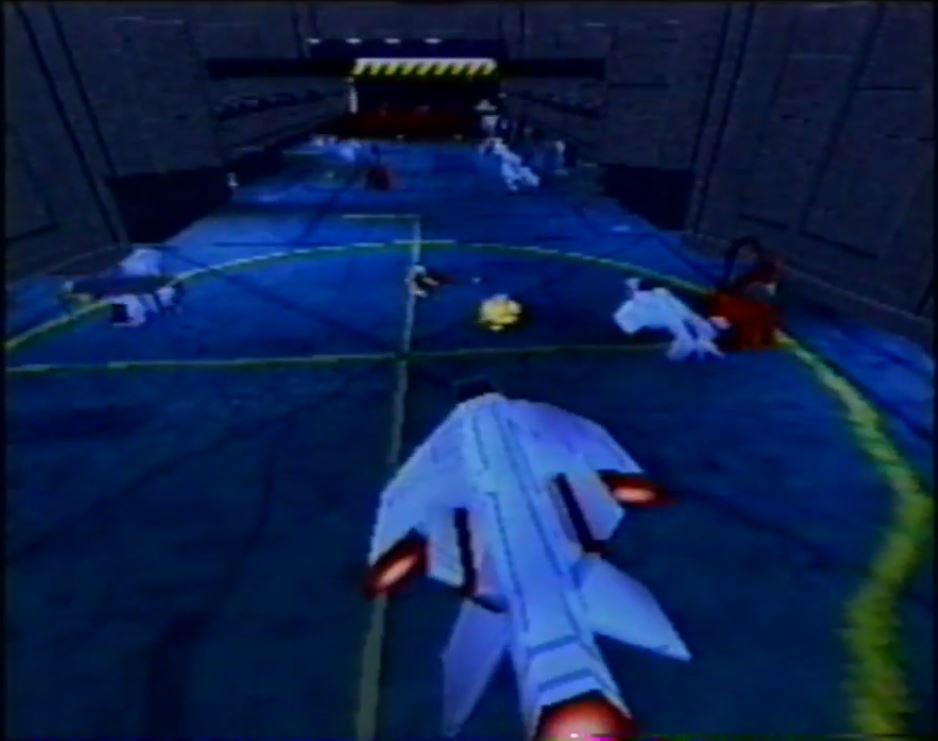
Mars Adventure (AKA “Saturn3054: The Titan Rescue”) is a cancelled action game that was in development around 1994 – 1995 by Sony Imagesoft, planned to be one of their first in-house projects for the original PlayStation. In 1994 Playstation hardware was still a prototype: all of the documentation was in Japanese and 3D console games were something new and hard to develop. Mars Adventure was an eleven-person team project and their first 3D game: unfortunately they were not able to complete it.
Gameplay was inspired by classic Choplifter and it would have been a first / third person, 360° flying game: you can imagine it somehow similar to Descent or G-Police, but its main mission was saving people from aliens. As we can read on Kyle Rode’s website:
“Since I was the only actual game player on the team, I quickly took control of the game design task, and I started to write up the game design document. At this point, the original Doom was the only game on the market that had any similarity to a 3D game, and it was actually a 2-1/2 D game, at that. Later, during development, Descent came out, and it was similar to what we were trying to accomplish.
The basic premise of “Mars…” was “Choplifter/(Fort Apocalypse)” on Mars or Titan or whatever. The player flew a spaceship around a space colony on Mars, and would rescue the people from the alien invaders. The spaceship would have a close proximity teleporter, which would suck them up into the ship’s cargo hold. The close proximity was the reason why the space marines couldn’t just do it from the mothership ala Star Trek.
I liked the idea of rescuing people as the main focus of the game play, instead of shooting up baddies. The act of rescuing would require that the ship stay motionless for a short period of time, while the transport occurred. This would open the player up to danger from the aliens. Also, when shooting up an environment, if you weren’t careful, there was always the chance that you might kill some good guys in addition to the aliens.
Unfortunately, the Playstation development kits that we received from Sony corporate in Japan, were a couple of months late, and the documentation was in Japanese. We even received the dev kits after third-party developers outside of Sony. Also, the Japanese documentation made them pretty worthless.”
By looking at prototype footage from the game it would have been quite amazing for its time, with huge levels where you could fly in every direction and fluid 3D graphics.
The Dark Half: Endsville (also known as The Dark Half Interactive) is a cancelled survival horror / adventure game based on the homonymous book by Stephen King. It was officially announced in early 1997, in development by Bits Studios and to be published by THQ and Orion Interactive for Playstation and PC. Unfortunately it seems they never released any screenshot from the game, but details about the project can still be found online in various forms.
“T-HQ announced today that it has signed an agreement with Orion Interactive to jointly publish The Dark Half, based on the novel by horror writer Stephen King. The game will be developed by the UK’s Bits Studios.
Also involved in the development of the game will be writers Matt Costello and Paul Wilson, who previously worked on PC titles The Seventh Guest and The Keep, respectively.
Revolving around protagonist Thad Beaumont’s struggle with his evil alter ego, The Dark Half is promised to be a 3D, third-person adventure game, “that will accurately reflect the Stephen King novel,” a T-HQ spokesperson said.”
“A new game for the PC and Playstation will be based on the King novel The Dark Half. The game will be based on Stephen King’s novel about a writer who must struggle with his evil alter-ego. It will be a real time, 3D adventure that contains 28 levels in seven different worlds. The Dark Half: Endsville is forecast for a 1998 release.”
“Stephen King, master of disturbing prose, is coming to the PlayStation and the PC next year in fiendish style with “The Dark Half.” The game will be based on King’s eerie tale of writer Thad Beaumont’s struggle with his murderous alter-ego, George Stark. The novel will be transformed into code through the use of two different game engines, one for the pre-rendered world of Beaumont, and one for the rendered-on-the-fly nightmare world of killer George Stark.”
“I was delighted to see “story by Jeffery Lieber” in the opening credits. Jeff and I go back to the mid-1990s when Matt Costello and I were scripting the “Dark Half Interactive” project for Orion Interactive; Jeff was acting as producer. He’s not the least bit squeamish but Matt and I managed to gross him out with our “Birthing Woman” interaction (don’t ask). The project was orphaned and became vaporware when MGM bought Orion.”
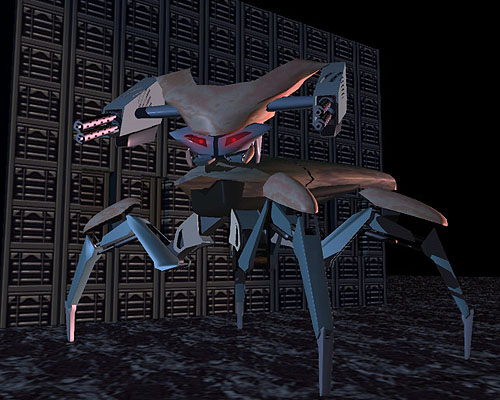
Cyberjack is a cancelled “six degrees of freedom” first-person shooter similar to Descent, that was in development for Playstation by SCE Studios Team Soho (the same team behind Porsche Challenge, The Getaway and the unreleased Mean Arenas) around 1995 / 1996. Unfortunately the project was never officially announced and it was soon forgotten when the team decided to focus on other games.
It was conceived as a sci-fi shooter set in cyberspace. Players would have been able to fly through the game’s levels in all directions, shooting down enemies and finding the exit to the next mission. Not much more is known about Cyberjack and as far as we know only 2 images remain today, preserved below to remember this lost Playstation project.
If you know someone who worked on Cyberjack and could help saving more details and media, please let us know!
This website uses cookies to improve your experience, by continuing to browse the site you are agreeing to the use of cookies. Find out more about cookies.Hide
Privacy & Cookies Policy
Privacy Overview
This website uses cookies to improve your experience while you navigate through the website. Out of these, the cookies that are categorized as necessary are stored on your browser as they are essential for the working of basic functionalities of the website. We also use third-party cookies that help us analyze and understand how you use this website. These cookies will be stored in your browser only with your consent. You also have the option to opt-out of these cookies. But opting out of some of these cookies may affect your browsing experience.
Necessary cookies are absolutely essential for the website to function properly. This category only includes cookies that ensures basic functionalities and security features of the website. These cookies do not store any personal information.
Any cookies that may not be particularly necessary for the website to function and is used specifically to collect user personal data via analytics, ads, other embedded contents are termed as non-necessary cookies. It is mandatory to procure user consent prior to running these cookies on your website.