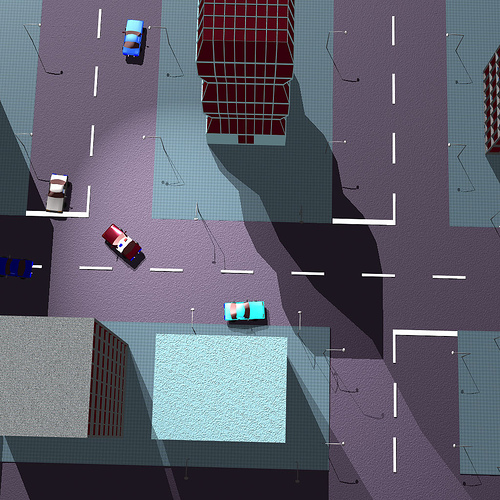
From early screenthos of Crash Twinsanity, we can notice that some stuff were different in the beta version: a character and some levels were removed (Foofie, the Lava Caves, Gone A Bit Coco), there were Bats in N. Sanity Island, the 10th Dimension area was different, Slip Slide Icecapades had a completely different layout and Farmer Ernest’s farm changed its location during development. A prototype of Twinsanity was know as “Crash Bandicoot Evolution” and it was meant to be much different and l
Cortex Chaos was a spin-off game from the Crash Bandicoot franchise, that was in development at Traveller’s Tales Oxford, but that was cancelled just after the early concept stage. The game is also know as “The All-New Cortex Show” and the player would have used Dr. Neo Cortex as the main character. The project had some interesting ideas, as we can read in the Crash Mania website: “The first proposal was based on the idea that Cortex had a series of little Clones and he would have beeen able to control them to do several little tasks … such as pick up and throw bombs, collect items, or line-up to create a bridge” […] “The Second followed a Rockman/MegaMan style idea” […] “The Third idea somehow had Nina involved more… and used weapon upgrades”. You can read more infos at Crash Mania. Thanks a lot to HPZr!
In August 2004, High Moon Studios (at that time still known as Sammy Studios; owned by Sammy Japan) started to work on a title codenamed “Alien”. After Sega was acquired by Sammy Japan, Sega took control over Sammy’s North American studios. As a result, they tried to close Sammy Studios.
However, Sammy Studios got independent and reappeared under the name “High Moon Studios”. Sadly, Project Alien was cancelled in August 2005.
The Fixer was a third person RPG in development at Climax for the Playstation 3. When SCEE decided to terminate their publishing contract in 2006, the entire project was cancelled.
Glover was a 3D platformer game developed by Interactive Studios Ltd and released for the Nintendo 64 and Playstation in 1998. A sequel was announced for Nintendo 64, Playstation and Dreamcast with a launch originally slated for mid 1999, but was later cancelled.
In 2010, NESworld recovered a playable beta of the Nintendo 64 version of Glover 2 and by October 2011, the ROM was leaked online.
Thanks to Nesworld and Goomther for the contributions!
The Bizarre Story Behind Its Cancellation
On February 25, 2015, James Steele, a programmer formerly of Interactive Studios, released a blog entry detailing the unusual circumstances which led to the cancellation of the game. According to the developer, a huge misstep at Hasbro involving one worker severely over-estimating the amount of cartridges required for the game blemished the Glover name at the company, ultimately resulting in the discontinuation of its sequel:
“…as far as we were told, Glover 2 had been canned because of Glover 1. Now this seems strange, because the first Glover has sold fairly well for a non-Nintendo N64 title. And it was on the back of those sales that Glover 2 had been given the go-ahead at Hasbro in the first place.
But Hasbro had messed up. They had screwed the pooch big time. You see, when ordering the carts for the first game, the standard production run was something like 150,000 units. And this is what the management at ISL had advised Hasbro to order – because the N64 wasn’t really fairing that well compared to the PS1 at the time and non Nintendo titles tended to sell poorly. They thought that Glover was a good game in its own right, and a moderate 3rd party success would sell around 150,000 units. And that is exactly what happened. Hence the go ahead for the sequel.
So Glover was a money maker for Hasbro, right? Right? Nuh-uh. As it happened, Nintendo had a special on N64 carts at the time the game was being schedule for production. Some bright spark at Hasbro thought it would just be absolutely SUPER to order double the normal amount – so they put in an order 300,000 units at a slightly reduced cost.
The problem was that none of the retailers wanted to take that stock off Hasbro’s hands. The game had been moderately successful, but the demand just wasn’t there. And thus Hasbro was left with 150,000 or so copies of Glover for the N64 that nobody wanted. That’s something like half-a-million dollars worth of stock that they can’t shift. And with Hasbro Interactive not being in the best of financial shape Glover became a dirty word around the company, as it became apparent over the course of Glover 2 development that they were stuck with all those carts.
Of course, the blame was put on the game and brand itself rather than the idiot who ordered the extra 150,000 carts from Nintendo. And that ladies and gentlemen, is why Glover 2 had been cancelled.”
According to Steele, who we later caught up with, the game was around 80-85% complete at the time development ceased.
This website uses cookies to improve your experience, by continuing to browse the site you are agreeing to the use of cookies. Find out more about cookies.Hide
Privacy & Cookies Policy
Privacy Overview
This website uses cookies to improve your experience while you navigate through the website. Out of these, the cookies that are categorized as necessary are stored on your browser as they are essential for the working of basic functionalities of the website. We also use third-party cookies that help us analyze and understand how you use this website. These cookies will be stored in your browser only with your consent. You also have the option to opt-out of these cookies. But opting out of some of these cookies may affect your browsing experience.
Necessary cookies are absolutely essential for the website to function properly. This category only includes cookies that ensures basic functionalities and security features of the website. These cookies do not store any personal information.
Any cookies that may not be particularly necessary for the website to function and is used specifically to collect user personal data via analytics, ads, other embedded contents are termed as non-necessary cookies. It is mandatory to procure user consent prior to running these cookies on your website.