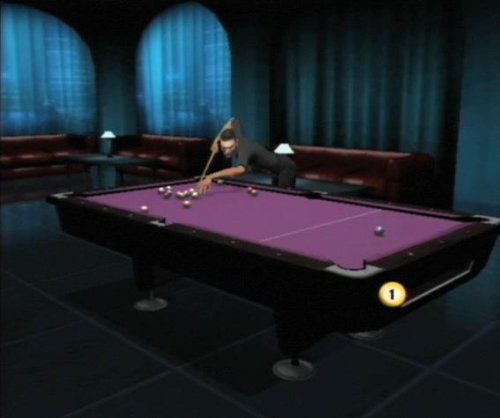
American Pool Deluxe is a cancelled pool simulation game that was in development by Blade Interactive in 2008 and would have been published by Gamecock Media / Navarre / Upshot Games on Nintendo Wii. The game was planned during the “casual games” Wii craze, but possibly canned when even publishers understood it was not going to sell enough on the market.
Authentic Billiard Games-Variety of game modes including 8 Ball, 9 Ball, Rotation, 3 Ball, Billiards and even Bar Billiards. Polish your skills and impress opponents with Trickshot Challenge mode
Precision Motion Controls – Use the precise motion controls to line up the perfect shot every time. Tap in a bank shot with a gentle push or scatter the break with a powerful move
Career Mode – Create your own pro and work your way up from humble beginnings in local pool halls and become a global billiards icon
Tournament Style Presentation – Experience a life-like pool tournament setting, including professional commentators and audience interaction
Multiplayer 1 – 4 players
Also on IGN we can find the original press release hyping up the game:
“With superior graphics and incomparable gameplay, American Pool Deluxe is as authentic as they come,” said Eric ‘The Preacher’ Yow, World Pool-Billiard Association Masse World Champion. “For years the gaming industry has attempted to duplicate the complex physics and geometry of cue sports into a lifelike rendition for families to enjoy. Finally, a game captures the beauty of the sport and allows you to perfect your skills! Run a rack without ever leaving your chair!”
American Pool Deluxe is the first game to come out of Upshot Games, the casual games division of Gone Off Deep Inc., whose other brands include video game publishing company Gamecock Media Group. “
Upshot Games even announced a “professional cue peripheral” that would have been launch with the game, as we can read on IGN:
“Upshot Games announced today an elegant, yet ruggedly built, “RealMotion Pool Cue” companion accessory for their upcoming professional pool game for Wii, American Pool Deluxe. This is not your average controller peripheral – it is a meticulously crafted cue built specifically to take advantage of the Wii remote’s accelerometer technology for real precision and fun.
“It is the dedication to realism that led to the development of the RealMotion Pool Cue for American Pool Deluxe,” said Eric ‘The Preacher’ Yow, World Pool-Billiard Association Masse World Champion. “Tested extensively by real billiards pros like me, you can be assured this is the only real pool game for Wii.”
A prototype of American Pool Deluxe is in the hands of game collectors.
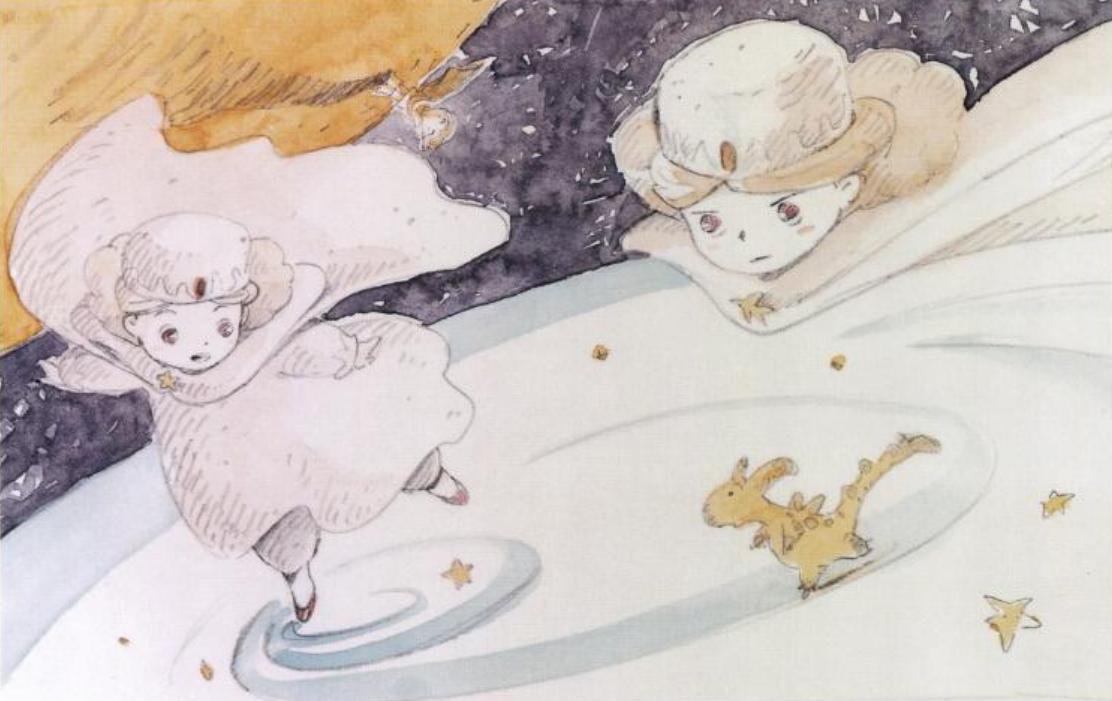
PoPoLoCrois is a cult-following series of RPGs based on a ‘70s manga by Tamori Yohsuke, of which just a few games were translated and published outside of Japan. The first game was developed by Epics (G-Artists) in collaboration with Sugar & Rockets and released in 1996 in Japan for the original Playstation, but it was initially conceived as a SNES / Super Famicom CD System project. This 16-bit PoPoLoCrois game was cancelled when the console add-on was canned by Sony and Nintendo.
A few photos from the design document for this SNES version were found and shared online by fans of the series and former developers, so we can preserve some proof of the existence of this lost RPG. As far as we know only this design doc was completed for the SNES CD version of PoPoLoCrois before being cancelled, but it would be nice to know if a 16-bit prototype was already in the works. Afterall, even the released Playstation game had a graphic style very reminiscent of old-school SNES RPGs, more than its 32-bit contemporaries.
Some details and theories about this unreleased 16-bit PoPoLoCrois were shared by Japanese website popolo-crois.com, “translated” by Google translate:
“The plan for the Super Nintendo Popolo shown on the left side of this photo is drawn by Mr. Fukushima in 1989 for Popolo’s animation project, so naturally this plan was created. It was after that. And the notation “EPIC/SONY RECORDS” (all caps) in the lower right of the proposal came to be used after its predecessor EPIC/Sony was absorbed and merged with CBS/Sony in March 1988. However, since CBS Sony changed its trademark to Sony Music Entertainment (SME) in April 1991, it has been mixed with lower case letters such as “Epic/Sony Records”. Therefore, the use of all capital letters in this plan suggests that the plan was created before April 1991 when the notation changed, so that period from 1989 to 1991 I’m guessing it will be until the end of March.
*As far as the date drawn on the setting data of 2 is concerned, it is from September to November 1992. The date of the monster design drawn by Mr. Tamori was also in October 1992, so I wonder if it was probably in the process of becoming a game by this time. In this material, not only Popolo 1’s enemies such as the Ice Demon King and Shitenno, but also Barbara, Myra (also transformed into Sanya!), Zilva, Leona, and other characters that appear in Popolo 2 as well as pilot films will appear. The tango and the figure of Paul the Lion are very widespread, so I have no idea how much story was planned at this stage. However, in July 1992, Sony decided to enter the home-use game console, and since the production of the Playstation version Popolostarted in January 1993, as described below, all of this material is for the Super Famicom version. It is unknown whether or not the PS version was also in view (some people say that Pietro’s hairstyle is shaved due to the memory of Super Famicom).
*3 The reason why the PS version of Popolo started to be produced around January 1993 was that Tetsuji Yamamoto said in a magazine interview (CONTINUE Vol.52) that it was three years from the start of Popolo’s production until release. It is said that it took a month, so I calculated backwards from the release date of Popolo. Also, Mr. Yamamoto seems to have been in charge of the PS business preparation room 10 months before the establishment of SCE, so it means that the production of PS version Popolo started at about the same time when the project of this PlayStation unit started. Right. If so, it is considered that Popolo’s production platform moved from Super NES to PlayStation between July 1992 and January 1993.
As I arranged the flow of production of the PS version of Popolo as described above, it is a question about “the circumstances have changed considerably since the pilot film and the design of the scenario and characters have changed”, but the circumstances have changed significantly Rather, it was before the pilot film was produced, and since then, I have not seen so much movement, including changes in the character design. As for the scenario, the essence of PS version Popolo is concentrated in the pilot film. By the way, what is the story behind the pilot film? At the stage of the pilot film, there was already a design image of the Ice Demon King, so was there any reason why I dared to bring in a Skinnag?”
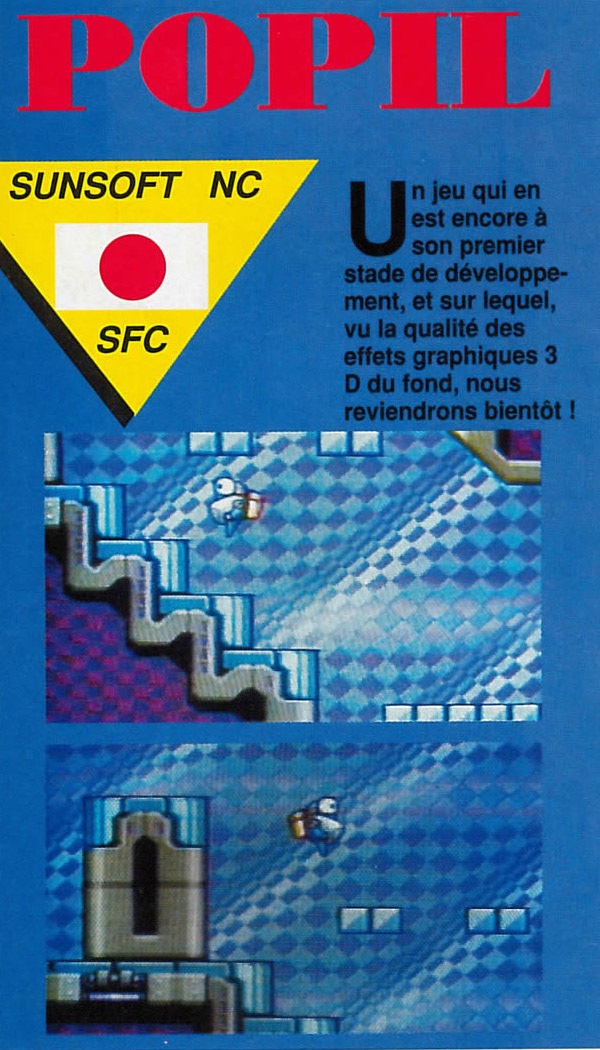
Popil is an obscure platform game that was in development by Sunsoft for the Super Nintendo / Super Famicom. This lost project is practically forgotten today and there was no proof of its existence online until Dosunceste found a couple images in Console Plus magazine (issue 1). While the game looks a bit like Twinbee: Rainbow Bell, we don’t have any more details about its gameplay. Maybe there are more screenshots and information in other gaming magazines from the ‘90s? If you find something more about Popil (or recognize it among other Sunsoft released titles) please let us know!
In only about 4 years of existence, United Game Artists managed to become one of the most original and beloved Sega teams ever existed, especially for Dreamcast fans. Originally founded as Sega AM9 and led by Tetsuya Mizuguchi, they had a portfolio of released games composed of just 2 new Dreamcast titles and a sequel (Space Channel 5 – 1999, Rez – 2001, Space Channel 5 Part 2 – 2002). UGA were for sure a talented and inventive studio.
Blending catchy music with beautiful, sometimes abstract 3D visuals, both Space Channel 5 and Rez are now considered cult classics and often used as examples to show how games can really be art. Synesthesia, the phenomenon felt when multiple senses are activated after the stimulation of a different one, was an inspiration and a game design objective for the United Game Artists team, mixing graphic, audio and gameplay so as to suscitate an abundance of feelings and sensations.
It’s easy to imagine how new games from UGA would have been acclaimed by their fans, but unfortunately things didn’t go as planned. After Sega discontinued the Dreamcast in March 2001, United Game Artists and the other Sega teams started working on the competitor’s consoles, creating new titles and porting their old classic or unfinished games to Xbox, Playstation 2 and Gamecube. In the following months some members of UGA worked on ports of Rez and Space Channel 5 for PS2, while the rest of the team started developing two new projects: Rez 2 and Buciyo 5.
Buciyo 5 (somehow translated as The Bumbling 5) was the new, original project by UGA planned to be a Gamecube exclusive, but not much was ever revealed about it. Sega quietly announced the game in January 2003 as a “New Project by United Game Artists” along with other titles such as F-Zero GX by Amusement Vision and Skies of Arcadia Legends by Overworks. At the time Jake Kazdal was the only American working directly at UGA on Space Channel 5 and Rez as an artist, animator and designer, and he was one of the few members of the original group behind Buciyo 5.
Jake was featured in an article published in January 2014 by Edge Magazine: “After completing Rez, Kazdal worked on a GameCube adventure for a year, a prototype that was never released”. Still without knowing much more about Buciyo 5, in 2016 when we were working on our book we got in contact with Jake, who helped us to preserve some more memories about this UGA’s lost masterpiece. He told us that:
“After Rez shipped, the rest of the Rez team went into a sort of discovery mode on what they would do with a Rez 2, and if that was even going to happen, they wanted to wait a bit and see how sales were. I was a big fan of my first director at Sega, Takashi Yuda, who was the creator and director of Space Channel 5. I had worked under him for my first year at Sega in Tokyo on that project and was just a big fan of his game design theory and style in general. He was starting a small team to prototype an idea for an action / adventure on Gamecube, so I asked to join him for a time, while the Rez team figured out what they wanted to do for the next project.”
According to the information we managed to gather, we imagine Buciyo 5 (which roughly translates to “The Bumbling 5”) as a mix between Mega Man, Metal Gear Solid, Pikmin and Ape Escape 3. Sounds interesting? It sure does.
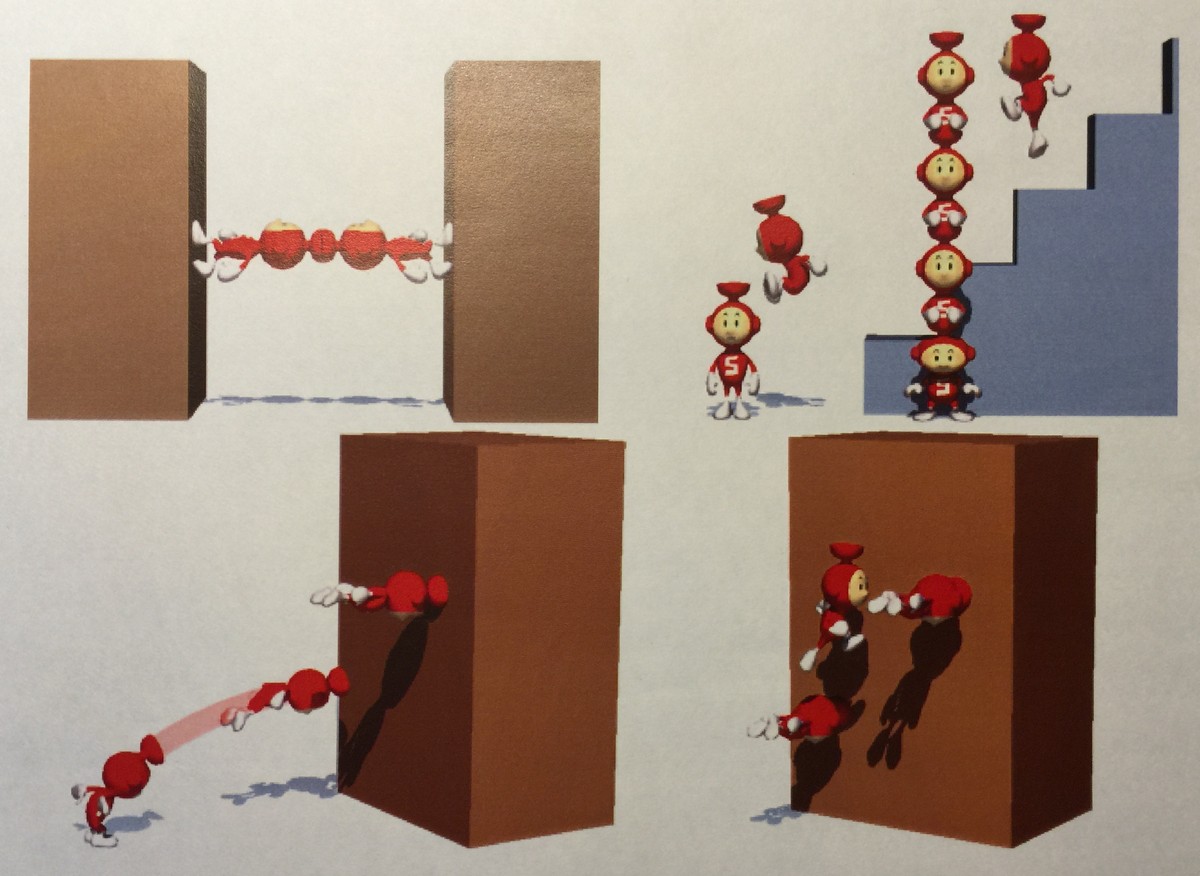
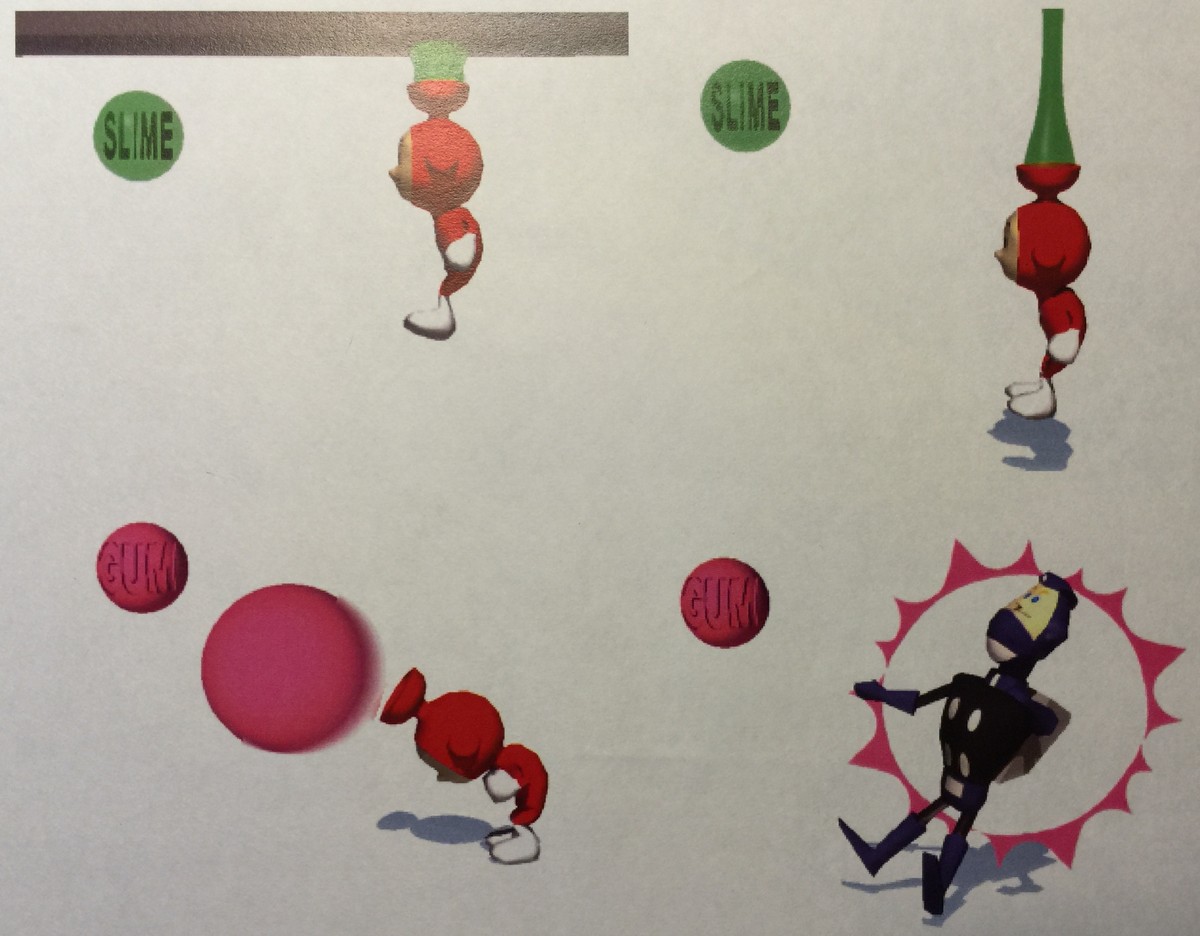
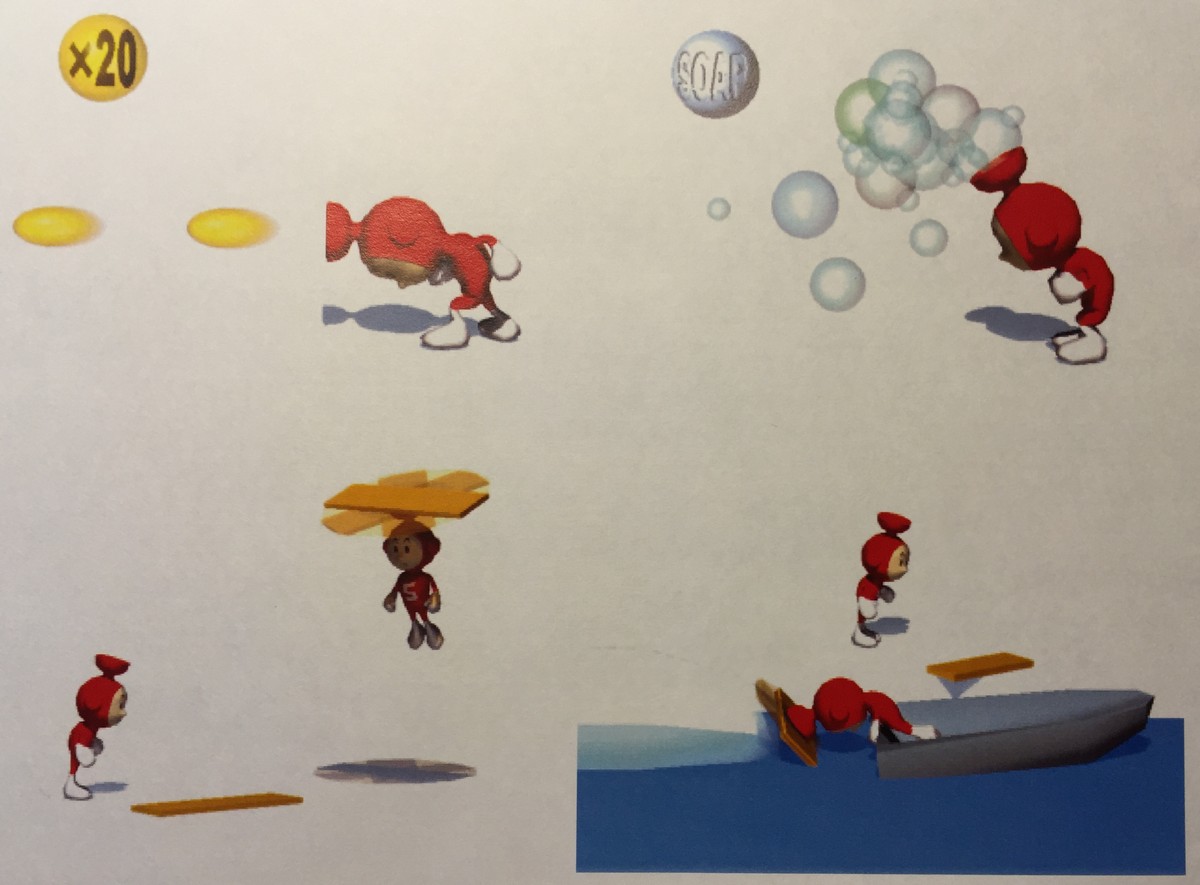
Players would have been able to choose between 5 red robots, visually somewhat in the vein of Mega Man in terms of cute robotic characters with human-like faces. Each robot had a different peculiarity: voice, eyes, nose, ears, and brain. This would have allowed different gameplay mechanics and approaches to the game’s levels, as explained by Jake:
“So one [robot] could mimic voices exactly, one could see really well, one could smell really well, one could hear really well, and one was a genius. You would use these 5 together to infiltrate enemy bases and take on the enemies as carefully as possible. They also had plungers on their heads, and you could jump on an enemy head-first, and flip him around with your plunger head! Or jump onto the ceiling and hold still as enemies walked underneath you, etc. It was pretty slapstick, and really cute, had a jamming soundtrack and was Yuda-san’s brainchild that we cranked on for a while”.
The Buciyo 5 team first created a concept video to internally pitch the game to Sega HQ – and it was a success: the project was greenlighted and they started working on a prototype. Once Rez 2 was officially abandoned – as the first one didn’t sell enough to warrant a sequel – more developers switched to Buciyo 5 and in about a year they were able to create an awesome playable demo, showcasing all the main features of the game and its unique style. Jake remembers:
“[…] working late nights, putting together a badass gameplay demo that was beautiful, super interesting and quirky, and designed by a bunch of *really* intelligent, talented game designers who really believed in the project. “ […] “It was at this time that I decided to move away from animation and really start focusing on environmental art, and Yuda-san had worked on all these Genesis era classics like Castle of Illusion and others, and I was stoked to be able to study with someone of that pedigree. We looked at a lot of classic Disney films for lighting and composition reference, and I fell in love with pre-production and concept painting during this project.”
Unfortunately, as it often happens with the most original and interesting games, marketing decisions were going to kill off the project. Mike Fischer, VP at Sega America at the time, went to Japan to evaluate new Sega games for the American market and was not interested in a quirky, cute adventure game, like Buciyo 5 definitely was. Sega Japan said they would have stopped financing the project if the American branch wouldn’t publish it in that area. So the plug was pulled: Buciyo 5 became another unseen game we’ll never play.
Of course United Game Artists were crushed when their last dream game was canned too. Rez 2 never made it past the pitch video phase, but Jake remembers “It was *sick*. Yokota-san, the art director of Rez, (and Rez 2, and Panzer Dragoon Saga) is a genius and it was an evolution of Area 5 from Rez. Insanity.” It seems that, at the time, there was no place for such avant-garde, experimental games at Sega.
Not long after Buciyo 5 was cancelled, Tetsuya Mizuguchi, Katsumi Yokota, Ryuichi Hattori, Jake Kazdal and other key staff left the studio, and United Game Artists quickly ceased to be. Those that remained at Sega, merged with Sonic Team (and ended up working on the stylish DS games Feel The Magic: XY/XX and The Rub Rabbits!), and many of them are still there.
In October 2003 Mizuguchi founded Q Entertainment along with Yokota and other former Sega developers to keep working on interesting music game hybrids and creating projects such as Lumines, Meteos, Every Extend Extra and Child of Eden. In 2009 Jake Kazdal founded his indie studio 17-BIT (formerly Haunted Temple Studios), releasing cult-following games such as Skulls of the Shogun and Galak-Z: The Dimensional. United Games Artists will always be remembered for having continued – till the end – to create original games following their own creativity: today their unique style is still kept alive by UGA’s former members.
Battle Choice is a cancelled fantasy style chess – beat ‘em up that was in development by Konami for the NES / Famicom, around 1988. It was based on the Japanese game of chess, Shogi, but mergeing simulation and action gameplay. In addition to fantasy knights, it seems there would have been even high school girls as playable characters in the game. We can assume it would have been a fun, comical take on classic Shogi.
The gameplay would have been the same as in the original shogi, up to the point where players take turns. When the pieces come into contact with each other, action-battles begin. The combat gameplay was basically a beat ‘em up.
Unfortunately the game was never seen in screenshots from magazines of its time and little is known about it. Music tracks from Battle Choice were included in the soundtrack album “Konami Famicom Chronicle Vol.3 ROM Cassette”, released in August 2015.
This website uses cookies to improve your experience, by continuing to browse the site you are agreeing to the use of cookies. Find out more about cookies.Hide
Privacy & Cookies Policy
Privacy Overview
This website uses cookies to improve your experience while you navigate through the website. Out of these, the cookies that are categorized as necessary are stored on your browser as they are essential for the working of basic functionalities of the website. We also use third-party cookies that help us analyze and understand how you use this website. These cookies will be stored in your browser only with your consent. You also have the option to opt-out of these cookies. But opting out of some of these cookies may affect your browsing experience.
Necessary cookies are absolutely essential for the website to function properly. This category only includes cookies that ensures basic functionalities and security features of the website. These cookies do not store any personal information.
Any cookies that may not be particularly necessary for the website to function and is used specifically to collect user personal data via analytics, ads, other embedded contents are termed as non-necessary cookies. It is mandatory to procure user consent prior to running these cookies on your website.