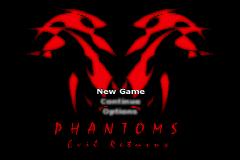
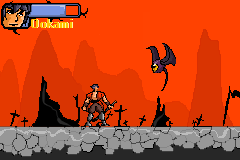
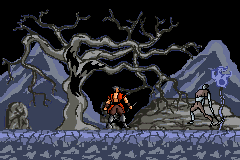
While the Middle East is gradually witnessing a resurgence in the gaming industry, with investors across the globe channelling their time and capital in hopes of nurturing their stakes into something more prosperous, there remains a conspicuous scarcity of knowledge surrounding the history of Middle Eastern-made games from the 1980s through the early 2010s. You might be surprised to learn that the region has been attempting, for many years, to infiltrate and establish itself within the industry, albeit with limited success. For today’s occasion, we will be looking into Phantom, the first Game Boy Advance title purportedly developed in the Middle East.
It began in 2003, when a cohort of developers from Jordan, fresh out of university, coalesced to form Element Team. Their early attempt would see them stepping into the then-fresh-to-the-market Game Boy Advance market with a project known as Phantom — a 2D action title that played similarly to the likes of Castlevania: Dracula X.
Operating within the severely constrained toolset available at the time, the team managed to assemble only a short Pre-alpha demo. Unfortunately, Phantom never progressed beyond this stage, as no publisher was willing to finance or shepherd the project into full production. The idea of a Middle Eastern studio attempting to carve out space in an already ravenous, hyper-competitive market felt, to many at the time, like a science fiction film.
Ultimately, Element Team was unable to sustain itself, and the project was quietly shelved before it could properly materialise. The game was cancelled, leaving only a demo build behind.
Everything began in June 1999, when IGN revealed that Titus had acquired the licence in order to make a game:
Titus is on one hell of a license acquisition. Superman, Top Gun… and now put RoboCop on that list. That’s right, Titus now has the rights to bring the robotic cop of New Detroit to consoles. Currently, Titus will not announce officially which consoles its RoboCop game will be brought to, but the license includes all systems (…)
The Game Boy Advance version was first mentionned in July 2001 as we can read on French website Jeuxvideo.com:
While we recently announced the return of Alex Murphy for an adaptation of the famous film RoboCop on PS2, Virgin Interactive and Titus do not seem decided to make a one-shot but on the contrary, it is a real licence exploitation that we should attend. The title not only planned on PS2, it should also land on GBC and GBA. The games in question could be released by the end of the year (…)
Further details were again shared by Jeuxvideo.com in May 2002:
Titus has just announced the adaptation of the arcade game RoboCop on GBA in a title named RoboCop: The Future of Law Enforcement scheduled for October 2002. As you can imagine, it will be based on the famous science fiction film and on this occasion the players will get into the armor of police officer Murphy. On the gameplay side, we are told it will be a side-scrolling shoot’em up which should have no less than 7 levels and 14 sub-levels with 25 different types of enemies to face.
However, the game totally vanished after this announcement, was never mentionned again and, of course, wasn’t released in October 2002. No details to this day were shared about why it was canceled, but speculation can be made. Alongside this GBA version, it is worth mentionning that the other games planned for various systems had a lot of trouble. The GBC version was released somewhere in the end of 2001, only in Western Europe, and was met with negative reception.
The First-Person Shooter version went into a much more troubled development, it was first announcedin 1999 when the licence was bought by Titus with apparently the implication of Xatrix Entertainment for the design:
Currently, Titus will not announce officially which consoles its RoboCop game will be brought to, but the license includes all systems, including PlayStation, PlayStation 2, Dreamcast, and Nintendo 64.
We have heard, however, that Xatrix, the developers of the upcoming PC first-person shooter Kingpin, will be handling the game’s design. What type of game will it be? A first person shooter, of course.
Don’t expect the game to be released until late 2000.
But the development dragged on and on, it was re-announced in April 2001, this time developed internally at Titus, and, first, only planned for the PS2 before also being developed for the Xbox and the GameCube. Then, Titus decided to cancel PS2 and GameCube versions and only focused on the Xbox. It is possible that the GBA version was dropped as well during this time of the development. After missing several scheduled dates, the game was released on Xbox somewhere in the second half of the 2003 year and was negatively panned by the critics. Oddly enough, the PS2 version was eventually released around 2003-2004 only in Europe, and the GameCube one released exclusively in Japan in 2004.
Another speculation about the cancellation of the GBA version was that its developer, Planet Interactive Development, disappeared somewhere in 2002-2003.
The whole source code of the game was finally leaked in January 2022.
After years of silence, the license returned briefly in 2014 with an adaptation of the reboot on iOS, and finally in November 2023 with RoboCop: Rogue City, developed by Teyon.
Fuzz and Rocket is a cancelled side scrolling platformer inspired by Yoshi’s Island, which was in development around 2003 by Halfbrick Studios (Ty the Tasmanian Tiger 2, Fruit Ninja) for Game Boy Advance. It featured an aim mechanic similar to Yoshi’s 16-Bit adventure, where you threw the protagonist’s sidekick (Rocket) to resolve puzzles or to kill enemies. At the time a few gaming websites posted news about the game and it even had a nomination at the 2003 Australian Game Developers Awards. As we can read from the old Halfbrick website:
“Fuzz and Rocket is an immersive 2D action platformer which incorporates both substance and style. It is centred around the main character, Fuzz and his sidekick, Rocket as they try to restore order to the land of Fulu. Mysterious masks have possessed the rulers of the 8 kingdoms of Fulu causing them to make life difficult for their subjects. It is up to Fuzz and Rocket to figure out what’s going on and trace the masks back to their source! Many challenges and obstacles stand in their way.
Fuzz and Rocket features over 8 unique worlds encompassing over 32 levels, numerous bonus games, in-game cutscenes and varied gameplay to keep players entertained for hours.
Fuzz and Rocket is Halfbrick Studios’ first Game Boy Advance title based on an original concept, which is currently in development. Fuzz and Rocket has been developed in-house using Halfbrick Studios’ proprietary engine and tools. We are currently looking for expressions of interest regarding its publication.”
The game was last seen at E3 2005 and as far as we know it was pretty close to being done, but in the end the team was not able to find a publisher before the GBA was replaced by Nintendo DS: Fuzz and Rocket was canned and forgotten by everyone.
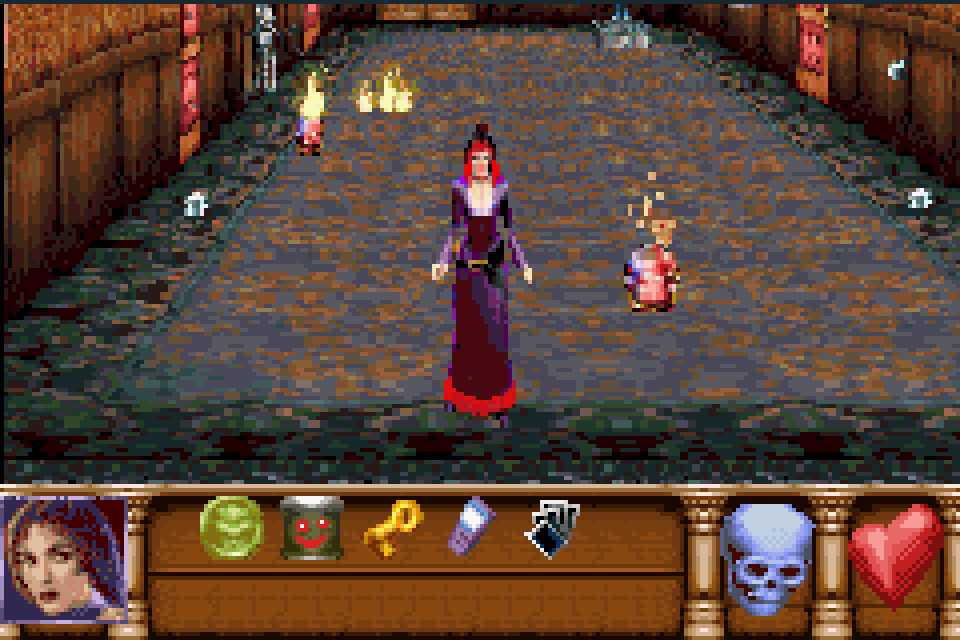
The Haunted Mansion is a cancelled adventure game that was in development around 2002 – 2003 by Pocket Studios, planned to be published for GBA by TDK Mediactive, the same company which published The Haunted Mansion for PlayStation 2, Xbox and GameCube. The games were based on the homonym Disneyland ride and the home-console versions were released in the same year of the Haunted Mansion movie (also based on the Disney ride).
This canned Game Boy Advance version was quite impressive for its 3D graphic, something that was not common on the console. Players would explore the mansion Resident-Evil- Style, finding keys and avoiding enemies, plus some on-rails sections on a classic mine cart.
It seems the GBA version of Haunted Mansion was canned when TDK Mediactive was bought by Take-Two Interactive. As wrote by a former Pocket Studios developer on Youtube:
“I was a coder on this game. The main reason for its non release was the TDK the original publishers being bought out mid development by Take2. I’m certainly not in the know as to what went on between Take2 and Pocket but after the takeover it was clear the game wouldn’t get a release. Lets just say Pocket wanted to hit its milestones to get paid and fill the contract and Take2 tried to make that hard.
As for the game. Publishers were at the time were eager to have games that were more 3D-ish, especially lower end publishers with less than amazing franchises as it made the game stand out from the flat 2d, iso games that almost every release was. The simple fact is the GBA doesn’t do 3D well, but I think looking back nearly 20 years and saying the 3d is broken isnt really fair. Personally I think some of the art in this game is lovely. I still think this game is technically impressive… Did anyone notice the transparent ghosts???? If any other game does transparency on the GBA I’ve not heard of it.
TBH the gameplay sucks. The card game was absolutely pointless, and the free roaming made the game weirdly empty and slow. I think a number of the team wanted to do a more side on 3d platformer affair, but that was ruled out fairly early as death/weapons was something you couldn’t do with this Disney property.”
Some years ago a ROM of the game was leaked online, so at least we can marvel at its technical achievement.
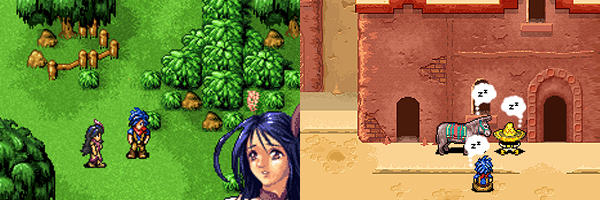
Western Lords is a cancelled Old-West RPG in development around 2004 by Blossomsoft for GBA, Nintendo DS and PC. In its initial version it looked like a classic 16-bit 2D RPG, but it seems it was later rebooted in 3D for Nintendo DS before being finally canned.
As we can read in some old messages in their (now closed) forum, the game was related to another unreleased game titled “Sagrada Guardians”:
“We’re currently working on a new game project titled Western Lords. Note, however: even though Sagrada Guardians was once titled Western Lords in the past (and then changed due to the theme issue), these games are not the same.
While Sagrada Guardians focus on ‘the cities made of gold’ theme, Western Lords will focus more on outlaws and cowboys in a merciless environment similar to Mexico. However, some story elements of Sagrada Guardians will be introduced via Western Lords.
Even if Sagrada Guardians and Western Lords shouldn’t be considered as the same series, they will be running in parallel to one another. Western Lords will have an entire new cast of characters, and should take place approximately one century before Sagrada Guardians on the same world. Take note that the environment will be darker unlike the fantastic ambiance of Sagrada Guardians. This will remind everyone how harsh the western era looked like (well, at least in literature!).
We hope to complete the game during this coming winter, exactly as we did with Oracle Adventure with the creative side. The game will possibly be sold for around $25 on PC. We’re also planning multi-languages, English and French as initial languages.
Also key members of Sagrada Guardians will be working on Western Lords. For instance, Xavier Dang will be the main composer and William Knight will be in charge of the dialogues. Min ‘keiii’ Kwon will possibly stay on as the artwork designer, though this is unconfirmed as of yet. “
The game was cancelled when the team was disbanded, as confirmed by the team leader on their old website:
“It was the very first project I created back around 2004. The Game Boy Advance and later the Nintendo DS were the main targeted platforms. Sadly, the team disbanded because of my inexperience and since then I’ve been honing my skills to become a one-man team. Fact is, the release of Eternal Eden in 2008 was some sort of Plan B to get Western Lords back on track. But then things escalated to Plan C, etc. I still intend to revive this project with a different style after 2016, if things go well.”
Blossomsoft also worked on other interesting cancelled games such as Mimic Book and GUNNARr (both for Nintendo DS). In 2016 an early prototype version of Western Lord GBA was found and preserved: you can download it from here.
In 2008 Blossomsoft released a different RPG titled “Eternal Eden” on PC as their first commercial project. As of 2020 it seems Western Lords was resurrected and it’s now planned to be released on Nintendo Switch in the future.
This website uses cookies to improve your experience, by continuing to browse the site you are agreeing to the use of cookies. Find out more about cookies.Hide
Privacy & Cookies Policy
Privacy Overview
This website uses cookies to improve your experience while you navigate through the website. Out of these, the cookies that are categorized as necessary are stored on your browser as they are essential for the working of basic functionalities of the website. We also use third-party cookies that help us analyze and understand how you use this website. These cookies will be stored in your browser only with your consent. You also have the option to opt-out of these cookies. But opting out of some of these cookies may affect your browsing experience.
Necessary cookies are absolutely essential for the website to function properly. This category only includes cookies that ensures basic functionalities and security features of the website. These cookies do not store any personal information.
Any cookies that may not be particularly necessary for the website to function and is used specifically to collect user personal data via analytics, ads, other embedded contents are termed as non-necessary cookies. It is mandatory to procure user consent prior to running these cookies on your website.