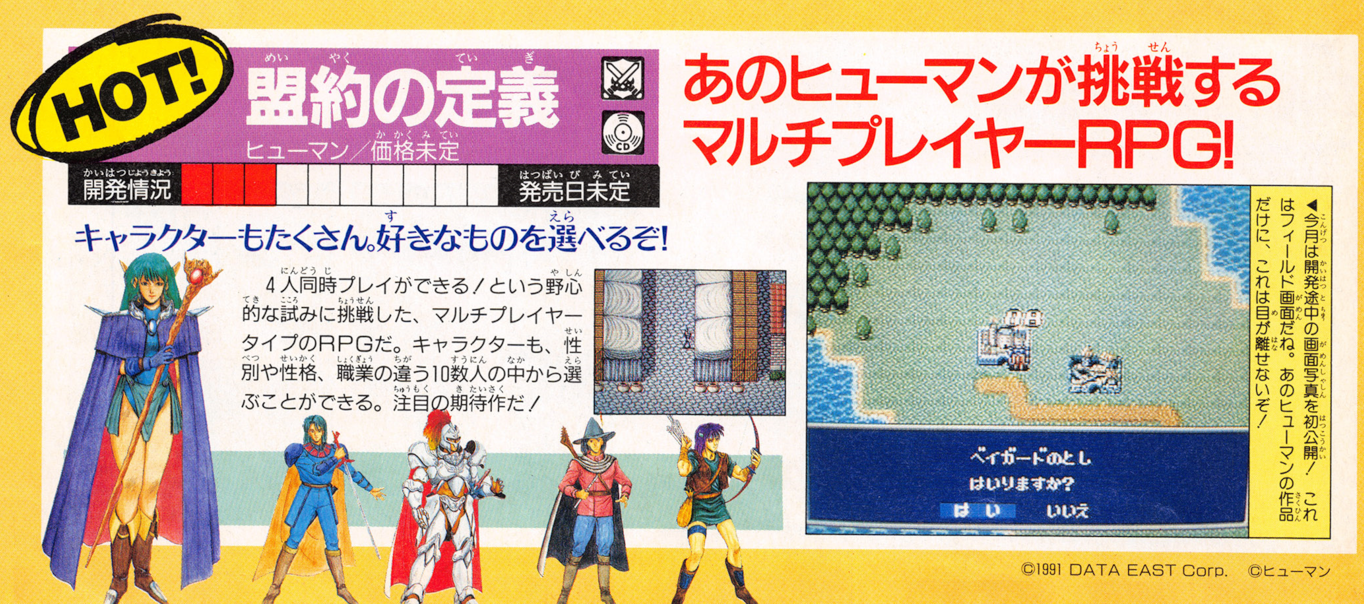
Some more details were published in the “Human Club Vol. 8” promotional leaflet and PC Engine Fan Magazine, so if you can read Japanese and would like to translate a short list of its main features described in there, please leave a message below!
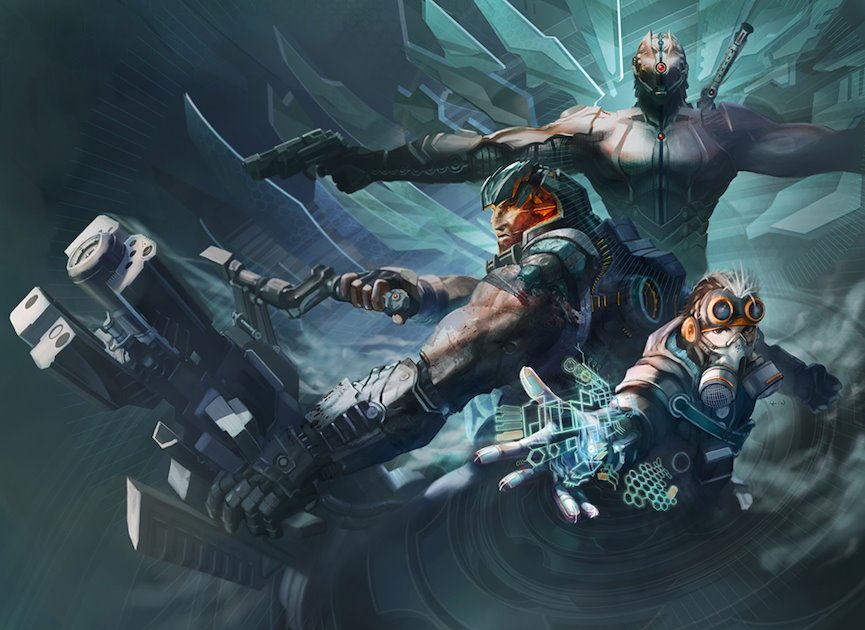
Starfall is a cancelled loot-shooter RPG that was in development around 2005 – 2006 by Hyboreal Games (later known as UI Pacific), a forgotten team formed by former Blizzard North developers, who previously worked on such games as Diablo, Diablo 2 and the cancelled version of Diablo 3. You can imagine it as a third person shooter with settings and gameplay similar to a mix between Halo and Diablo, plus a comic-book art-style. We can speculate it would somehow have been similar to what Borderlands became when published in 2009.
“The company is establishing a new best-selling game franchise by applying the proven formula of mass accessibility, addictive game play and longevity through replayability. Hyboreal Games was founded by Eric Sexton, MichioOkamura and Steven Woo, all industry veterans and former developers for Blizzard North where their contributions were essential to the success of the highly acclaimed Diablo franchise which has sold well over 13 million copies worldwide.
Hyboreal Games has enlisted the outsourcing services of FlipSide Game Studio in the development of the first project. FlipSide Games was founded by Jon Morin, our long time friend of nearly a decade and former co-worker at Blizzard North. FlipSide Games has already been hard at work helping us on the First project for the past few months.”
Unfortunately the team never showed any in-game screenshot for Starfall and only some concept art is preserved below, to remember the existence of this lost project. We can read some details about their concept for the game in an old interview by Shacknews:
“Shack: Have you been in talks with any publishers or other sources of capital, and are you concerned about the financial challenges of this endeavor?
Eric Sexton: We have just started talking with publishers about our current project. Starting your own business is always challenging, but the team is confident in our project and our experience as game developers.
Shack: What can you tell us about your first title?
Eric Sexton: Our current project is a 3D, Science-Fiction, Action RPG. It’s Halo meets Diablo with all the fast visceral game play of third person shooters merged with the character advancement and item collection of a role playing game. You can explore the planets of the galaxy, customize your spaceship and choose the path of your character while deciding the fate of the galaxy.
Shack: The few pieces of concept art available for your project suggest a perhaps more colorful or vibrant aesthetic than that of the Diablo series, where most of the team’s roots lie. Is this indicative of the direction of the game?
Eric Sexton: We do want to go with a slightly lighter look. The art we have up on our page is a preliminary direction, but we are still exploring the “look” of the game universe.”
Hyboreal Games soon vanished without any trace, so we can assume they never found a publisher interested in Starfall.
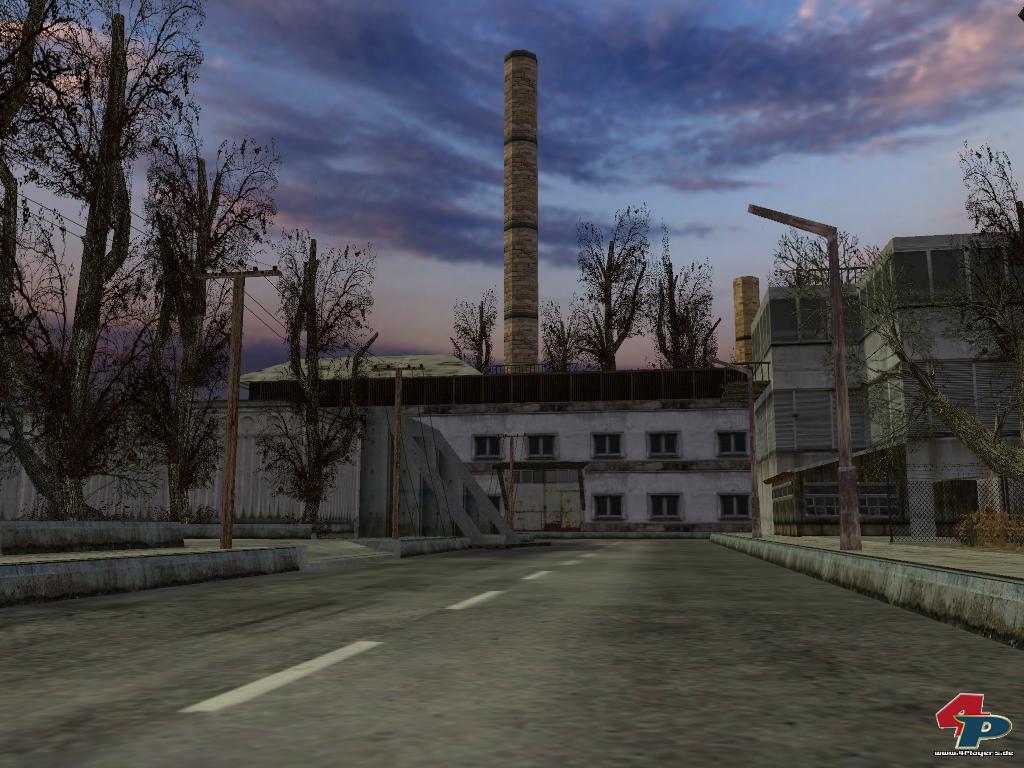
Nyx is a cancelled FPS that was in development around 2004 by German team SharkStorm. The game was set during a conflict between Russia and Turkey, with a mutant / zombie pandemic unleashed after the use of bio-chemical weapons.
As we can read on an old preview published on the now-closed Gengamers:
“In 2005, conflicts between Russia and Turkey reached their peak. The russian president gives the order to attack Turkey with a biochemical rocket. But the cheap technique Russia uses, fails. The biochemical rocket defects a short moment after it’s start and changes launching-coordinates with target-coordinates. The biochemical rocket flies back and hits the rocket-launching-station. The worst catastrophe in russian history began. People mutate because of the aggressive virus in the rocket. Some of them are dead before they can notice.
Vitali Adanov wakes up after some hours and looks around. In his room there is just silence, nothing sounds in from outside. Vitali asks himself what to do and decides to go outside. He goes through the cold floor and suddenly he hears some strange sounds. Doesn’t matter to him at this moment and he leaves the house. Near the sidewalk he can see a corpse. It seemed to be a woman, admittedly she looks a bit strange. Vitali realizes that she is hiding something in a fabric. Cautious he takes off the fabric and frightens when he sees a dead child in the cold bleach arms of the woman. Vitali is confused and turns around, just not to see this horrific thing. After a short time of concentration and revitalization he sees a group of people coming nearer to him. Vitali wants to know what happened and shouts in their direction but he got no answer. Coming nearer to Viatli he recognizes fresh blood and open wounds all over their bodies. In their faces, a touch of green color…
He is shocked, he can hardly not move his feet. One man of the group walks straight to him… Vitali doesn’t know what to do so he makes a step to the man, suddenly the scary hands of the thing rush right to his face and clings in the clenched body of Vitali. With a terrible cry the mutant tries to bite him. Vitali kicks him away and begins to run. The game starts ….
In Nyx you have the mission to reach a research station which is the only place on earth where you have the possibility to find an antivirus for the mutants. During the game’s progress Vitali has to fight against more and more enemies, which were “bred” by the Russian military. During the game, many cutscenes will show moments of Vitali´s past. There you can find the reason why Vitali’s body doesn’t get infected with the substance in the biochemical rocket.”
It seems Nyx was canned when SharkStorm were hired to develop another project, but in the end the studio just closed down sometime later and it’s now forgotten by everyone.
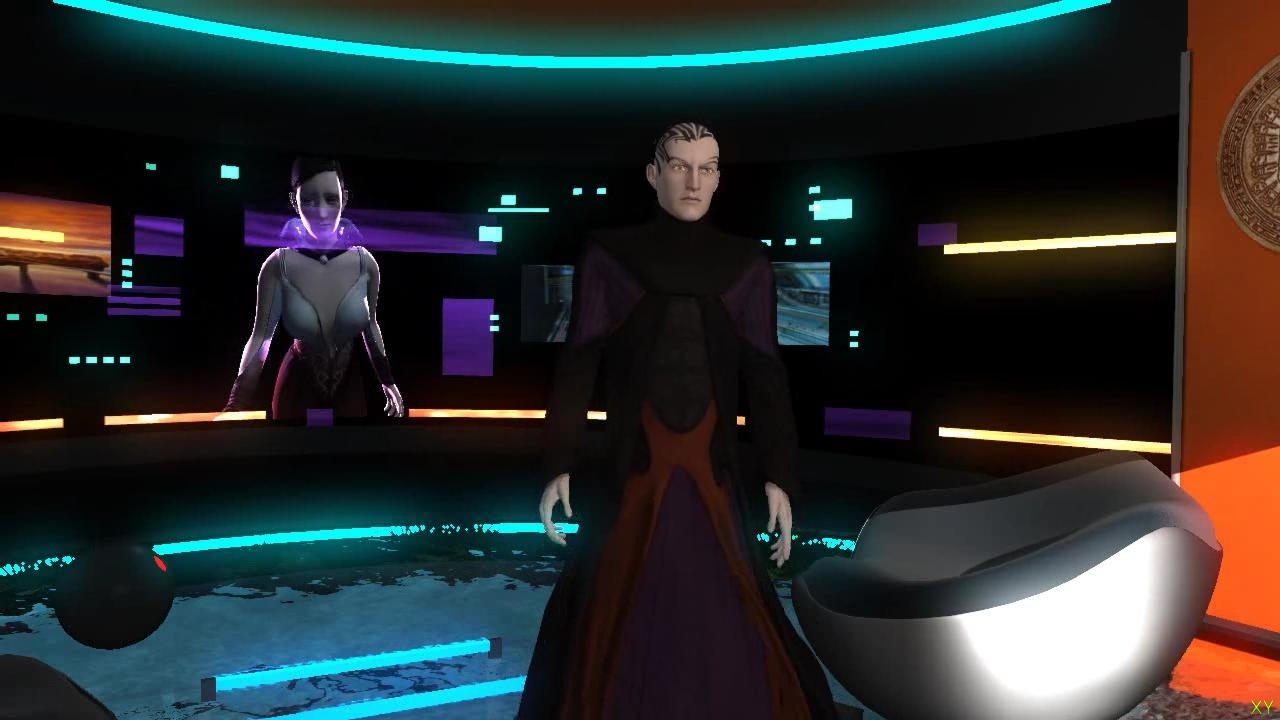
Ugo Volt(AKA FLOW: Prospects of Mayhem) is a cancelled FPS – TPS Adventure game that was in development by Move Interactive around 2005 – 2007, planned to be published on Xbox 360, Playstation 3 and PC. The game was officially announced in 2006 and it was shown at E3 of the same year: graphically and stylistically it looked like a strange mix between Halo, Too Human and Fable, with cross-settings between sci-fi and fantasy.
“Ugo Volt will switch from third-person view to a first-person perspective as players move through these two areas of the game, but we didn’t see much of any gameplay mechanics.
[…] In the near future, global warming melts the polar icecaps and floodwaters ravage the earth, covering all but the highest altitudes. (Waterworld?) Things, well, things don’t look good. Out of the ruins, the World Order Corporation harnesses nanotechnology to construct buildings and sanctuary for the population quicker than humanly possible. As the world’s savior, mankind gives ruling power to the World Order Corporation, which by expertly misleading the population, gradually takes away more and more liberties from the population, and eventually goes so far as to instill a dictatorial leadership, complete with emperor and creepy throne room (Revenge of the Sith?).
In 2031, in order to create the first advanced human prototype, the WOC selects a worthy man and woman to give birth to and raise the child. The prototype will use powerful artificial implants and the test period will last 60 years. If successful, mass production will begin. The child’s name is Ugo Volt. At 15, one of Ugo’s neurotransmitters malfunctions and sends out a shockwave that pushes his father into a pit of molten lava. […] Ugo internalizes his anger toward the WOC and eventually creates an alter-ego bent on revenge.”
By looking at available footage Ugo Volt seems like an interesting project. There’s something fun in its style and setting that could have made it enjoyable to play, just like watching a b-movie with friends. In prototype videos we can see some of the first-third person shooting gameplay: the protagonist uses special powers to resolve physic-based puzzles and some kind of black-hole gun, which attracts objects scattered through the levels to use them as projectiles (somehow like the Gravity Gun in Half Life 2). You could also assembly and edit your weapons to create new ones by mixing their parts together, open up shooting gameplay to experimentation.
Unfortunately it was still in early development when the team had to put the project on-hold, for lack of funds. They started working on a tie-in game for Portuguese TV series Floribella, receiving some money from SIC publisher. This was not enough to keep the company afloat and without any new investor interested in Ugo Volt, Move Interactive was closed down in 2008.
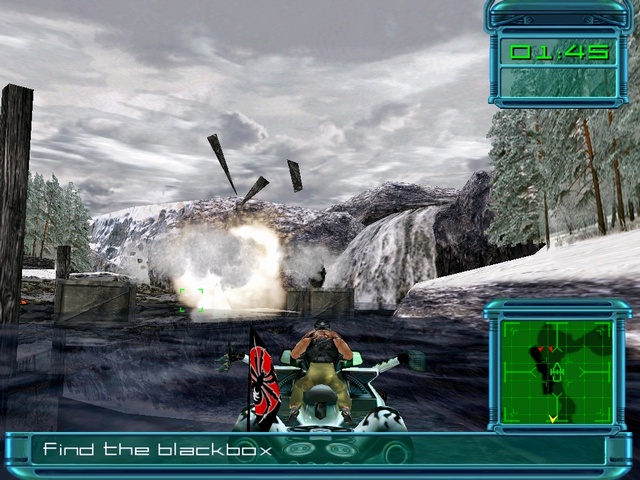
Hell or High Water is a cancelled jet-boat shooter that was in development by Wild Child Studios for PC. You can imagine it somehow like a mission-based Wave Race set in different levels from all around the world, where you had to shoot down enemies and collect key-items to complete your objectives.
“Hell or High Water fits players in a heavily armed military-type jet-boat. You have to use your best skills to outmaneuver and destroy AI-controlled opponents with your arsenal of rockets and machine-gun. The game consists of several episodes in various parts of the world with different mission objectives. For example, in the episode at Amazon River your goal is to collect dynamite and use it to mine and blow up a river dam, while in the Nord episode you have to find and destroy a crashed plane prototype and pick up the black-box. The whole game is an intense race against time in the world of water, fire and explosions!”
The team worked on this prototype to test gameplay using Driver-Inter‘s proprietary engines, but in the end the project was cancelled, possibly because they did not find a publisher interested in funding it. Wild Child Studios were also working on another water based game titled “Extreme Wakeboarding”, which was also canned in 2002.
This website uses cookies to improve your experience, by continuing to browse the site you are agreeing to the use of cookies. Find out more about cookies.Hide
Privacy & Cookies Policy
Privacy Overview
This website uses cookies to improve your experience while you navigate through the website. Out of these, the cookies that are categorized as necessary are stored on your browser as they are essential for the working of basic functionalities of the website. We also use third-party cookies that help us analyze and understand how you use this website. These cookies will be stored in your browser only with your consent. You also have the option to opt-out of these cookies. But opting out of some of these cookies may affect your browsing experience.
Necessary cookies are absolutely essential for the website to function properly. This category only includes cookies that ensures basic functionalities and security features of the website. These cookies do not store any personal information.
Any cookies that may not be particularly necessary for the website to function and is used specifically to collect user personal data via analytics, ads, other embedded contents are termed as non-necessary cookies. It is mandatory to procure user consent prior to running these cookies on your website.