Playstation 3 (PS3)

Sonic Generations [Beta – PS3/Xbox 360]

Sonic Generations [Beta – PS3/Xbox 360]

Sonic Generations is a 3D action platforming game developed by Sonic Team and published by SEGA. The game was created to celebrate the 20th anniversary of the company’s famed mascot, Sonic The Hedgehog. It was released in late 2011 and observed a number of small changes on its road to launch.

‘Sonic Anniversary’ & The Cancelled Versions

As revealed by leaked correspondance between SEGA of America and Sony Corporation of America from September 2009, the original working title of the game was ‘Sonic Anniversary’. It is unclear exactly which stage of its development the title was at back then, but we can safely assume a very early one.

The next update on Sonic Anniversary came from Madrid’s Gamefest 2010, courtesy of Sonic news site, Sonic Paradise. As corroborated by Sonic Reikai, a SEGA representative reportedly let slip an abundance of information on the game to one of their reporters. Without the authorisation of SEGA, the rep. disclosed that it was to be a combination of 2D and 3D gameplay, and would be developed for Nintendo Wii, PSP, PS3 and DS. When asked whether or not it was planned to come to Xbox 360, the employee indicated that talks were still ongoing.

Eventually, the game was officially announced as Sonic Generations on April 18, 2011 for Xbox 360 and PS3. It is uncertain how far the Wii, PSP and DS versions progressed, but our sources suggest that they were cancelled not long into development.

Two Three Sonics, One Epic Adventure?

Partway through development, long before the game’s script had been finalised, Ryan Drummond was invited by SEGA to re-audition for his role as Sonic The Hedgehog. Previously, the voice actor had played the character in a number of games, like the Sonic Adventure titles, but was replaced by Jason Griffith in 2004’s Shadow The Hedgehog.

Due to a fundamental professional disagreement with the company, Drummond ended up turning down the opportunity. According to one of our sources, who was formerly of SEGA, the actor would have played a “third Sonic” who would have represented the Dreamcast era of the series.

At another stage, Sonic Team also considered the possibility of Classic Sonic having a speaking role in the game and consulted the staff at SEGA of America about it. Aaron Webber, the associate brand manager at SoA at the time, insisted that if the character were to speak, he would have to be voiced by Jaleel White.

White, who was responsible for portraying the mascot in all three of the Sonic animated shows (Sonic SatAM, Sonic Underground and The Adventures of Sonic The Hedgehog) from the 90’s, was never contacted about the opportunity, however. The idea was soon dropped early on in production and Classic Sonic was made to be mute.

Sonic’s Birthday Beta

Despite the project as a whole being made to commemorate the blue blur’s birthday, the precise date of the 20th anniversary was June 23, 2011. To mark the big day, SEGA began distributing  a beta demo of Sonic Generations on Xbox Live and PSN. This build contained the very first stage, which was Green Hill Zone Act 1, wherein Classic Sonic is playable.

The layout of Classic Green Hill was ever so slightly different in the beta. At the section about midway through when you enter the cave, a buzz bomber present in the final game had not yet been added. Instead, there is a platform. Furthermore, breaking item monitors/boxes would leave a briefly a blue static effect on the screen.

There was also a different loading screen in this build, showing Sonic and Dr Eggman in their Sonic 2 sprite forms:

Modern Sonic Beta

Later in the year, a few weeks before launch, SEGA put out a second downloadable demo on October 18 2011, which was at first exclusively available to Xbox Live Gold subscribers. This second beta contained the second level from the game, which was Green Hill Zone Act 2, featuring Modern Sonic. It was lifted from a build first on show to attendees of E3 and Summer of Sonic in 2011.

Inexplicably, there is a difference between the voice clips used in the demo and the released game. Not only is Sonic’s voice clip for boosting different, he begins the level by saying “Ready? Go!”; similar to how he started each day stage in Sonic Unleashed off by announcing “Here we… go!”. This was later scrapped. It appears to have been an alteration that was implemented fairly late in development.

This assertion is supported by the fact that the clip itself still remains in the sound files programmed for every Modern Sonic stage in the game. Via modding, fans have been able to access these. As it turns out, Sonic Team simply muted the “Ready? Go!” voice clip instead of removing it. A number of hackers have been able to undo this change so the line can once again be heard within the game.

Like Act 1, there are some minor contrasts in the stage design, too. Towards the end of the level, Sonic must homing attack a chain of buzz bombers and extra spikes were present, also. A trick rainbow ring, which sends the player in the wrong direction later replaced these enemies.

Sonic’s blue aura effect, in this version, followed him whenever he uses his jump dash, stomp or homing attack moves; similar to how he did in Unleashed. Furthermore, the game is much more generous with the amount of boost power it allows the player when they use tricks in mid-air.

Unused Cutscene?

In some of the pre-release trailers SEGA used to promote the game, you can get a glimpse at a CGI cinematic which was never included in the final release. Whether or not this is a genuine unused cutscene that was dropped, as opposed to merely something created for promotional purposes remains unknown.

It can be seen towards the closing of the ‘Rivals and Bosses’ teaser and features Sonic and Tails confronting the Time Eater in Green Hill.

Thanks to The Neo JoyIvo Robotnik and Runaway for their contributions!

Videos:
 

Folklore [Beta – PS3]

Folklore is an action adventure developed by Game Republic and published by Sony Computer Entertainment for the PlayStation 3 in 2007. The 2006 beta trailer shows only Keats, but the finished game has two playable characters, the other being Ellen, who could be called the “main character” of the story. Keats is also referred to as a detective, and not a reporter.

The story also focus on a “murder mystery”, rather than on “the girl in the black coat” mentioned in the beta. On the whole, it seems like a lot of the story has changed, keeping pretty much just the setting and the village of the dead theme. Another difference in the beta trailer are the cutscenes. The trailer has plenty of “the normal stuff”, that is, what seems to be CGI and realtime animation. The finished game instead tells the story through a rather unique kind of 3D comic book cutscenes, or however to describe them.

The gameplay also looks very different. Though you absorb enemy souls to use in the final game, the trailer makes it seem more like a regular, turn-based RPG with summon attacks rather than the quite fast-paced action RPG that was the final result. Summon attacks happen extremely quickly in the final game, in a way that they are really different “weapons” that the main character uses.

Also, not sure if Keats is being chased at the end of the trailer or if it’s just a companion creature. Judging from the way it’s following him (keeping the same pace, etc) the latter seems more likely. Either way, nothing like that happens in the final game.

Folklore was originally supposed to take place in the same universe as Monster Kingdom: Jewel Summoner for the PSP (Folklore being Monster Kingdom: Unknown Realms.) From the beta trailer it seems like the gameplay of Folklore would have been similar to Jewel Summoner, before they decided to split it off from the Monster Kingdom series. It also seems to share some story aspects with Coded Soul (the sequel to Jewel Summoner) which was never released in the west. And for that matter the name; Folklore is known as FolksSoul in Japan.

Thanks a lot to Saga for the contribution!

Videos:


Deadly Premonition [Beta – PS3 / Xbox 360]

Deadly Premonition (aka Red Seed Profile in Japan) is a survival horror created by Access Games and released in 2010 for Playstation 3 and Xbox 360. Originally conceived as a PSP adventure game in the vein of “Flower, Sun and Rain”, Deadly Premonition became a next-gen title only in 2005.

Not surprisingly, Sweary65 said in a interview with Destructoid that combat sections were a publisher’s idea added only at the alpha stage of the development cycle. Probably in the earliest builds the player could only hide or escape from enemies. The “useless” garbage containers scattered around which York can use to conceal himself are likely alpha leftovers.

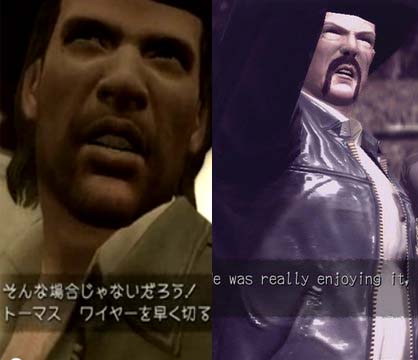
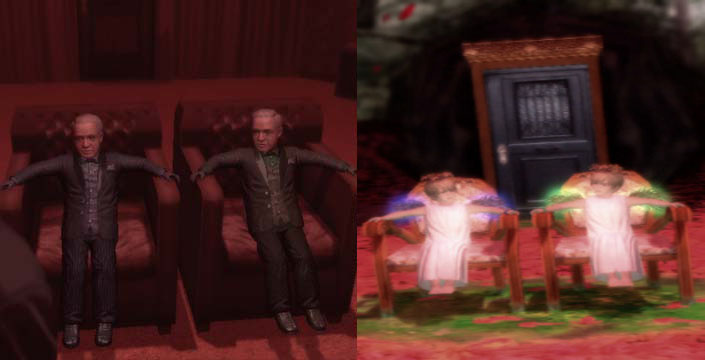
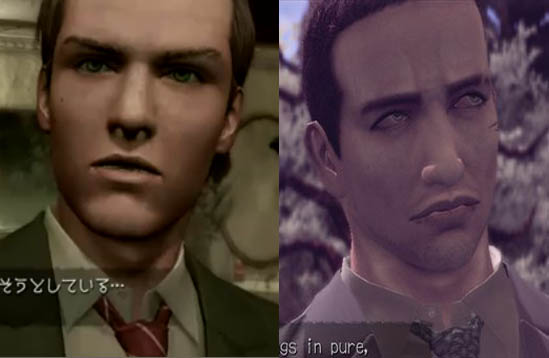
In 2007 a beta version of the game, tentatively called Rainy Woods, was finally showed to the public but, due to the many similarities with the TV series Twin Peaks, notably the dwarf twins and the protagonist, the publisher decided to postpone Deadly Premonition in order to change the appearance of the characters. All the voice acting was completely reworked too. We’ll probably never know how the original story would have unfolded.

York now looks like the main character of a 1970’s exploitation film.

The sheriff wasn’t changed that much.

In the released game “the red room” is located outdoor in the forest.

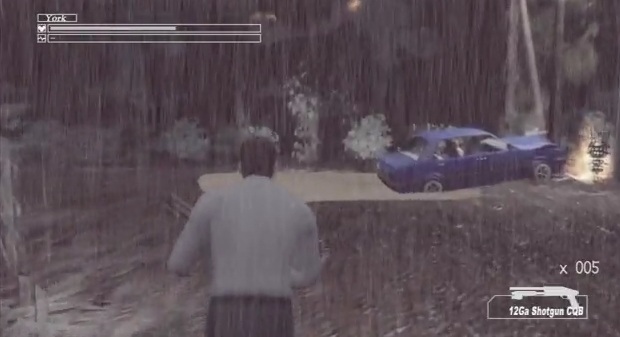
This pic is strange. It shows beta York without his jacket in the prologue, but in the final version this happens only at the end.

You can also read this topic at Assembler Games for more info and theories about the differences in the beta version of Deadly Premonition!

Images:

Videos:


Animal Wars [PS3 – Cancelled]

[Page updated: 27/06/2015 with vidoc, images & development history]

Animal Wars was a tactical RPG for the Playstation 3 in development at Factor 5, Inc. between 2004 and 2006 with Sony Computer Entertainment on board as its publisher. It was planned to be released some time after Lair, which launched in August, 2007.

Factor 5’s Quirky War Game Made By 4 People

According to one former employee, work commenced on the title in 2004, “roughly around the time” pre-production on Lair began. It came about as a result of the multi-game contract Factor 5 signed with Sony to produce a number of games exclusive to their platforms. Until the deal expired, the company was set to have every project of theirs fully funded by the publisher, pending their approval. Every title worked on during this partnership was slated for release on PS3 only and Animal Wars was one of them.

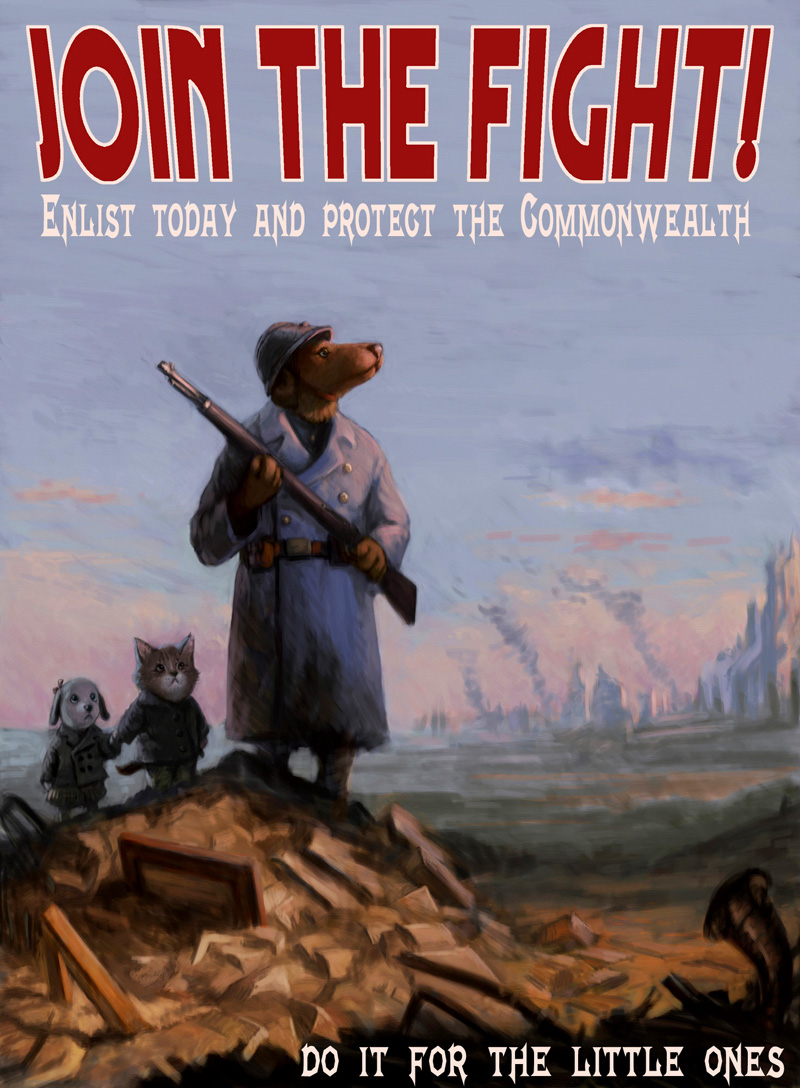
Join The Fight Propaganda Poster - Animal Wars Concept Art - Sony Factor 5 project

Whereas Lair exhausted a great deal of the developer’s resources from beginning to end, Animal Wars was a considerably smaller project, ongoing in the background for a number of years. Its team was comprised of no more than 4 workers total: 2 designers, 1 dedicated artist and a single programmer. The game was so low down Factor 5’s list of priorities, that every developer assigned to it was at some point repositioned to work on Lair and/or other proposed titles.

Early concept art:

Early character exploration:

Animal Wars was set in “an alternate WWI universe with anthropomorphic animal characters”, one developer recalled. The assassination of “the Archduke Birdinand” (a parody of historical figure, Archduke Franz Ferdinand) in the game’s opening served as the catalyst for the great war its campaign would have centered on. The event would have ignited a global conflict between various nations of animals (e.g. felines, bears, foxes, etc.).

Character art:

Its developers were hoping to build a unique story-driven experience out of Animal Wars. They had envisioned a rich world with great attention to detail and even went about creating propaganda posters and vintage style newspaper covers for inspiration:

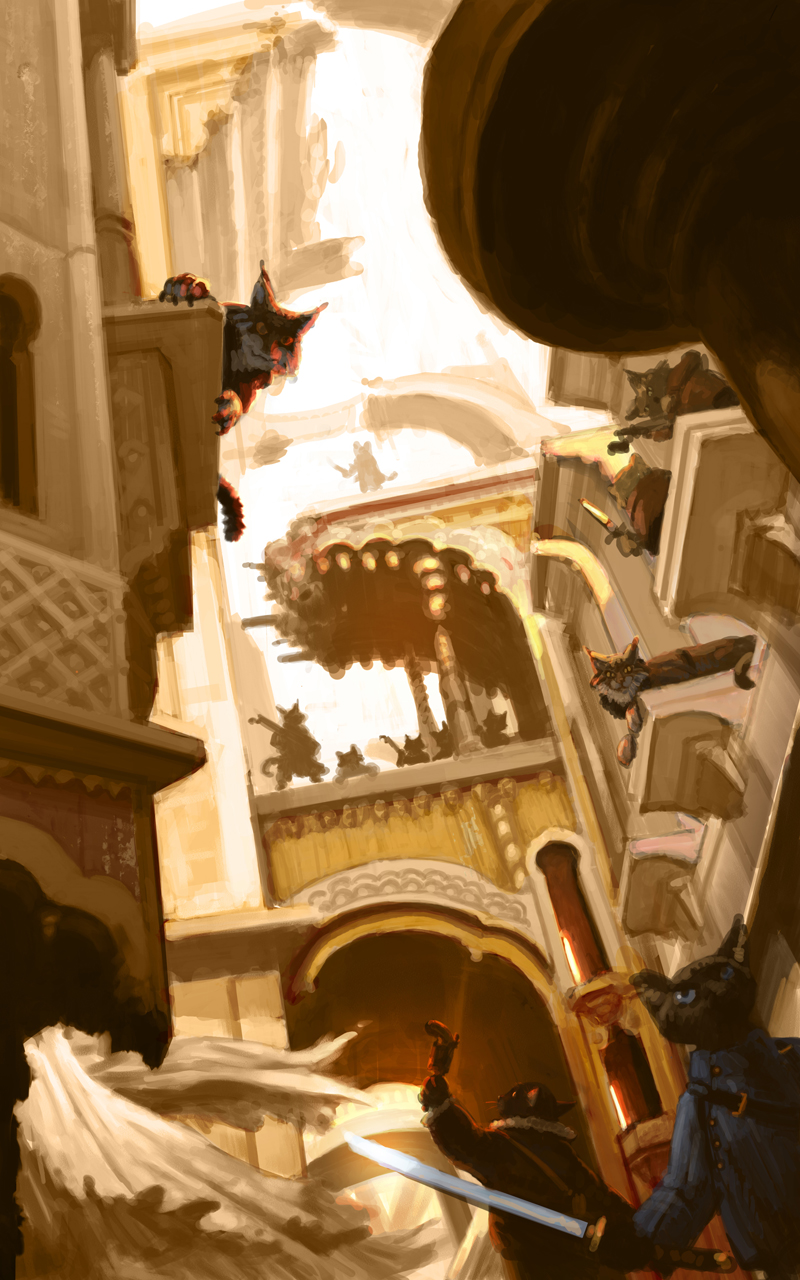
The enemy faction consisted of a coalition between ‘Boarmandy’ (boars), The Black Paw (a rogue cat organisation responsible for Birdinand’s murder), bear soldiers, and the main villains, an army of wolves lead by the evil ‘Isegrimm’. An explosive introductory level was set to portray a savage air raid on a city inspired by London, as perpetrated by boars in ‘Big Bertha’ attack blimps. Players would have then found themselves following the exploits of a canine in an aviator jacket, the planned protagonist; although, other playable characters were being explored, too.

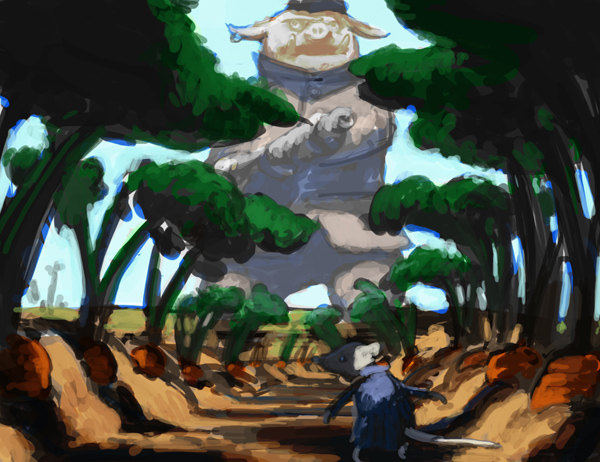
Among the various mission types mulled over during pre-production was one which would have flipped the scale of battle on its head and saw the player taking up the role of a mouse. From this perspective, regular soldiers would appear as humongous titans by comparison, as the mice performed daring espionage operations. Ultimately, this ambitious stage idea never got as far as being prototyped.

Mouse Mission Concept Art - Animal Wars Cancelled Game

One source likened its gameplay, of which very little was completed, to Valkyria Chronicles. It was intended to be a strategy RPG with a turn-based battle system and a unique oil painted art style.

The graphics were like Valiant Hearts but in 3D” – former Factor 5 developer.

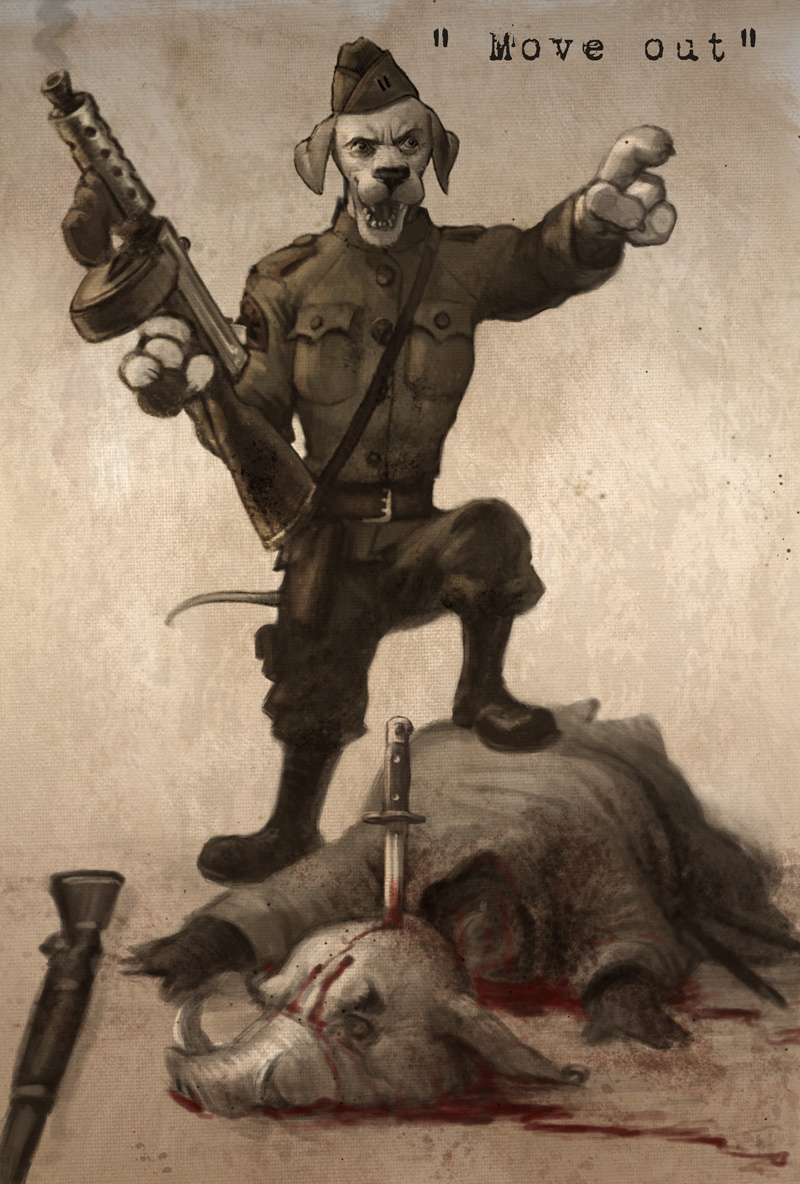
Its concept of anthropomorphic warfare was deceptively innocent on the surface. Early sketches, for instance, depicted a number of particularly violent scenes, including a dog soldier posed atop a decapitated pig. Its artistic direction leaned dark in this respect, though it had yet to be determined how explicit the final product would be.

Sam The Soldier Dog Concept Art - Animal Wars PS3

In what was said to have been a big contributing factor towards Sony’s willingness to fund it, the title was leveraging the work Factor 5’s people had previously done on the Star Wars: Rogue Squadron games. It called upon their experiences moulding that game’s blend of ground and air vehicular combat, which the publisher was very keen to capitalise on. Boats and amphibious tanks would have featured, too.

As explained by one of our sources, a central part of its concept was that each of the vehicles would have, in some form, integrated attributes associated with different animals into their design and functionality:

“For example, I worked on making a jeep that would always land upright no matter how crazy you drove it (cat landing on all fours).”

Why Sony Pulled The Plug On F5, Inc.’s Pet Project

Among the few that contributed to Animal Wars throughout its lifespan, the enthusiasm for it was in abundance. One ex member of Factor 5 even took to NeoGAF some years later to exclaim:

“It was fucking amazing looking and was way better than Lair so it made all of us sad it got cancelled.”

One of our sources echoed these sentiments, saying that its apparent independence from Factor 5’s higher ups was much to its benefit:

“I was more excited about Animal Wars than Lair because it was a smaller team and upper management left it alone (upper management interference greatly contributed to Lair’s failure).”

Despite this, none of the excitement held internally for the project could ultimately prevent its demise, as the relationship between Sony and Factor 5 began to sour.

Pre-vis. character models:

In the beginning, the deal between them was forged primarily so that the San Rafael studio would reinforce the PS3’s launch line-up with an original IP, which would later turn out to be Lair. Any other projects they were behind, Animal Wars included, were largely a show of good faith on Sony’s behalf.

Crucially, Lair was first scheduled to be available for the PS3 within its first few months on the North American market in fall 2006. However, its development encountered many hurdles; chief among which was the higher ups demanding the addition of motion controls and the team simply struggling to get to grips with the console’s then perplexing development environment. Factor 5 was already a company of limited resources, but Lair’s troubled life cycle lead to a number of departures mid-development. This left them unable to fulfill their end of the contract and thus, requested the game be delayed into 2007.

The publisher’s response was less than understanding. They promptly cut off all funding to Animal Wars and redistributed any monetary assets designated for it into Lair. The developers weren’t willing or able to self-finance the remainder of the project, resulting in its subsequent cancellation. The move also put an end to a number of other propositions, including a shoot ’em up called Virus and a reboot of Turrican.

One developer we spoke with detailed how the game had reached the prototyping phase when it was shelved, but never left pre-production:

“At the time, we had a working biplane, tank, jeep and 3rd person character working… We had a vertical slice of a damaged town that the lead character (a greyhound in WWI aviator outfit) and the tank was able to run around.  We also had a pretty massive terrain for the biplane to fly around (similar in size to what ended up in Lair).”

Prototype character models:

The former employee admitted that the prototype build suffered visibility issues, which they had not yet been able to resolve when development came to a close. These were caused by the dark colour palette employed by both its character models and environments, which would blend together unintentionally.

Wild Cats Scenario Concept Art - F5 Animal Wars

Animal Wars was never officially announced and its prototype materials were locked away by the management of Factor 5, Inc. during the company’s closure in late 2008.

Prototype models: