
Silent Hill: Homecoming is the sixth installment in the Silent Hill survival horror video game series, developed by Double Helix Games (AKA Foundation 9 studio + The Collective + Shiny Entertainment). From the pre-released screenshots, we can already see some beta differences between the “final” version and an old “beta” version, like different hair color for the protagonist and a “better” graphic. If you played the final game and notice some more beta differences in the early screens and videos, please let us know! Thanks to Brad for the contribution
GTA IV [X360/PS3 – Beta]

Michelle is Niko’s first girlfriend in GTA 4. In the beta version, her face looks totally different from the final. [Thanks a lot to Gerror for this image!]
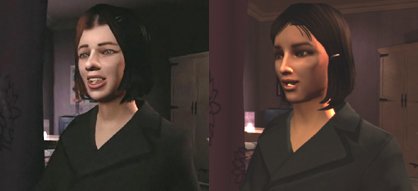
Various users from the GTA Forums have found a lot of differences in the early GTA4 screens, were we can see:
- A removed Black Taxis
- Missing License Plates
- Beta Gloves
- Beta Haircut
- Transparent White Blinkers for Police/Taxi
- Beta clothes
- Little Jacob without glasses
- Beta MP5
- Removed Silenced Glock
- .375 Colt Python Revolver
- Beta MP10 – Done (by BWARazor)
- Yankee had white rims
- NOOSE Van was an blue Boxville Truck
- Vincent looks different
- Vlad with a long haircut
- RESTAUTANT were miss-spelled on the sign
- Sales sign were removed in Chinatown
- Leenies Fireproof were called in the beta “STANLEY Fireproof Door Co.”
- Pogo the Space Monkey Arcade game from GTA SA in bars
- In the Beta the Rotterdam Tower blue,purple and white lights intstead of red,white and blue lights in the final
- The Beta has two 2 stores weren’t in the final game: JR.RAY’S and JIM
- The Sex Shop had different wall textures
It’s interesting to notice that at the GTA Forum they are even working on a Mod for the PC version of the game, to restore some of the beta content removed from the final version! You can check the topic in here: Grand Theft Auto IV Beta Mod.
Images:
Videos:
Conker: Live And Reloaded [XBOX – Beta]
Conker: Live and Reloaded is a remake of Nintendo 64 game Conkers Bad Fur Day. When the game was 1st announced it was called Conker: Live and Uncut, and was intended to be completely uncut and remove all the censoring of the first game, its name was later changed to Conker: Live and Reloaded and had even more censoring than the original game. Throughout the games development there were many cuts and changes to the multiplayer mode.
While it was a remake, the single player game went through a number of changes mostly involving different textures or models, especially for Buga The Knut and his girl. Her lips are larger in the older picture, and her bra is leopardskin rather than a standard brownish color in the final version. Also her nipples are showing in the beta version (not only that, but Buga has chest hair in the beta shot). Conker-bat was black in the beta, as in the N64 game, but in the final version it’s orange.
Thanks a lot to Airfoemoe, Supermoe1998 and Karrunaniara for the contributions!
Images:
Videos:
Dirty Harry Video Game [Cancelled – Xbox 360, PS3, PC]

Dirty Harry/Dirty Harry Extreme was a cancelled third person shooter action game that was first in development at The Collective, Inc. and was intended to be published by Warner Bros. Interactive in the first half of 2007 on Xbox 360, PS3 and PC. Additional versions were planned for Nintendo Wii, DS, Xbox, PSP, and PS2 to be released that same year.
Go Ahead, Make My Game
The first conception of ‘Dirty Harry’ is believed to date back to around June 2004. Around this time, multiple sources such as Eurogamer reported that license holders, Warner Bros. had started to privately invite developers to pitch their ideas for a Dirty Harry video game. It is unknown how many other developers responded to the offer, but it was The Collective, Inc. who delivered the successful proposal and was granted the license in late 2004.
An Announcement Too Soon?
Scripting work on the Dirty Harry game started around January, 2005. Eastwood had signed on to reprise his titular role, lending his voice and likeness, as well as being a creative consultant on the project. Actors Laurence Fishburne, Lucy Liu and Gene Hackman were also planned to feature.
The reveal of the Dirty Harry video game came in February, 2005. At the time, it was being targeted for a release in 2007 to coincide with the release of the HD-DVD Dirty Harry film collection. This was part of a marketing push by Warner Bros. to resurrect the franchise and the video game, in particular, was intended to give the series greater relevance among to younger audiences.
“Creating Dirty Harry video games will also introduce this memorable film character to new generations on a medium they appreciate.” – Clint Eastwood
Its first public announcement came in the form of a press release from Warner Bros. Interactive. At the time, details on the game were scarcely available. No trailer, screenshots or information about which platforms it would be made for other than multiple unspecified “next generation consoles” was attached. This was because production on the game had not even began at this point, but WB had great confidence in the project; to the point at which they’d announce it so prematurely. It would be a while, too, before the core of development would start. WB, The Collective and Eastwood spent the remainder of the year steadily refining the script and producing concepts of set pieces.
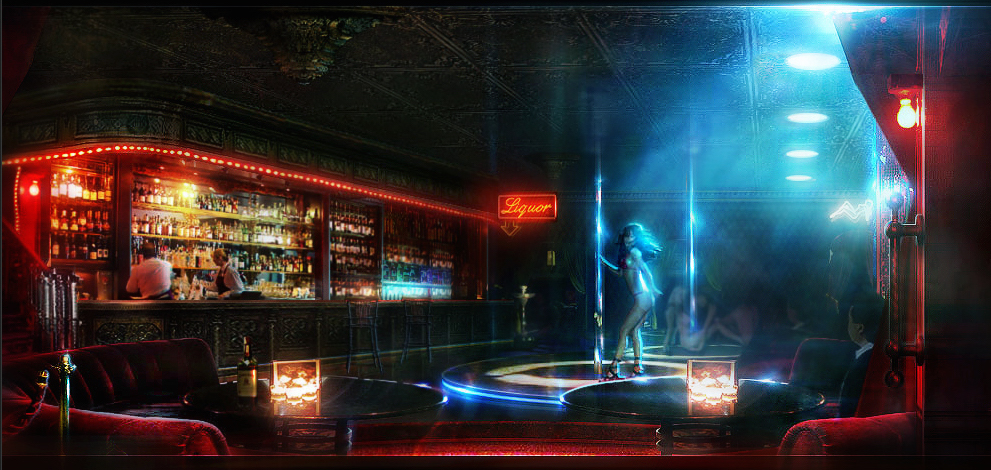
The game took place between the first and second films, Dirty Harry and Magnum. Little information on the narrative was ever revealed, but according to the initial press statement, its aim was to add more depth to the protagonist.
Concept art:
The Collective Gets To Work
It was in February 2006 that the game, then still going under the working title of ‘Dirty Harry’, was finally put into full development. It was being worked on for the Xbox 360 and PS3.
It was initially undecided whether or not the title was going to feature an open world San Fransisco, one former developer told us, but by the start of the year, it had been decided that it would instead take on a mission-based structure. It then became a ‘duck and cover’ third person shooter with melee combat elements.
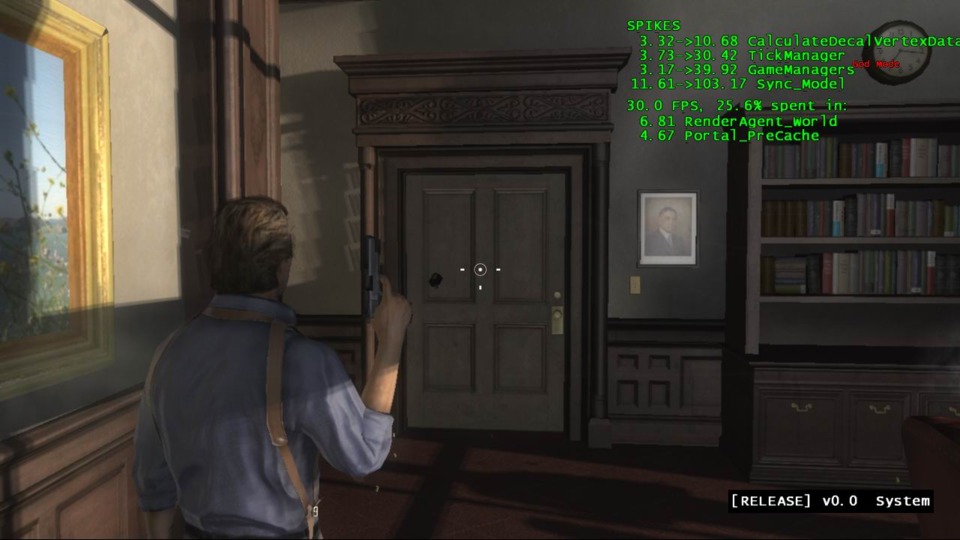
The storytelling of the Dirty Harry game was linear, but featured a “reputation system”, as one ex Collective developer described. Players would be given the choice how to deal with criminals: they could either knock them unconscious with a melee attack or straight up shoot them with Harry’s trademark .44 magnum. The NPC’s in the game would then react dynamically to these actions. For instance, developing a high kill count or firing on someone unnecessarily could land you in hot water with the chief of police. Conversely, being too lenient on crooks could cause them to take the detective less serious, mocking him and considering him less of a threat.
In-game environments and misc. assets:
The First (And Only) Trailer
By April 2006, the game was progressing steadily at The Collective, but was not yet ready to put on display to the public. Warner Bros., on the other hand, had been talking it up to various outlets for some time and was keen to show it off. The solution to this was a trailer, which was produced by an external company. Initially, it was only shown behind closed doors to the press at E3 2006 in May, before being released online shortly thereafter.
The trailer, seen below, has been subject to some debate over the years. Some fans believed it was entirely pre-rendered and not representative of its in-game visuals, while others thought it could be an actual look at the engine itself. The truth lies somewhere in the middle. The Collective had given their game assets to ACMEfilmworks, including character models and engine schematics. ACME, under the direction of filmmaker Tigar Hare, then used these to render the trailer. Thus, it gives us a somewhat accurate portrayal of what it would have looked like in motion; albeit with a slight up-resing treatment.
As we have come to understand, Eastwood had yet to record any voice work for the game at this point, so the trailer used audio lifted directly from the original movie for the voice of Harry Callahan.
High quality direct feed screenshots of the trailer:
The Unseen Versions
It was never formally announced, but in late 2006, Warner Bros. Interactive had hired the now defunct Sensory Sweep Studios to create multiple versions of Dirty Harry for other systems. These plans included Nintendo Wii, DS, PS2 and PC.
Ambitiously, the developers were aiming to deliver the same third person shooter experience across every platform. Whereas the PC release would have been a straight port of Collective’s 360 game, the DS title was built from the ground up; as were the ones for PS2 and Wii. The Wii version was never put into full production, but would have been an “up-port” of the PS2 game with the additions of IR pointer aiming and motion control for melee attacks.
PS2/Wii Version models:
DS Game environment screenshot + model:
A Sudden End To Development
Up until the start of 2007, development on the title had been progressing “smoothly”, one developer recounted to us. The game, which had been renamed to ‘Dirty Harry Extreme’ towards the end of 2006, was on schedule for release within the next 7 months. One source told us that Extreme was about 70% complete, when in March, it met an abrupt end.
Representatives of publisher, Warner Bros. Interactive, visited The Collective to check up on the project and were unsatisfied with the progress they had made. The former devs we quizzed are quiet about the specifics of what exactly went wrong, but the product had failed to meet the standards of WB. In the interests of protecting the brand, the company revoked the team’s access to rights, cancelling their game. Sensory Sweep’s projects were also terminated shortly thereafter.
One reliable source who was close to WBIE attributed the demise of the project to a shift in their upper management, including the installation of a new president. An internal review lead them to revise their plans for the game, the source claims.
Subsequently, The Collective had to lay off the entirety of their Dirty Harry team of around 30 people. This was, at first, denied by a representative of the studio, but as time went on and more former employees came out of the woodwork, it became apparent that this had been the case.
Foundation 9, the parent company of Collective, said that the redundancies were part of an effort to “optimise” the studio’s development capabilities. While these statements were by no means untrue, our sources disclosed that it was, in actuality, a direct result of Dirty Harry’s failure; a truth thinly veiled by the PR cover-up. The loss of the contract with WB meant that Foundation 9 no longer was financially secure enough to keep them on board.
One ex employee alleged that staff at The Collective were mislead by the publishers into thinking that the project had been outright dissolved at this juncture – it had not.
Life After The Collective
After The Collective had been taken off the project, it was widely assumed that it was dead. Rumours of its end began to circulate when WBIE’s president, Samantha Ryan, released a statement to reassure fans that this wasn’t the case:
“We are moving forward with the Dirty Harry next generation videogames and will be changing our development plans in keeping with the best interest of the franchise legacy. WBIE is dedicated to creating a game that will bring Clint Eastwood’s legendary Detective Harry Callahan character to the interactive space with a new story and great gameplay.””
The extent of these supposed plans was never divulged to the public, but Ryan and the rest of their management were indeed looking for another developer to take up the reins. It was towards the start of 2008 that TimeGate Studios, fresh from launching F.E.A.R. Perseus Mandate, was brought on board to complete the game.
TimeGate, however, could not simply pick up from when the previous developers had left off. Up until this point, it had been running in The Collective’s in house engine known as ‘Slayer’ with the Xbox 360 as its lead development platform. However, as Warner had no claim to use the engine without them, the game was rebuilt.
The production was subject to a major overhaul, involving the implementation of full two player co-operative gameplay for the entirety of the story mode, a former designer told us. The title of ‘Extreme’ was abandoned, as well, as it reverted to its prior working title of ‘Dirty Harry’. Monolith Productions of Shadow of Mordor notoriety had also been contracted to do additional work on the project externally.
The Final Nail In Its Coffin
Ultimately, despite years of toiling away behind the scenes, the Dirty Harry video game was not meant to be. In mid 2008, its final cancellation came about after its short-lived revival. A former artist from TimeGate said the decision was made by WBIE simply because “it wasn’t very good”. After several years of sinking money into a project that wasn’t turning out as they had hoped, the publisher ceased all work on it. Unlike detective Callahan, WB had no last shot left to fire, as no further attempts were made to pursue a new development studio.
Since the game vanished without a formal statement from Warner Bros. on the game’s status, various fan movements such as “Bring Back Dirty Harry The Game” have been established online in an attempt to resurrect it.
Alternative video link:
Psychonauts [XBOX/PS2 – Beta / Concept]

Originally, the main character was an ostrich suffering from mental imbalance and multiple personalities. Tim Schafer killed the idea because he strongly believes in games being “wish fulfillments,” guessing that not many people fantasize about being an insane ostrich. Raz was originally named Dart and it had many different design before the final one. Even the Censors were different, with a more “green monsters” look. The HUD, the Menù, the Psi Challenge Markers and the Telekinesis style were changed too. Some “brains” were in different positions in the beta version, as the one at the top of the wall in front of the asylum. The Milla’s Lab does not exist in the final game.
Tim Schafer first conceived the idea for Psychonauts while working on Full Throttle, which originally was to have an interactive peyote trip sequence. The idea was deemed unsuitable for a family-friendly game, but it led to Schafer’s desire to do a game featuring psychological trips or interactive dream sequences. – [Info from Wikipedia]
Images:
Video: