Others

Star Net Frontier (Dart Studio) [PC – Cancelled]

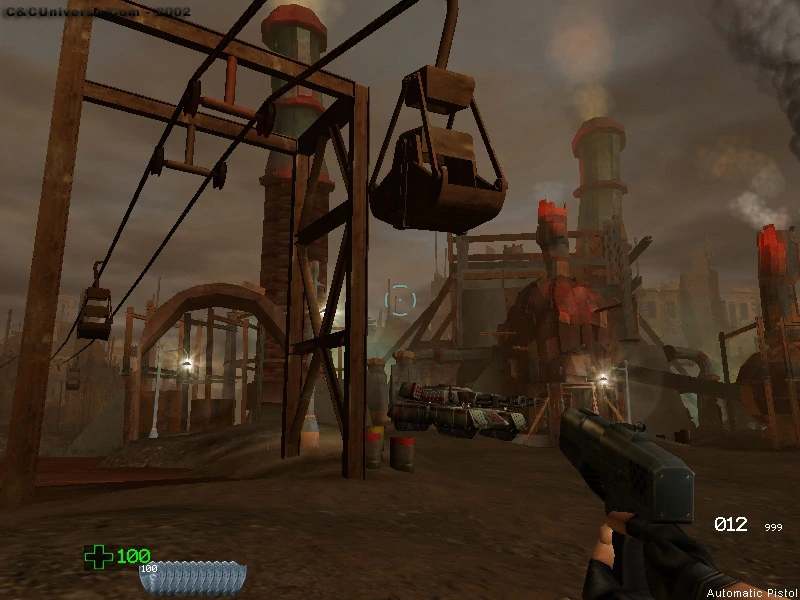
Star Net Frontier is a cancelled Massive Multiplayer Online Sci-Fi RPG / Shooter that was in development by Dart Studio around 2002 – 2004, planned to be released on PC. Players would have been able to take different roles (trade captain, soldier, rogue, politic, etc.) while exploring a series of alien planets (with up to 100 square miles of open terrains), travel and trade around the galaxy, battle on planets and in space. As we have already seen many times in other cancelled games with similar premises (huge galaxy full of explorable planets, freedom to choose how to play the game, online multiplayer with thousands of players) Star Net Frontier’s ambitions were too high for a small team.

The game was planned to feature:

  • Highly flexible and modular design of the online world supported by dynamic game-play
  • Large-scale episodic storyline to extend and update game environments and locales as well as launch a major episode on a regular basis. Each episode will be based on such events as civil wars and invasions, large-scale battles, discovery of new planets, natural disasters, etc.
  • Simulation of sophisticated economy and politics; players will be able to engage in cutthroat trade, support or oppose political parties, establish governments, and even declare wars.
  • Player-to-player and player-to-NPC interaction of the thousands online players in the single persistent Universe.
  • Experience of multiple environments using First and Third Person View:
  • Large open terrain environment – roam on foot or vehicle from 10th up to 100th square miles of continuous open terrains including deserts, forests and jungle, hills and mountains, etc.
  • Open terrain environment will support real-time weather and environmental factors (rain and snow, alteration of day and night, etc.)
  • Open outer space environment – huge network of star systems, connected together. Using a spacecraft players will roam from one star system to another, orbit planets, explore asteroid belts, dock to space stations, land on the planets.
  • Large indoor environment – play inside of such structures as factories, mines, board huge space stations and battleships.
  • Water and underwater” as well as “in the air” environments.
  • Unique profession of reporter will allow players to record/replay events in the game. It will allow players to report and share in-game events and experience with other players in the game as well as with a bigger community out of the game, on the web.

From Dart Studio’s old website we can also read more about the game settings:

“Game takes place in the far future, millennia after the human race first steps on the moon of the home planet and in space. Humanity spread widely among the stars and settled hundreds of thousands of star systems. Vast computer networks spread across all those stars. And in this network AI woke up and gained consciousness. Controlling millions of mechanisms and bio-machines (cyborgs), it tried to free itself from the slavery as well as conquer and dominate humanity. Hundreds of years of wars followed that moment.

During the wars separated human worlds were united in the vast and mighty Empire and finally AI was forced beyond the borders of the Empire. But it wasn’t terminated, the threat still remains and war continues. AI mechanized legions are still attacking unprotected worlds at the borders and it sends spies deep into the Empire, looking for weaknesses. On the fringes of the human Empire, among the stars and on the surface of alien planets, the future of the sentient being will be decided.”

An interview with Dart Studio’s Vladimir Tarasov was also published by HomeLand in 2003:

SNF world will be populated by humans, AI machines, and cyborgs – hybrid combinations of humans and machines.

As a citizen of one of the planet-states or as a member of a free mercenary outfit, players will have a chance to try and learn many professions in the army, merchant fleets, trade guilds, and many more.

SNF game takes place on several planets, moons and space around these planets. Each SNF planet is a 3D emulation of one or several regions of the planet’s surface. Each region may cover up to hundred square miles of different kinds of terrain. Players may navigate on foot or using different vehicles to small towns, trade-posts, watchtowers, military bases and forts, ruins of underground labyrinths and mazes of abandoned scientific laboratories or industrial installations. In space the game takes place between planets, space stations, moon bases littered with fields of debris of destroyed spaceships, blown-up space stations, and ruined battle platforms and satellites left from previous wars. Planets and moons have asteroid fields and other space junk in their orbits as well. Players may travel in space using starships.

In the end Star Net Frontiers quietly vanished and today no one remembers about this lost game. We speculate the team did not find a publisher of funds to continue working on their ambitious MMO, so the project had to be canned.

Images: 

Cyberdrive (Nadeo) [PC – Cancelled Prototype]

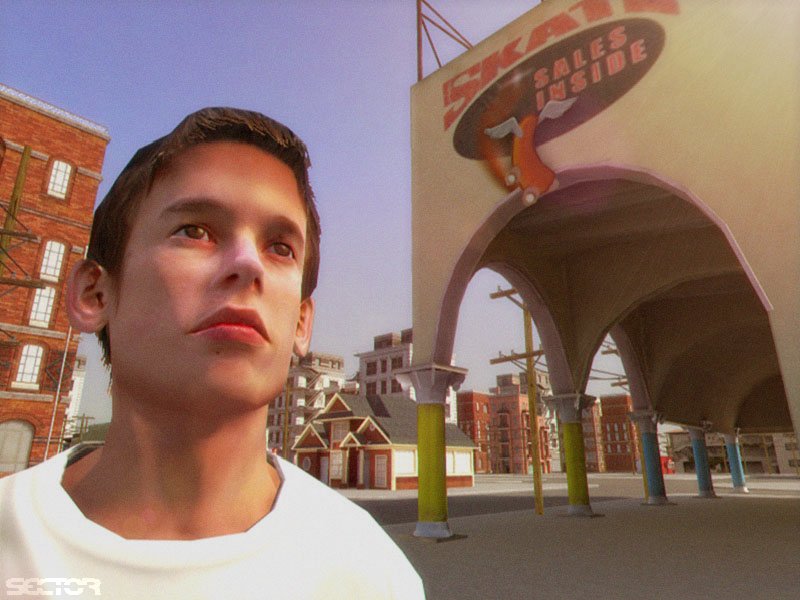
Cyberdrive is a cancelled racing game set in a sci-fi Paris that was in development for PC by Nadeo around 2001, before they became a favorite team among fans of arcade racers, thanks to their release of TrackMania in 2003. At the time Nadeo was still trying to find their niche, working on many different prototypes such as Windracer and Lanfeust of Troy to pitch them to different publishers. Cyberdrive looked inspired by TRON and we can assume gameplay could have been similar to TrackMania.

Some fans randomly found out about the prototype projects in 2011, saving a few images before they could have been lost forever. In the end Nadeo was lucky enough to get hired to work on Virtual Skipper 2 and 3, something that helped to keep them alive while waiting to find real success with Trackmania.

Images: 

Daikatana 2 (Human Head Studios) [PC – Cancelled]

Daikatana 2 is the cancelled sequel to John Romero‘s first and most ambitious FPS since his departure from id Software and the founding of Ion Storm. This sequel was in development with the help of Human Head Studios while Ion Storm was still working on the first game (as told by Romeron at PC Accelerator magazine), but no screenshots nor artwork were ever shown to the public before its cancellation.

It seems development on the sequel started in early 1998, when no one imagined that the first Daikatana would take so many years to be released, nor that it would bomb so hard when published. Former Human Head developers shared memories of the project in interviews and articles published by Eurogamer and GamesRadar:

“We first met John when he was the producer on Heretic and Hexen, so when we left Raven we thought, who better to work with than John Romero! Initially Ben Gokey called him up, told him the story, and he asked us to work on Daikatana 2. Of course we jumped at the chance.”

Ion Storm funded us enough money for a few living expenses and some new equipment. This in turn meant that we would be using the Unreal engine, and that was extremely exciting.”

Unfortunately by this time Ion Storm was already in decline, Daikatana was becoming a running joke, and Eidos were starting to wonder where all their money was going. Hiring an external studio to develop a sequel to a game that was nowhere near complete was one expense which they could do without. And so, “before we knew it the project was canceled and we were on our own again”.

Human Head would live to fight another day though. “When Daikatana 2 was canceled, Epic was incredibly nice and let us use the Unreal engine even though we didn’t have any contracts with any publishers.”

One of Prey’s concepts even came from past projects that Human Head had worked on. The idea of wall-walk boots originally came up during initial work the studio did for Daikatana 2. That game never happened, and after that, Human Head started talking to Epic about handling Unreal 2. One of its ideas for that project: yup, those wall-walk boots. Human Head didn’t end up doing Unreal 2 either, which was Prey’s gain. “Fast forward to Prey, we were like ‘Alright, we would love to be able to do wall-walk boots,'” Rhinehart says. “So I’m glad that we finally managed to get that particular tech in the game.”

The first Daikatana was postponed several times due to constant technical problems, forced engine changes and internal disagreements in the team. In 2000 the game was finally released and under the hooting of the press, it failed in sales and Ion Storm Dallas disappeared the following year. Human Head Studios later worked on Blair Witch Volume II: The Legend of Coffin Rock and Rune.

If you know someone who worked on Daikatana 2 and could help us preserving some artwork, screenshots or files from this lost game, please let us know!

Thanks to Josef for the contribution!

Images:


Cold Blooded / Shark Boy (7th Level) [PC – Cancelled]

Cold Blooded (AKA Shark Boy) is a cancelled action adventure game set in a half-mutilated universe threatened by a tug-of-war between warring gods, that was in development by 7th Level around 1996 and was planned to be released on PC. Its most notable features were it’s comic-book graphic style, different gameplay for each level and the main protagonist voiced by Bruce Campbell (the actor from such cult-classic movies as the “Evil Dead” trilogy and Bubba Ho-Tep).

Footage from the game can still be found in an old 7th Level Press Kit, but there are also rumors about a playable beta version leaked online many years ago: if you have a copy of this canned game, please let us know!

Featuring:

  • More than a dozen graphic adventure and top-down games, puzzles and action videos
  • Constantly changing gameplay
  • Immersive story like and second to none animation
  • A dark, ’90s comic book on CD-ROM

Thanks to Valerio and ItsFact for the contribution!

Images:

Videos:


MageLords (Kinesoft) [PC – Cancelled]

MageLords is a cancelled strategy game that was in development by Kinesoft around 1999 – 2000, planned to be released on PC. Its main features would have been a mix of RTS and empire-building gameplay, boosting epic battles with a hundred of 3D characters on-screen, something quite impressive for its time.

More details on what MageLords could have offered can be found in previews published by IGN and Gamespot:

“The world of MageLords was first ruled by a civilization known as Arcan, which was made up of six distinct clans. Each clan had a representative in Arcan’s ruling council, which governed all aspects of society. Over time, the council focused its efforts on harnessing the power of the magic that permeated its world. Each member of the council selected one of the six magical disciplines to study: good, evil, order, chaos, nature, and the nexus. The council adopted the title of MageLords and soon became distrustful of one another.”

“You play as a MageLord who remotely governs an empire and magically controls armies from afar. On the empire level you’ll need to extend your control to new provinces and build cities to increase the mana, gold, and food levels so you can build more powerful armies and cast more impressive spells to indirectly affect tactical battles.”

“MageLord’s 3D battlefield can engage up to 100 individual figures, from medieval human troops to super-sized giants and nasty demons. Figures are mainly controlled in unit formations, which depending on the figure’s size and strength, can include from one to ten individuals.”

“The game features a wide variety of creatures, including dragons, minotaurs, zombies, basilisks, skeleton warriors, death knights, hellhounds, and wraiths. While many creatures belong to one of the six main races in the game, others are neutral. Neutral creatures can exist in the world due to the work of the ancient evil force, the Asthorra, or they can merely be random wandering monsters.”

Thanks to Kinsie for the contribution!

Images: