mmo

Republic Dawn: Chronicles of the Seven [PC – Cancelled]

Republic Dawn: Chronicles of the Seven is a cancelled sci-fi futuristic Massively Multiplayer Online First-Person Shooter developed around 2004-2005 by Elixir Studios and Nicely Crafted Entertainment exclusively for the PC. It was supposed to be a sequel to the strategy game Republic: The Revolution, released in 2003.

Few information are currently available regarding this project. The game was announced by its developer in February 2005 with a press release containing some info about its background:

The Dawn of a New Republic.

“We, the governments of the Seven Republic, will defend the republic and our freedom with all force. We will put aside our differences to rebuild the life that we have lost. We will seek out the reasons for this loss and exact revenge on those responsible. This is the covenant of the Seven Republic, this is our task.”

-The Covenant of the Seven Republic

London, England 22 February 2005 Elixir Studios today announced that their much anticipated sequel to Republic: The Revolution, is underway as a joint venture with Cambridge based MMOG specialist Nicely Crafted Entertainment with the working title of “Republic Dawn: The Chronicles of the Seven”.

The game, due for release in 2007, is set around a rich storyline based in a distant galaxy and will give players access to a living, breathing universe created using Nicely Crafted’s proprietary AliceServer technology. Elixir will be providing their world-class graphical technology and both companies will be working on a new ground breaking Artificial Life engine.

“Teaming up with Elixir for Republic 2 is a fantastic way to start 2005. With Demis and his team’s experience in creating outstanding triple-A games, Republic 2 is going to provide great gameplay and visual experiences – offering players freedom and flexibility that is unparalleled in today’s MMOG marketplace”, commented Toby Simpson, managing director of Nicely Crafted. “With our server technology, we’re creating a world where hundreds of thousands of people will be able to take part in building a republic.”

“Nicely Crafted is at the forefront of MMOG gaming technology. I’m really excited that my vision of thousands of players building a Republic together is finally going to happen”, said Demis Hassabis, Elixir’s creative director. “This is the perfect way for Elixir to enter the MMOG arena.”

Republic Dawn is a vast MMOG first person space game based around an embryonic society devastated by a sudden attack. The players must rebuild the Republic facing tough political, economic and military decisions along the way. During this time a deep story of human struggle will be acted out with the players challenging every decision. With a progressive and immersive gaming environment of unique depth and detail, Republic Dawn promises to be a definitive MMO game.

Republic Dawn will allow players to dictate the future of mankind. Will they rise up as one in the name of revenge or will they let the already unstable Republic fall?

Shortly after, Computer Games Online managed to get an interview with Ben Simpson from Nicely Crafted:

Elixir Studios’ 2003 released debut game Republic: The Revolution was a ambitious and different look at an urban-political sim game. Now the company is teaming up with Time of Defiance developer Nicely Crafted Entertainment for Republic Dawn,  a space based MMO “sequel” to the original game.

Computer Games – First, how did the idea for making a MMO sequel to Republic come about? Was it Elixir’s idea or Nicely Crafted?

Ben Simpson – Well both companies had separate long term visions for games that, when discussed were very similar, with further creative brainstorming it became obvious that both ideas would easily fit together and thus Republic Dawn was conceived.

Computer Games – From the brief description in the press release, it sounds like Republic Dawn is keeping some aspects of the original game in term of game-play goals. Is that a fair assessment?

Ben Simpson – Yes that is a fair assessment – In the Revolution you were tasked to overthrow a regime and establish a Republic.  In Dawn the Republic already exists but will need to be maintained.

Computer Games – How will players compete against each other in the game? Are there a number of different people in the human empire that are fighting against each other for complete control?

Ben Simpson – Players can choose to PVP (Player Vs Player) in either combat or in business or to band together and tackle the games PVE (Player Vs Environment) aspects.  It is completely feasible that players could come together, create a new political movement and ascend to the Senate and attempt to influence the running of the republic and therefore its actions…

Computer Games – What is the current status of the game’s progress and when will it be released?

Ben Simpson – The game is currently at an advanced design stage and work on a prototype is underway.  We are aiming to release the title Q2 2007 with closed Alphas being available prior to the main release to ensure that specific aspects of the game are as refined as possible.

However, in April 2005, Elixir Studios shutted down following the cancellation of a two years development project with a “perceived financial high-risk” and the poor sales of both Republic: The Revolution and Evil Genius as stated by Gamesindustry.biz:

British independent developer Elixir Studios has announced that it has commenced winding down its operations after a key title was cancelled, but efforts continue to rescue some of the firm’s projects.

“The important thing to us is that we’re in control of our own destiny,” Elixir CEO Mark Hewitt told GamesIndustry.biz this morning. “We won’t just run up against a brick wall like some developers have. We’ll still have money in the bank when we close, we’ll treat our staff as they should be treated and help them to find new jobs.”

The closure of the studio should also have no bearing on Republic Dawn, the massively multiplayer title which was being co-developed by Elixir and Cambridge-based Nicely Crafted Entertainment, according to Hewitt.

“We were giving technical advice to them on their project, as opposed to any other support,” he explained. “We’ll still be able to provide that technical advice, and that project should be unaffected.”

“I’m very proud of what all the staff at Elixir have achieved and the games we produced,” Hassabis said in a statement this morning. “We gave it everything we had but ultimately it wasn’t quite enough. It seems that today’s games industry no longer has room for small independent developers wanting to work on innovative and original ideas. Perhaps there is no longer any need for them.”

After the closure of Elixir Studios, Demis Hassabis left the video game industry, becoming an entrepreneur and researcher in the Artificial Intelligence domain and joined the UK government as an advisor.

It wasn’t clear what happened to Republic Dawn after Nicely Crafted completely took over the project. The studio only released another game in 2011, Picaroon, just a few months after the servers of Time of Defiance were shutdown, which didn’t have a huge success. We can speculate that development didn’t go as planned, and the developers had to cancel the game and refocused on more economically viable projects.

If you know someone who worked on Republic Dawn: Chronicles of the Seven and could help us preserve more screenshots, footage or details, please let us know! 

Mindhack (Mindware Studios) [PC – Cancelled]

Mindhack is a cancelled Massive Multiplayer Online First Person Shooter developed by Mindware Studios around 2001-2002, exclusively for PC.

No information about Mindhack’s background are available at the moment. By looking at the few artworks and screenshots of the game, we can tell that it was set in a futuristic science fiction universe. The game was revealed in March 2002 with a short explanation of its concept on a dedicated website:

“Mindhack is an Online Action Game which combines popular and proven elements of first person action games with the principles of mass online games (massive socializing support, persistent character, etc.). The system of game rules is relatively straight forward while providing a great number of game types and many different ways players can enjoy the game.

Mindhack is not intended solely for hardcore players but also for mass-market players preferring the action genre. Players will be attracted by familiar action principles combined with many socializing elements which will allow them to interact with other players in ways not seen today in games of this type.”

Using a proprietary engine called MENG, it seems the game was showed at the Game Developers Conference 2002 in order to sign with a publisher, apparently without success, before falling into obscurity for a few years.

In 2006, following the future release of Mac and Linux versions of their first game, Cold War, Phoronix was able to interview programmer Patrik Rak. Mindhack was briefly mentionned about its cancellation:

“(…) The goal at that time was to develop a FPS based MMO game, but several month later we have concluded that the MMO market became so crowded that all but the best backed up of these project are necessarily going to bite the dust. So we quickly steered to more conventional waters of the third-person single player world, before any serious harm was done.”

According to former CEO Karel Papik, the technology primarly developed for Mindhack would later served as a basis for Cold War.

Mindhack wasn’t the only cancelled game from Mindware Studios. In 2006, the company had to axe Voodoo Nights and Unknown Heroes, both due to a lack of publishers interested in the projects.

If you know someone who worked on Mindhack and could help us preserve more screenshots, footage or details, please let us know!

Images

Ramayan 3392 A.D. [PS3,PC – Cancelled]

Ramayan 3392 A.D. [PS3,PC – Cancelled]

In 2007 Sony announced that they will add a new MMO to its collection on MMOs released to that time (Everquest).
On 10th August 2007 Sony announced that they will be developing new MMO in partnership with Virgin Comics. Game will be based on Ramayan 3392 A.D. comics released under Virgin Comics. It is a futuristic reinterpretation of indian mythology.
Sony signed a multiyear cooperation with the team behind the comics.

Virgin Comics cofounder and CEO Sharad Devarajan explained that the game’s cultural roots will help bring a fresh perspective to the genre.”

Ramayan 3392 A.D. is based on the ancient Sanskrit epic Ramayana. The story follows a
battle between humans and demons in a post-apocalyptic world. The comic was written by
Shamik Dasgupta with illustrations by Abhishek Singh, and was based on a story by author
Deepak Chopra and Elizabeth (1998) director Shekhar Kapur.

Ramayan 3392 A.D. was aimed for 2010 release. Until today, the game hasn’t been released and on most sites can be found its status on release date only as TBD.  

Project Copernicus (38 Studios) [PC – Cancelled]

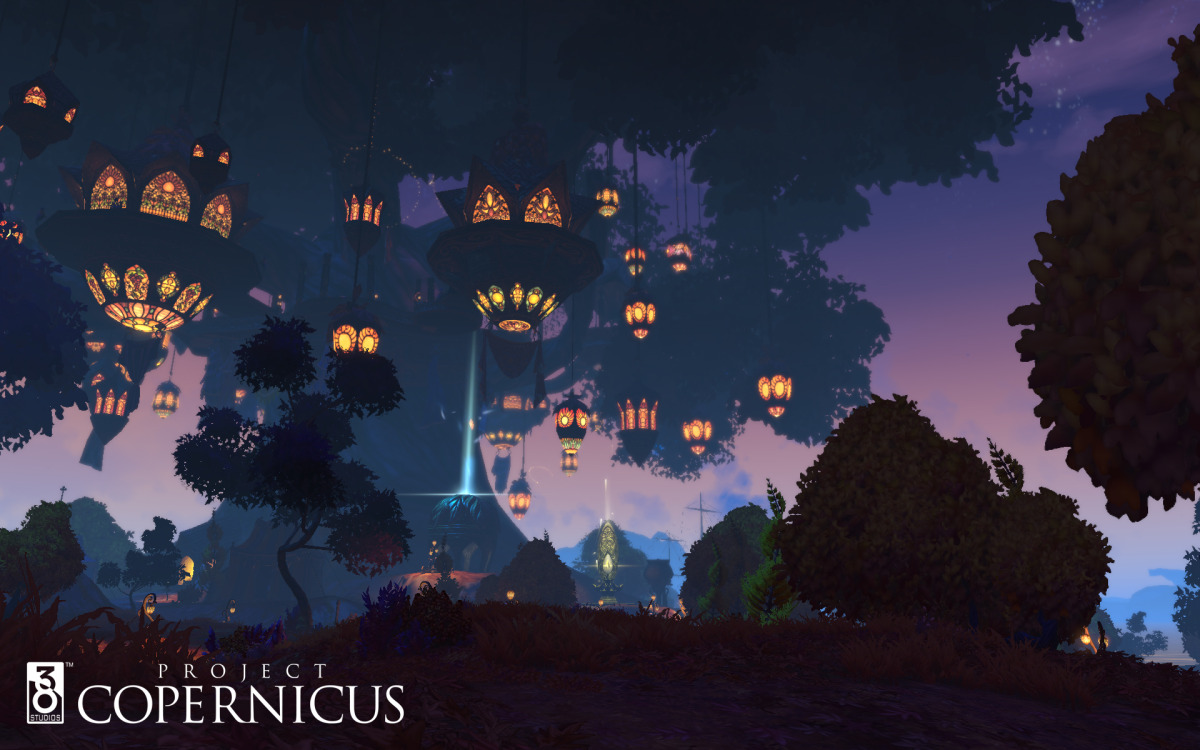
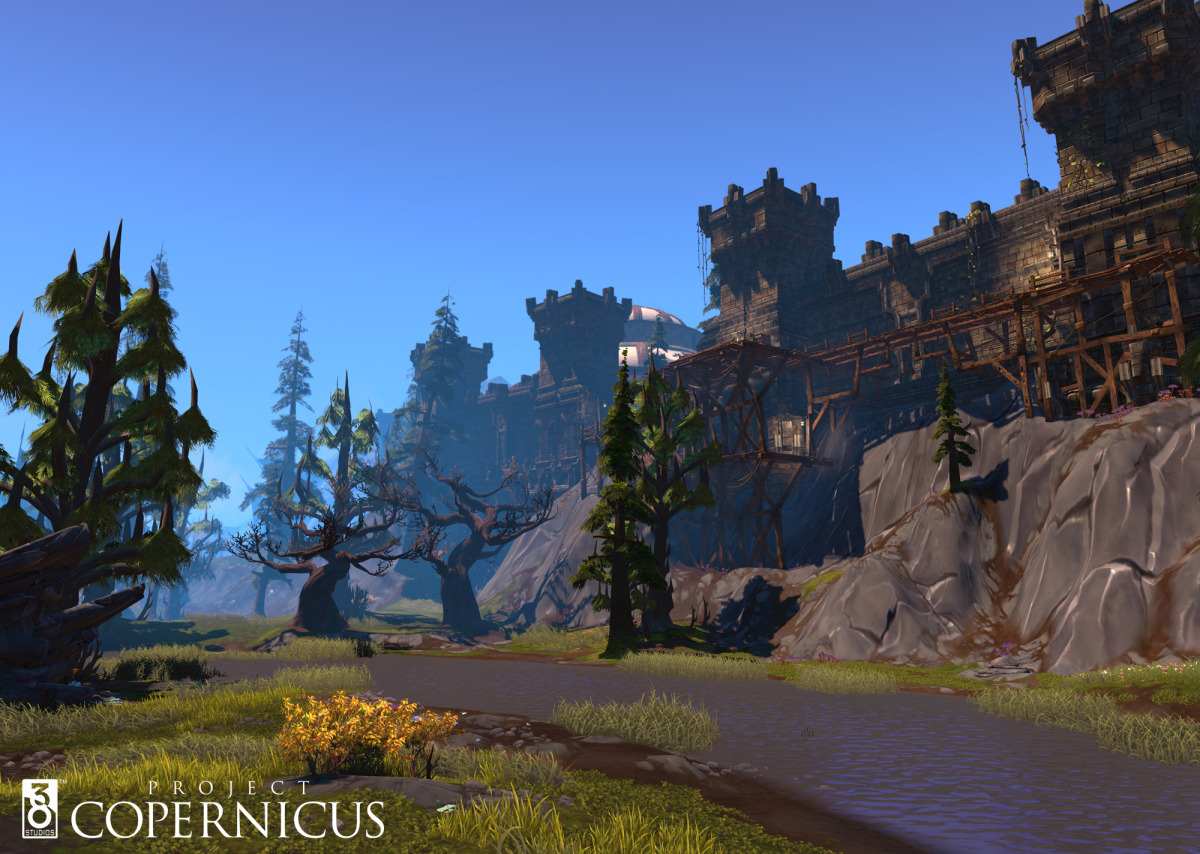
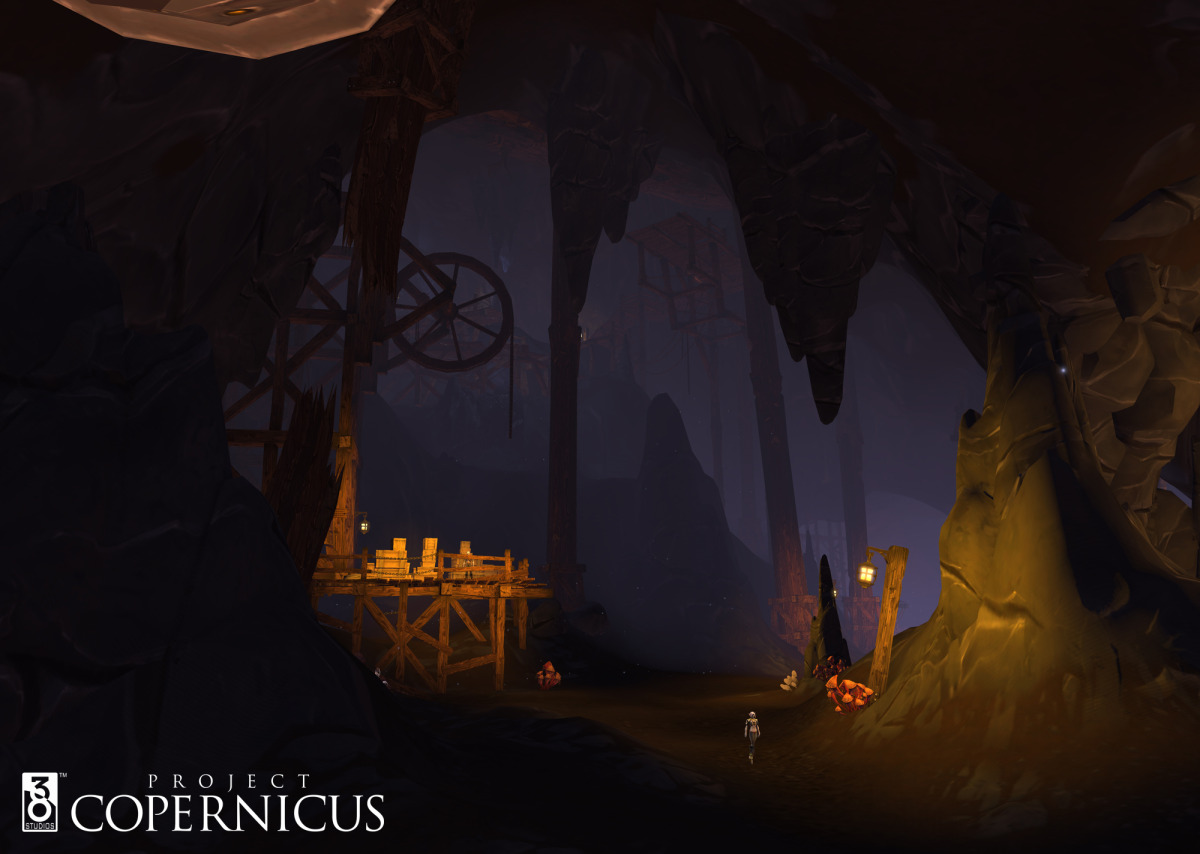
Project Copernicus is a cancelled PC MMO that was in development by 38 Studios (AKA Green Monster Games) between 2006 and 2012, an overly ambitious project that got their creators to fail in bankruptcy in a long and painful venture. This would have been their first project: the company was conceived precisely to develop a new, profitable Massive Multiplayer Online Game, a “World of Warcraft killer”.

As we can read from an in-depth article by Tech Raptor:

“In 2006, baseball pitcher Curt Schilling announced he would continue working in a new field: video games. After speaking with several friends and family members, he would found Green Monster Gaming with one goal in mind: create a new MMO.

Schilling himself was an avid fan of MMORPGs,  playing the likes of World of Warcraft in the off-seasons and wanted to add to the market a passion project of his own design. Schilling was not alone in this passion. Two of his biggest backers to Green Monster Gaming, famous fantasy author R.A Salvatore and conceptual artists Todd McFarlane, were also gung-ho on the potential of any projects the studio could create.

This is in part to Schilling himself, who stated in an interview just after his studio closed, “If it wasn’t an MMO, I wouldn’t have done it. If you look at the game space now, if you want to build something that’s a billion-dollar company, the only game to do that with is an MMO.”

Some of the big names to join the company would include Travis McGeathy, the lead designer of the MMO Everquest; and Jennifer MacLean, former chairperson of the International Game Developers Association (IGDA) and the VP General Manager of Games at Comcast. ”

There is not much info on Copernicus’ gameplay, but we know they heavily invested into its settings and lore, with a 10,000 year game-history created by R.A. Salvatore and art direction by Todd McFarlane. After the team failed to gather interest and funds from investors to complete their MMO, they decided to acquire Big Huge Games from THQ.

Their plan was to release a less ambitious single player action RPG: the result was Kingdoms of Amalur, a game that merged a project already in development by BHG with part of Copernicus’ settings and lore. As we can read on RPG Fans:

“For three and a half years, we had the Amalur universe in 38 Studios,” Schilling said. “The IP is being led by this team of very passionate people, we’re making this MMO, we’ve got a roadmap – and in a 24 hour span, we add 90 employees who now all of a sudden are taking the baby being created in Boston. There’s 90 people we don’t know and we’re handing off this multi-billion dollar, multi year project… to who?”

But perhaps it wasn’t so crazy. As it turns out, Big Huge Games had already been laying the groundwork for their own single player RPG project under lead designer Ken Rolston, of Morrowind and Oblivion fame.

“They had been shopping this fantasy game for a long time,” said Schilling. “From a tech perspective and a game design perspective, there was a solid foundation. But they were missing the story – the thing that makes a great RPG. We had that. It was a match made in heaven, because not long after the partnership, when Bob [Salvatore] and Ken [Rolston] and the creative team sat down together, there was a lot of magic going on.”

Unfortunately even Kingdoms of Amalur did not sell enough to keep 38 Studios alive and without being able to keep their MMO in development, the company closed for bankruptcy in 2012:

“38 Studios went to Delaware’s bankruptcy court this afternoon beginning the arduous process of salvaging what it can in the face of a $270 million debt.  The hearing marked the first opportunity since the studio filed for bankruptcy for creditors to question the company’s executives. According to the Boston Globe, creditors and employees who have gone unpaid since May will likely receive nothing through the proceedings as the studio takes the first steps towards liquidation.”

“Kingdoms of Amalur would go on to be a modest success for 38 Studios. Published by Electronic Arts, as a part of their EA Partners program, Kingdoms of Amalur would see 1.3 million copies sold in three months, which for a new IP was respectable. Schilling, and later Chafee, would note that the game needed to hit around 3 million units sold to break even on development costs and turn a profit.”

We don’t know exactly how much of Project Copernicus was done before its cancellation, but enough footage and screenshots were leaked online to have a good idea of how it would have looked like. Unfortunately, from what Curt Schilling said, his dream MMO was not fun to play:

“The money was only a secondary concern to Schilling. “The game wasn’t fun… It was my biggest gripe for probably the past eight to 12 months.” Evidently the combat lagged and no one seemed to be playing it around the office.”

“As the studio collapsed, employees were left in the dark. Worse, their health insurance was shut off without notice – which one pregnant woman only discovered upon going to a doctor’s appointment. The company that was supposed to handle relocation fees didn’t finish the job, leaving several employees stuck with mortgages on their old homes as well, and bills that were supposed to have been handled through management hadn’t been.”

Images:

Videos:


Invasion [PS2 – Cancelled]

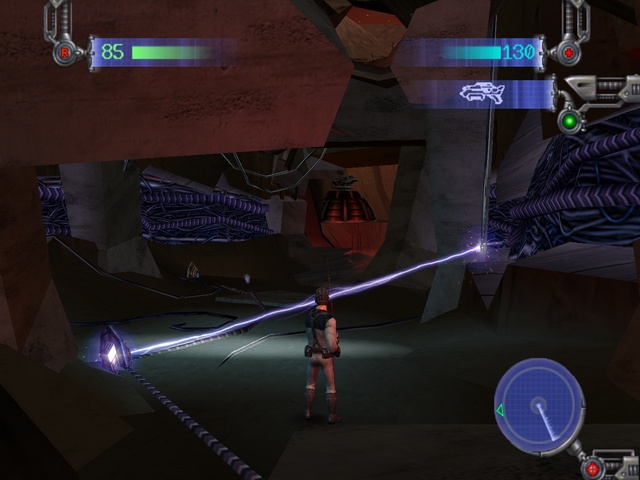
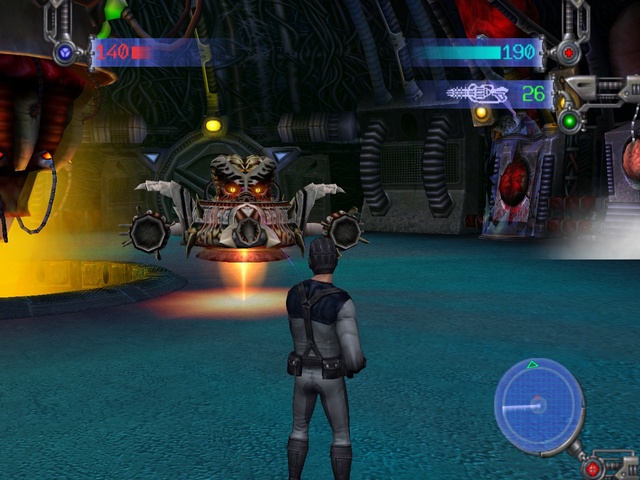
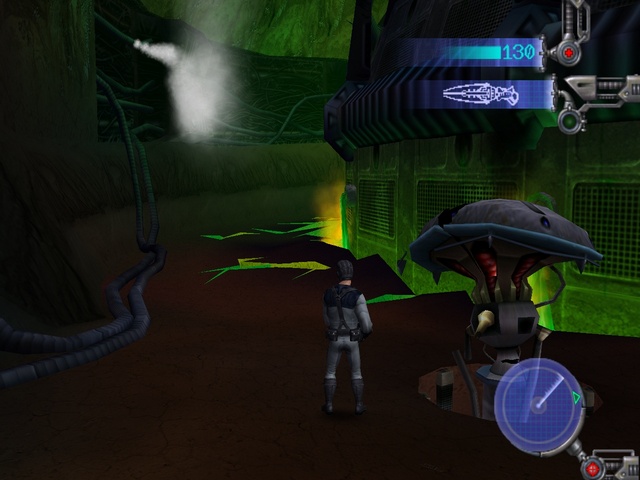
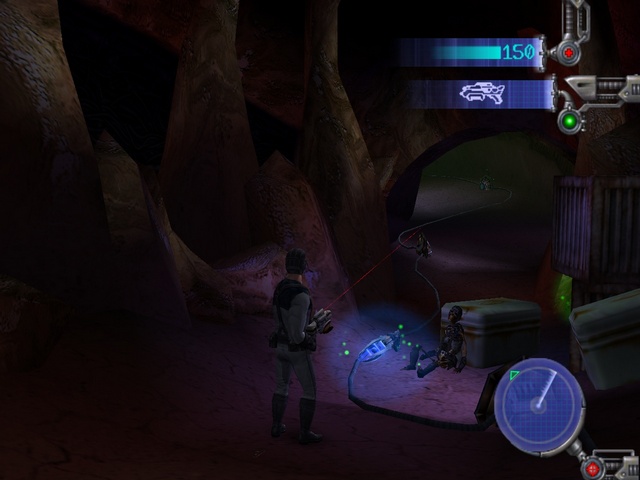
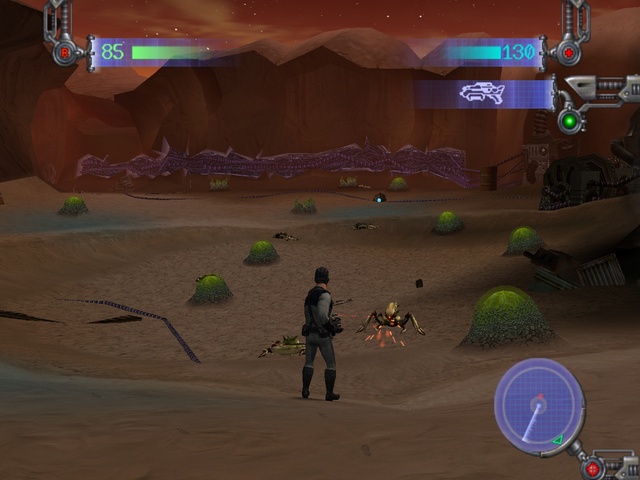
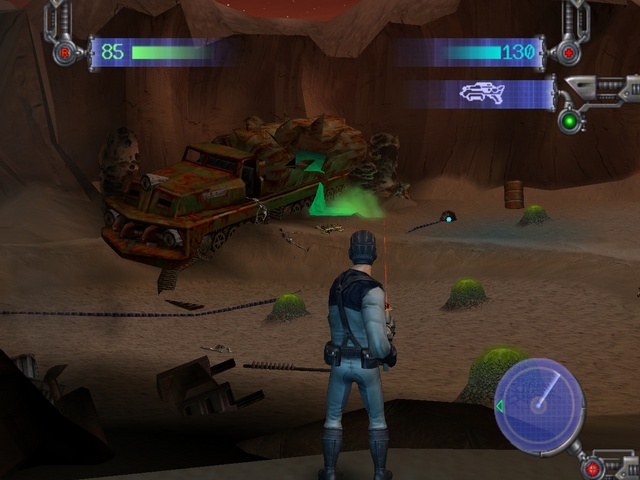
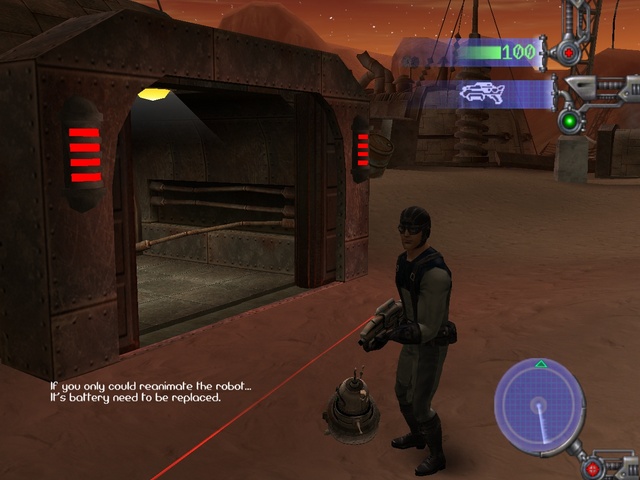
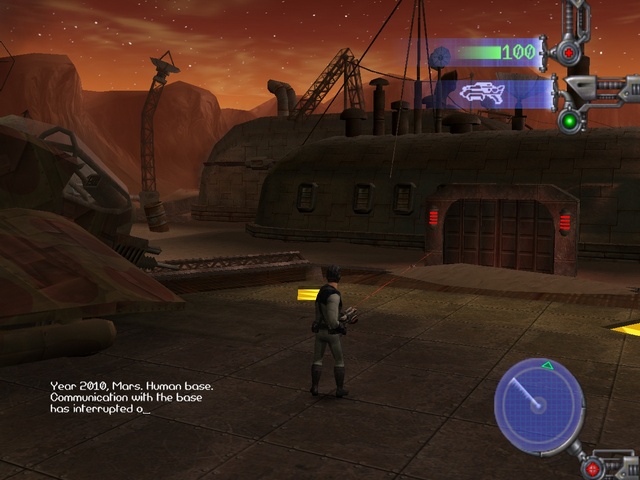
Invasion is a cancelled massive online multiplayer shooter in development by Turbine Inc (mostly known for other online games such as Asheron’s Call and Dungeons & Dragons Online) for Playstation 2 around 2003. The team worked on a single-player prototype to test gameplay using Driver-Inter‘s proprietary engines, but in the end the project was cancelled, probably because of difficulties in creating a proper MMO game on the 6th generation of consoles.

invasion-ps2-mmog-turbine-cancelled-4

As you can see from the prototype footage and screenshots preserved in this page, the game was quite impressive for its time, at least graphically. Some details about Invasion can still be found on Driver Inter’s website:

“Invasion is a third-person shooter where player searches an abandoned Martian colony for its secrets in order to prevent a menace of an alien invasion on Earth.

The game is a demo with several types of weapons, powerups, enemies, quest items, an NPC that requires protection from player and a boss at the end of the last episode. The demo contains three episodes in three different areas: abandoned outpost, canyon and underground lab.

This project was a first stage of development of a unique massively multiplayer online game (MMOG) “Invasion!” where players were expected to:

  • Explore and defend a Martian-invaded earth
  • Guide “smart actors” who experience the world as a personalized sci-fi epic
  • Fight creatures great and small in entertaining monster movie battles
  • Evolve new abilities, new body parts, and new ways to play the game

The MMOG project “Invasion!” was cancelled.

In 2010 Turbine was acquired by Warner Bros and renamed WB Games Boston, working on MOBA Infinite Crisis and smartphone versions of  Batman: Arkham Underworld and Game of Thrones: Conquest.

Thanks to Mihapsx for the contribution!

Video:

Images: