This title, by Silicon Knights, was presented for the first time in playable form at E3 1999, on the original Playstation. It immediately received critical acclaim by the audience, not only for the graphics hardware that led Sony to very high levels, but also for a gaming system that already went beyond it’s full potential, though it was only a fraction of the final product.
Both of the video screens, from which you can find online, you may notice immediately a particular pointing system (which was also picked up by then Eternal Darkness) where you can target a specific part of the opponent’s body that lies ahead (limbs, trunk and head). The use of weapons to zoom was very effective, and there were large areas of exploration.
The game was scheduled for summer 2000, with a pack of more than 4 CDs, literally filled by a gigantic world, an immersive story and hours of movies in FMV. All this before Nintendo, after seeing the excellent results of the work of Eternal Darkness (the time in development for N64), decided to take over the team of Silicon Knights completely, making it one of his numerous 2nd parties.
“Too Human” had no more official news, but given the scale of the project and the years of work that had been spent, there are rumors now a conversion of title for the next generation of Nintendo console (the now discarded hypothesis of the little room on output cartridges on the N64), which was confirmed at Spaceworld 2000 (note the annual event of Nintendo products) with a FMV of a game cruising on the GameCube.
In 2005, Silicon Knights came under the control of Microsoft, and the project was moved to the Xbox 360. The game seems to have lost many of its original features, but can perhaps finally see the light..
Thanks to Celine for the contribution and to ForWhomTheBellTolls for the english translation!
In the mid ’90s Shinji Mikami began to work on a new horror game set,just like NES’ Sweet Home, in a large building surrounded by a forest. Maybe influenced by the recent success of Doom, the project was initially conceived as a FPS. We know next to nothing about this first prototype, but it would have surely been one of the most advanced shooter created yet. However at the end Capcom selected another pc game, Alone in the Dark, as a model for their new product, and Resident Evil / Bio Hazard became an action adventure with a strong emphasis on survival.
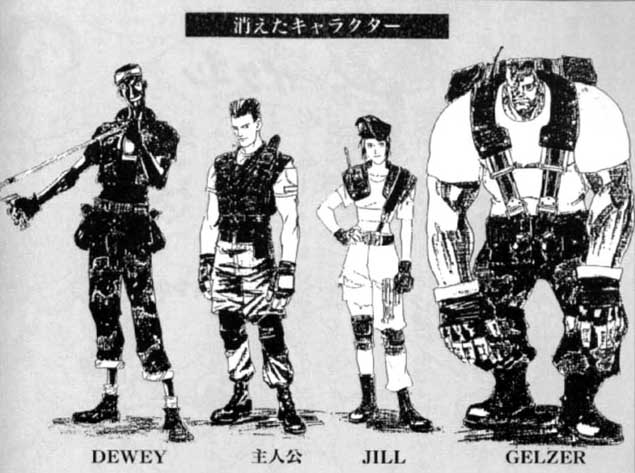
Unfortunately, we don’t know much about the first draft of the story, but at least we have few artworks about Dewey and Gelzer, two beta characters, later replaced by Rebecca and Barry, that represented respectively the strong guy (in this case a cyborg) and the comic partner. We can only speculate that at the beginning the narrative was less serious, and the graphic style not that realistic (for the standards of the time).
Co-op beta
After one year of development, in 1995, previews of the first playable builds of Resident Evil started to appear in gaming magazines.
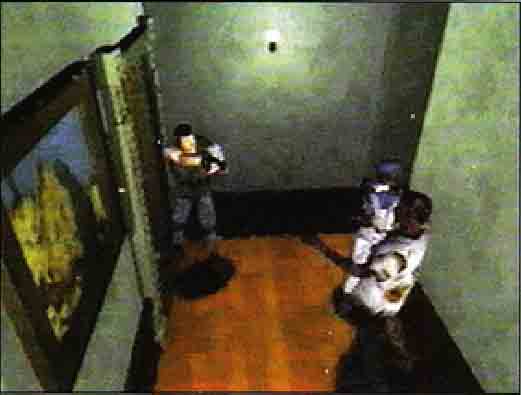
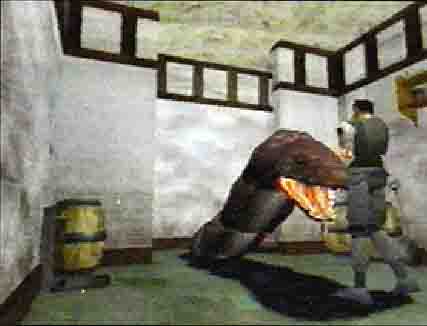
In these screens we can see that originally the game could have been played in co-op. Jill also had a different costume and the fight with the snake was in the room that connects the house with the garden. We don’t know if in this early beta there were still leftovers of the removed locations in the code (the cementery, the paths in the forest) that were, like Trevor’s letters, later reintroduced in the RE remake for the Gamecube.
Resident Evil 08/04/1995
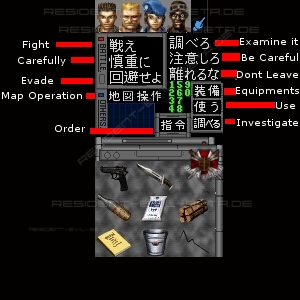
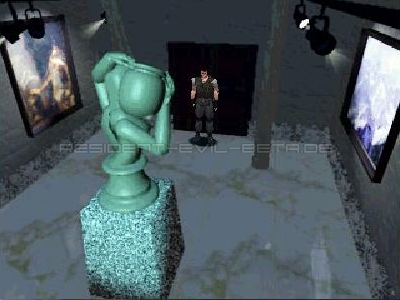
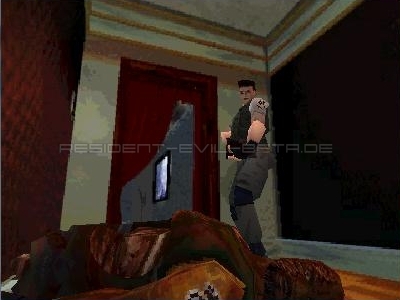
In 2010, Tyrant of resident-evil-beta.de recovered a beta of Resident Evil that dates back to 08/04/1995. It seems to be similar to the V-Jump ’95 build, so for a list of the main differences see the paragraph below. Unfortunately, in this version the co-op mode was already removed, even if some leftovers can still be found in the folders of the iso. Only Chris is playable, and it is not possible to see the map or access the inventory. Interestingly, you can change weapons in real-time. Also, in this beta Barry can save Chris too, but just because they didn’t make the event exclusive to Jill’s scenario yet. In 2011, Hidden Palace released this particular build to the public.
Notice how Dewey and Gelzer’scharacter portraits are still present in the game’s code.
V-Jump ’95 Presentation
In the video of the V-Jump ’95 Presentation, linked below, we can see an early beta with some differences:
No cutscenes
Some different camera angles
Chris polygonal model was less detailed and he began the game armed
Different music and japanese voices
All the zombies had white jackets
The blue gallery had four pillars
Some minor differences in many rooms
Kenneth Sullivan (the corpse in the backroom) is in another location in the final game
Spiders instead of dogs in the corridor (it still happens in the released version when you return in the mansion after the guardhouse)
Hunters at the beginning of the game!
No metal plate for the crests in the outside corridor
The first fight against the snake was moved in a room in the first floor in the final game
The room where chris fights the snake in the video is different in the final version
Probably this build is more recent than the 08/04/1995 one, but not by much.
Maximum console 1996 Preview
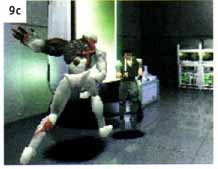
A slightly different Tyrant
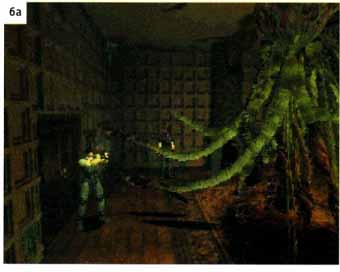
Wesker in the plant room? Most likely it was just a placeholder, but as we know, in the final version Wesker is in the guardhouse, we meet him after the boss… what if at the beginning we could fight the plant with him?
Also, in the same issue, the article mentions a graveyard among the other locations of the game. This is strange, because if it was still planned to be included we should have at least some screenshots of it. Maybe it got dropped at the end of the development? and if so, why it wasn’t included in the director’s cut ?
Trial Version
More unseen material can be found in a demo called Resident Evil Trial. This version was more or less the same as the final game but there were still some differences: no keyboard in the hall, the plant’s book was in the tiger’s statue, the shield was in the blue hall, many items were in other places, some camera angles were different, etc etc.
Far more interesting are the objects that can be unlocked in the demo with the action replay: a pickaxe (probably used in the caves), Oil (used to burn zombies like in REmake?), beta version of the ink cartridges, the magnum and flamethrower ammo. Also, originally Bio Hazard was meant to have Japanese voices, but they were changed as Shinji Mikami felt that it wasn’t realistic for the characters to speak another language, as they were supposed to be American.
Thanks to KeijiDragon for the video with the original japanese dialogue!
Barb Wire is a cancelled FPS that was in development for the original Playstation, Saturn, PC and Mac. The game was based around a film ( with the same name ) that flopped badly at theaters: the blonde girl in those shots is Pamela Anderson. Thanks to Celine we found some info on the game, that were published in GamePro Magazine issue 92. It seems that in the game we would have been able toplay solo or to compete in a two-player mode that enabled one player to be Barb and the other to play as an evil boss. It included a deathmatch mode with specifically designed multiplayer levels. The game was going to be published by GT Interactive.
In one of the first PSO videos, which showed the forest stage, there were four characters in front of a kind of locomotive on rails. A similar object, activated by using the usual pressure pads, could be found in a PSO Vr2 challenge, but in the PSO beta this was far more interesting, because the characters moved it themselves. It’s a pity that these puzzles were removed from the final version.
You can select the FOmar class from the beginning in PSO Ep. I&II, but with the gameshark you can unlock it in PSO vr2 for the Dreamcast too . Maybe it is just a leftover from the planned unified servers for PSP Ep. I&II and PSO vr2, because they were required to have the same features.
In these screenshots, we can see the beta central zone of the Pioneer 2. On the left we can see some kind of palace, which in the final version became the entering point of the ships and the meeting place for the Quests. There were many advertisement signs, but the holograms with the various sentences were still absent. In one of the screenshots we can see, other than the three main characters, some hunters in the background, gathered at what looks like a fire. In the original design of the Pioneer 2, it seems that there was another path under the city, maybe for other sections of the mothership.
In these screenshots of the beta Forest we can see many features that were removed from the final game, like wood stairs, fences and underpasses. In another video, we can see that the dragon originally made his entering through the rock wall. Another series of screenshots shows the beta version of the ships, even if on the left side of screen it is possible to see, to the contrary of the released version, the other character’s bars. Moreover, some warps are different in the Online Lobby.
In the concept arts of the Book of Hunters : PSO Settei, there are drawings of many classes (HUmarl, HUnewmn..) and mags not found in the final version of game. Some of these later resurfaced in PSO for Xbox and Gamecube, like HUcaseal, FOmar e RAmarl. Also, the beta mags could be equipped even on arms and feets.
386 Wren is a unused character, so described in the Book Of Hunters: “The character called Searren is a battle robot who was introduced in Phantasy Star III: Successors of Time (Megadrive/released 4/21/1990). According to comments made by a member of Sonic Team, “This got drawn for me when I said, ‘What if Searren appeared in PSO?’. We couldn’t use him due to time constraints. It’s a pity for it go to waste, so we’ll publish it.” Searren is a robot, borne of an ancient culture possessing extremely advanced science; as such, he differs from androids in that he lacks emotions. Programmed to obey orders only from Orakio’s people, he assists the human heroes across all three generations.”
Some more details regarding the beta video shown below were noticed by Leonkh:
The title screen of the game indicates “Auto Demo”, which implies that, much like the found Sonic Adventure “Auto Demo”, the game is on auto play with various areas being loaded after a set amount of time.
Also on the title screen, we can see a sort of opening FMV prior to the title screen of which the final game has no such thing. In particular, the final game simply fades from the opening splash screens to the the static image title screen whereas this demo has the FMV’s final shot be that of what the title screen’s static background is (albeit with a strange “water transition” effect from the final shot to the static title screen).
This “Auto Demo” contains the beta town location / hub “Pioneer 2” shown in some of the screenshots in the Unseen64 article.
As the games are Online Multiplayer games, the video shows four screens each showing the game from another players’ perspective. This is a fact that I bring up as this prototype has a completely different loading screen from the final game which also shows the artwork of the character used on that particular screen.
Furthermore a known public beta for PSO named “Network Trial Edition” was released some months before the final game. A forum post detailing some of the differences can be found here.
[Original intro in italian by monokoma, english translation by Yota]
Images:
Videos:
Phantasy Star Online GameplayPhantasy Star Online Gameplay (02)
ENG: This entry in the archive doesn’t have a description yet. If you want to add some info about the beta / cancelled stuff that you see in these images, just write a comment or send us an email! We’ll add your info in this page and your name in the contributors list. Thanks a lot for your help! :)
ITA: Questa pagina dell’archivio non ha ancora una descrizione. Se vuoi aggiungere delle informazioni riguardo le differenze della beta o la descrizione di un gioco cancellato, lasciaci un commento o mandaci una email! Inseriremo le tue informazioni nella pagina ed il tuo nome nella lista dei collaboratori. Grazie per il tuo aiuto! :)
This website uses cookies to improve your experience, by continuing to browse the site you are agreeing to the use of cookies. Find out more about cookies.Hide
Privacy & Cookies Policy
Privacy Overview
This website uses cookies to improve your experience while you navigate through the website. Out of these, the cookies that are categorized as necessary are stored on your browser as they are essential for the working of basic functionalities of the website. We also use third-party cookies that help us analyze and understand how you use this website. These cookies will be stored in your browser only with your consent. You also have the option to opt-out of these cookies. But opting out of some of these cookies may affect your browsing experience.
Necessary cookies are absolutely essential for the website to function properly. This category only includes cookies that ensures basic functionalities and security features of the website. These cookies do not store any personal information.
Any cookies that may not be particularly necessary for the website to function and is used specifically to collect user personal data via analytics, ads, other embedded contents are termed as non-necessary cookies. It is mandatory to procure user consent prior to running these cookies on your website.