PC / MAC

M.O.S. (Military Occupational Specialty) [PC – Cancelled]

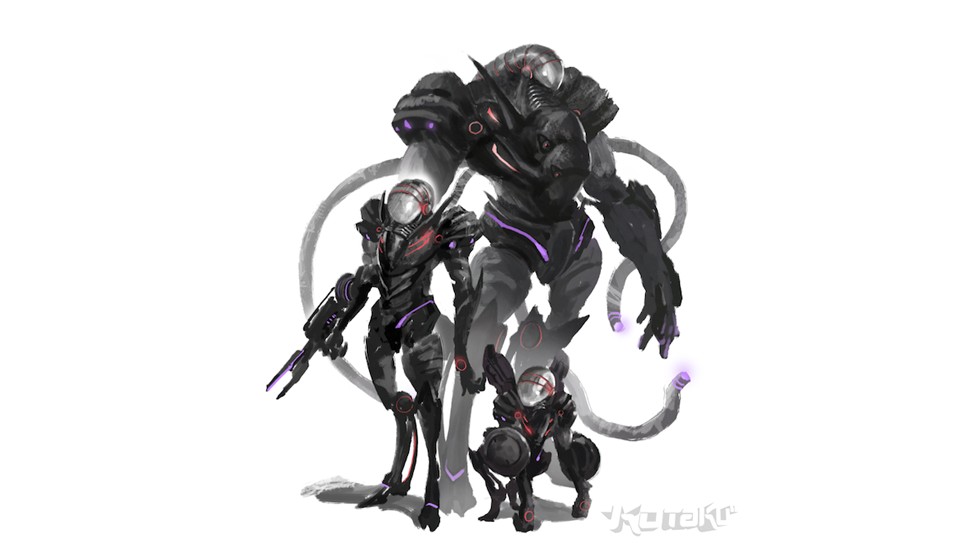
M.O.S. (Military Occupational Specialty) is a cancelled “Massively Multiplayer Tactical Role Playing Shooter” (M.M.T.R.P.S.) that was in development around 2003 – 2004 by SharkByte Software, planned to be released on PC. It was an ambitious online FPS / RPG hybrid, conceived to become the “next genre of online gaming”, featuring a huge 42.987 miles² explorable planet, which is quite unbelievable even by today’s standards if you compare it to such open worlds as Final Fantasy XV (700 miles²),  Just Cause 3 (400 miles²) or Fuel (5.560 miles²) .

Players would take the role of a soldier sent to an alien planet called Balia, to combat for one of the available military factions: The Dominion, The Divine Separation and The Sovereignty. As in other MMORPGs Players VS Players and Realm VS Realms would have been available, you could drive different types of vehicles and

Details on SharkByte Software’s hopes for M.O.S. can still be found in old interviews and in their (now offline) website:

“The Idea for M.O.S. game about because we all liked playing FPS’s and tactical shooters such as Rainbow Six. We also like some RPG’s especially the online ones, so we thought man would it be cool if we could play Rainbow Six but in an Everquest setting? From there we started laying out the details of how this type of game might work. Now we are working on making that happen.

We currently have two server technologies that are being used and I can say that one will support approximately 30k per world and the other should allow for everyone to play together (obviously not in the same square inch :) ).”

“The initial game world covers approximately 142 kilometers by 193 kilometers. When you add the uncharted continents, seas, and oceans, the entire game world will encompass an area of 260 kilometers by 430 kilometers. This translates into an area of 161 miles by 267 miles.

A player will have three ways to develop their character. Since this is a military game the first method of advancement is in rank. A traditional rank system is being used. Secondly, the player will hone his skills by means of missions. Skill points are awarded which the player uses to develop the character skills. Thirdly, since this is a role playing game, the player will accumulate valuable information on which the players’ ability to decipher and implement what is learned can affect the outcome of the game.

The overall aim of the game is to establish and maintain the superiority of the player’s own shard. Within this framework the player will amass personal wealth and advance in rank with the successful completion of missions.”

“Killing of players within one’s own shard is also allowed although highly discouraged. As in any society, the attempted killing of an unarmed or peaceful citizen carries severe consequences. Friendly fire, on the other hand, may be unavoidable in the heat of combat.

Shard vs. shard attacks will be available. It is highly recommended that a player build up his skills before going into battle to increase his odds of survival.

A Shard is a group of military personnel under the rule of a General. There are 3 Shards on the planet: The Dominion, The Divine Separation and The Sovereignty. We chose the term Shard because it emphasizes the splitting of a single object.”

“Initially you will have to join a shard. Since this is a military type game and the player is recruited to serve on this planet the player is obliged to serve for a period of time. After fulfilling the obligation the player will have the option to continue within the system or make their fortune on the frontier.

A player will have access to use of vehicles as part of items necessary for use in missions. If a player can afford the cost of a vehicle, it is available to him.”

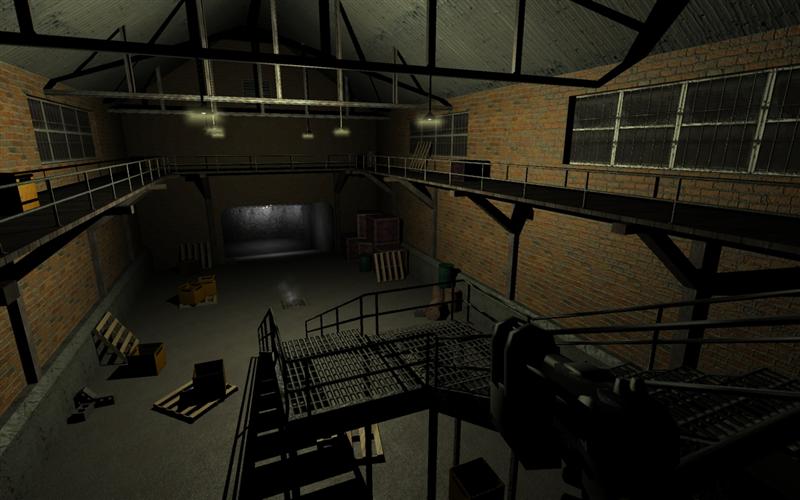
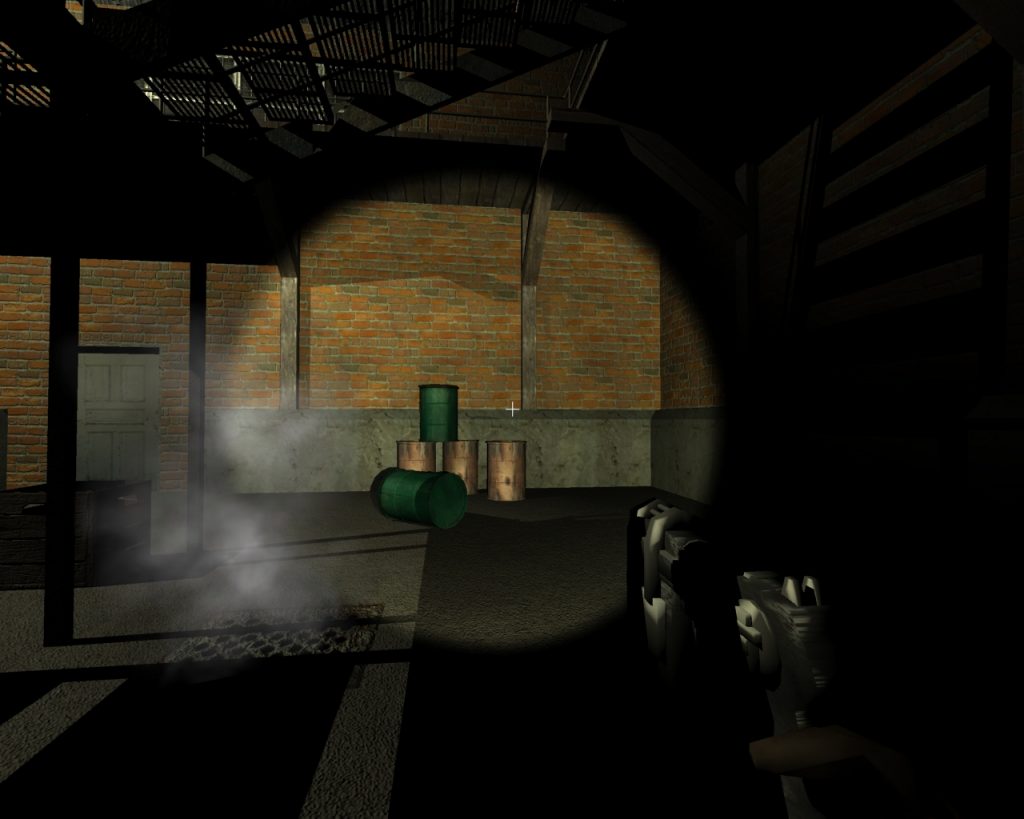
The team just showed concept art and a single 3D render from the game, so we don’t know how much was really done before its cancellation. As it usually happens with these ambitious MMORPG from the early ‘00s, we can assume the team underestimated the efforts, skills and budget needed to develop such a game and never find a publisher interested in helping them.

Images: 

Hostile Intent (Aware Entertainment) [PC – Cancelled]

Hostile Intent (Not to be confused with the Half-Life mod of the same name) was a First Person Shooter that was being developed by American company Aware Entertainment during 2002 and 2003. Aware Entertainment were based in Knoxville, Tennessee, and were founded in January 2001 by Andrew Roberto while he was still in Law School, with the studio born from a desire to create “truly interactive computer games”. This was their very first project.

With a fairly outlandish plot and a gritty look, the concept of Hostile Intent seemed to fall somewhere between Battlefield, Rainbow Six and even the James Bond series. It was described by Aware as an intense, fast-paced shooter while simultaneously offering an open-ended gameplay experience.

The backstory of the game would have offered us a little bit of alternate history as the setup:

“In 1945, just after the end of the second World War, United States President Franklin D. Roosevelt created a covert organization called “Leviathan” to combat any perceived threats against the free world. Leviathan was cleared to use any means that governments could not publicly endorse, whether it be kidnapping, assassination, sabotage, arms-dealing, corporate espionage or even triggering war and, due to the nature of these methods, the organization was to be a secret to everyone with the exception of a single member of the executive branch of the US, who would then pass on the knowledge to a successor once he left office.

However, just a few months later, any knowledge of Leviathan dies with Roosevelt, who suffers a cerebral hemorrhage before he can disclose the existence of the organization to vice-president Harry S. Truman. With no one to keep it in check and its funding structure firmly secure, Leviathan goes on to attain massive influence over the world’s affairs, essentially becoming a shadowy world government with the power to deploy its forces anywhere it deems necessary.

Decades later, their reign is threatened by a prodigious and mentally-ill hacker known as “Xander”, who has plans of world domination. Using his computer skills to steal from the elite and big businesses, he funds a personal army that he dubs “Alliance Of Anarchy” to achieve his goal and while trying to send false orders to one of the world’s armies, he accidentally reveals himself to the Leviathan leadership, a former high ranking member of the CIA known only as “Spyder”. With both factions now aware of each other, a battle for supremacy begins as Xander escalates conflicts around the world and sends his mercenary army to hunt down his rival, hoping to take advantage of Spyder’s distraction and stretched resources in his efforts to bring the world back under Leviathan control.”

In the middle of this mess, the player would assume the role of J.D. Knox, a former marine and Leviathan operative recruited by Spyder, as he is deployed in battlefields around the world. These would include some obvious choices for the time, such as Iraq and Chechnya, but places such as North Korea would also make an appearance.

Hostile Intent was quite ambitious in the gameplay department. Aware would claim in several interviews that the game would not only feature levels with infinitely generated landscapes, but also a fully destructible environment, complete with terrain deformation, made possible by Aware’s own custom made engine which they were also hoping to license out for other games.

With a scope this large, the player would have at his disposal a large amount of real-life weapons and vehicles to fight with and get around. In addition to over 20 guns that ranged from pistols to rocket launchers and laser target designators, Hostile Intent would allow us to get inside the M1A1 Abrams tank, the Humvee, the Bradley APC, Hokum, Apache and Comanche helicopters, and even several boats.

With this feature set, it should come as no surprise that Hostile Intent was being developed with multiplayer action in mind. In addition to all the modes one would expect, such as Deathmatch and objective-based missions like hostage rescue, the game would also feature modes that could take advantage of its capacity for environment destruction, with up to 32 players joining the mayhem at once.

However, it does not seem that the single player experience would suffer as a result of this online focus, as the open-endedness of the gameplay allowed for not only a large amount of replayability, but the levels themselves would have been populated by NPCs, both hostile and friendly, in addition to the main enemy force. The main campaign would have been team-based and, although Hostile Intent was not meant to be a pure tactical shooter, it would have offered some depth when it came to player movement, with the ability to lean around corners and to go prone, and even the possibility to employ stealth.

2003 saw Hostile Intent build up a little bit of hype among some of the smaller gaming websites. With a release date estimated for late 2004, Aware claimed in an interview that they had several publishers interested in their game, but no deal had been finalized at that point in time. The last update on their official website seems to have been on September 15 of 2003 and, by 2004, the website no longer existed. Hostile Intent, and by extension Aware, had seemingly died, and whether that was due to difficulties with publishing, overambition, or a combination of both, remains unknown.

Article by thecursebearer

Images:


Vampire Hunter (Square Enix + Digital Extremes) [Cancelled – PS3, Xbox 360, PC]

Digital Extremes is a Canadian video game developer founded in 1993, best known for creating Warframe, Dark Sector, The Darkness II and co-creating Epic Games’ Unreal series. Around 2012 the team was working with Square Enix to develop a new action adventure set in a fantasy vampire world, possibly to be published for Xbox 360, Playstation 3 and PC.

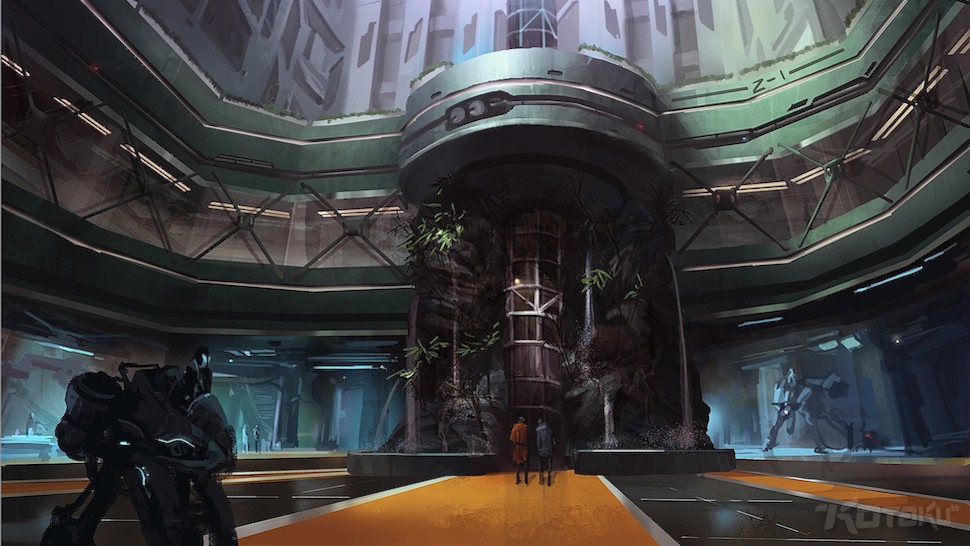
Unfortunately the project was never officially announced and they cancelled it in the end: we don’t have any more information about how it would have been played nor why it was never completed. Some concept art from this Vampire Hunter game is preserved below, to remember the existence of this lost project.

Images: 

Ninth Doctor Who (2005 Video Game) [Cancelled / Tech Demo]

A Doctor Who video game, based-off the science-fiction series of the same name, was being developed by Australian developer IR Gurus Interactive (later rebranded Transmission Games). The game would have coincided with the first series of the revived 2005 tv-show starring Christopher Eccleston as The Ninth Doctor and Billie Piper as Rose Tyler. Development lasted half a year and was funded through substantial government subsidies. The reason for its cancellation according to Paul Callaghan who worked at the studio was simply “It’s complicated”.

“I’d wanted to work on a Doctor Who game since I was about 11 years old, so this was kind of a dream project for me,” said Callaghan. “When it was cancelled, I had to take a step back to work out whether or not this was the career I wanted to pursue.”

As to the plot for the game, it is vague whether the details given by Callaghan are what was planned for it. From the Sydney Morning Herald article:

“He conceived a plot around aliens modifying the human race with airborne nanobots, allowing companion Rose Tyler to undergo some changes: “We could give her some cool alien powers!””

According to Andy Widger, then head of communications for BBC Worldwide, there were no intentions of releasing it as he told website GamesRadar:

“The news of a Doctor Who game is a little premature. At present the only work being done is on an interactive demo for internal evaluation. There is no firm proposal for a game and no commitment to particular formats or an idea of a potential release date – and no screenshots.

Article by Vitas Varnas 

Mythica (Microsoft MMORPG) [PC – Cancelled]

Mythica is a cancelled MMORPG based on Vikings folklore and Norse mythology that was in development by Microsoft Game Studios between 2002 and 2004, planned to be released on PC. At the time most big gaming companies tried to launch their own massive online multiplayer games, as it was quite a lucrative market (at least until they over-saturated it). Mythica boosted impressive graphics for its time, and Microsoft also promised fun gameplay mechanics.

As we can read from their official 2003 press release:

“When playing ‘Mythica,’ players will feel like genuine Norse heroes on a personalized journey unique to them,” said Adam Waalkes, studio manager for role-playing games at Microsoft Corp. “Through ‘Mythica,’ Microsoft Game Studios will revitalize the massively multiplayer genre by putting the focus where it belongs: on gameplay.”

In the quest to become the one true hero in a vast gaming world, players may adventure with a band of fellow immortals into huge, populated public spaces or enter a Private Realm. “Mythica’s” Private Realms Technology envelopes players in story lines and environments that react to their actions in private areas of the world. Here players become the central characters in a heroic tale where actions have lasting consequences in their own persistent game world.

The Private Realms are spread across several traditional planes of existence from Norse mythology, from the grassy fields and eternal spring of Asgard to the fiery heart of Muspellheim. Using godlike powers, players can dispel droves of menacing monsters with a single blow or battle massive, monstrous beasts such as the Midgard Serpent.”

In 2011 Justin Olivetti wrote a great article about why Mythica could have been a great addition to the MMORPG market:

“No matter how similar MMOs may be to each other, each one needs a “hook” that devs and marketers can bandy about to capture the imaginations of gamers. […] With Mythica, the hook was “Let players be gods.

[…] Each day, players would get to choose whether they wanted to adventure in an open world setting or in personalized “private realms” that would change the game according to their deeds. In private realms, what you or your small group of friends did would have a lasting impact on the game world — as long as you were in that version of the game, that is.”

Mythica’s development team consisted of about forty people, but most of them were fired in 2004 when the game was officially cancelled. Just a year before Microsoft already faced another sudden problem: Mythic Entertainment (developer of popular MMORPG Dark Age of Camelot) sued Microsoft, seeing in the similarity between their name and Mythica. We could speculate it was just a way to get some money from Microsoft or interfere with their game, seeing it as a potential competitor in the same genre as DAoC. In the end Microsoft just recognized the MMORPG market was over saturated: it would have been risky to proceed with Mythica’s development, so the project was canned.

Thanks to Josef for the contribution!

Images:

Videos: